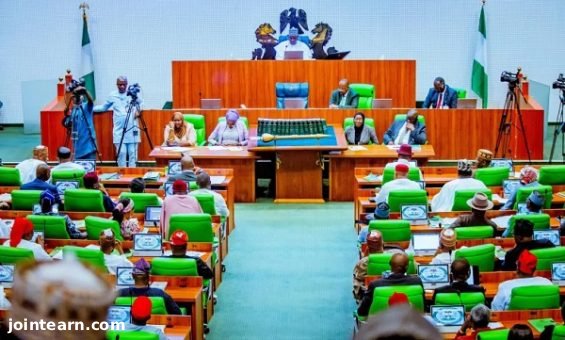
The House of Representatives on Wednesday urged the Central Bank of Nigeria (CBN), NIRSAL Microfinance Bank, and the Federal Ministry of Finance to immediately suspend all deductions on COVID-19 intervention loans. The House also called for a full waiver of outstanding loans owed by vulnerable households and micro-businesses.
The resolution followed a motion of urgent public importance sponsored by Saidu Musa Abdullahi, Deputy Chairman of the House Committee on Finance. The motion highlighted the inability of many Nigerians to repay the loans due to current economic hardships.
The House directed the relevant agencies to restructure repayment terms for SMEs, including extending moratoriums, reducing interest rates, and spreading repayments over longer periods to protect jobs and prevent business failures.
During debate, Abdullahi recalled that the COVID-19 Targeted Credit Facility (TCF), introduced by the CBN and NIRSAL during the pandemic, disbursed ₦419.42 billion to households, micro, small, and medium enterprises. The program supported 792,936 beneficiaries, including 674,972 households and 117,964 small businesses, with women accounting for 45% of recipients.
The TCF reportedly created or sustained about 1.58 million jobs, helping to stabilize livelihoods during and after the pandemic.
Abdullahi noted that as of September 2023, ₦261.07 billion (62%) of the loans remained unpaid, while ₦378.03 billion was classified as outstanding. He cited surveys showing rising default rates driven by inflation above 24%, food insecurity, business closures, and shrinking household incomes.
He stressed that many loans were used for basic survival needs—food, shelter, healthcare, and school fees—making repayment unrealistic for those yet to recover economically. Abdullahi further argued that structured waivers are fiscally manageable, citing substantial recoveries from automatic deductions made between late 2023 and December 2025.
Highlighting international precedents, he noted that countries like the US, Canada, Germany, South Africa, and India waived or restructured COVID-19 relief loans to reflect the humanitarian context.
Abdullahi warned that continuing aggressive recovery measures could inflict severe hardship, risk the collapse of small businesses, worsen unemployment, and escalate social instability.


Leave a Reply