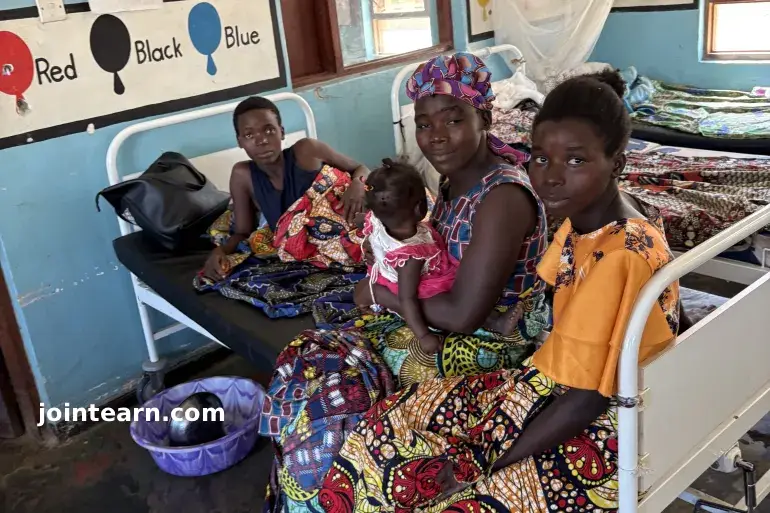
As health posts across Malawi scale back operations or close entirely, communities and medical professionals warn that expectant mothers are losing access to the lifesaving services they depend on. The ripple effect of United States Agency for International Development (USAID) cuts is becoming increasingly visible in remote regions, where long distances, poverty, and strained hospitals now form an even more dangerous combination for pregnant women and newborns.
A Health Post Struggling to Survive in Mulanje
In the Mulanje district of southern Malawi, nursing officer Ireen Makata sits outside a once-busy rural health post that now opens only intermittently. The small beige clinic once served dozens of women each day, offering antenatal checkups, maternal care, family planning services, vaccines, and emergency transport. Today, reduced funding has forced the facility to operate only every couple of weeks, stretching dwindling medical supplies as far as possible.
For women who once relied on this clinic, the closure of health posts means they must travel long, exhausting distances on rough dirt roads to reach a district hospital. Many cannot afford the lost time or travel cost, so they simply go without care.
“They’re missing early antenatal visits, especially during the first trimester when complications are easiest to detect,” Makata says. She now rarely travels to the clinic due to fuel shortages and a lack of operational support. With limited staff visits and almost no ambulance services, remote maternal care has all but collapsed.
The Broader Impact of USAID Cuts
Earlier this year, the U.S. government halted USAID-funded programmes under an executive order from President Donald Trump. This decision froze MOMENTUM — a major maternal and newborn health initiative operating in 14 of Malawi’s 28 districts. MOMENTUM had supported 249 health posts, funded outreach missions, trained medical personnel, and supplied medications and equipment. With the pause in funding, more than 20 health posts have closed, mobile clinics have shut down, and essential equipment was liquidated.
Before the cuts, the United States contributed nearly one-third of Malawi’s national health budget. That financial backbone has now been severely weakened, leaving government agencies, hospitals, and NGOs scrambling to fill the void.
Communities Facing Higher Maternal Risks
In the Musa community near Mulanje, local leader Massitive Matekenya stands outside a deserted health post that once provided consistent care. Now, he says, the community is feeling the full weight of the closures.
“Women are delivering on the road while trying to reach the hospital,” he says. “When complications arise, the mother or baby can die before help is available.”
He recounts the recent death of a 40-year-old woman who succumbed to malaria after failing to reach a nearby facility in time. With no functioning ambulance system and no regular outreach, preventable deaths are expected to rise.
Matekenya fears that limited access to family planning will also lead to increased pregnancies in already vulnerable communities. “This could cause a spike in maternal deaths,” he warns.
Fistula Care at Risk as Funding Declines
In Lilongwe’s Bwaila Fistula Centre — a key treatment hub for women suffering from obstetric fistula — staff members are worried about the long-term consequences of reduced maternal healthcare.
Obstetric fistula, caused by prolonged and obstructed labour without medical support, leaves women incontinent and often ostracised from their communities. The centre treats more than 400 patients annually, but with fewer resources and shrinking outreach activities, many women may go undiagnosed.
Head coordinator Margaret Moyo stresses that early antenatal checkups, midwife training, and youth education are crucial in preventing fistula. She fears that setbacks in these areas will undo years of progress.
A Lifeline Through Community Ambassadors
To counter the stigma and lack of awareness around fistula, Moyo oversees an “ambassador” programme in which treated patients return to their communities to identify and support other women in need.
One ambassador, Alefa Jeffrey, once endured isolation, discrimination, and physical pain after developing fistula during childbirth. She lived with the condition for years before finally receiving treatment. Today, she uses her experience to encourage other women to seek help and has personally brought dozens of patients to the fistula clinic.
“I can speak from experience,” she says. “Many women think they cannot be treated, but I show them that recovery is possible.”
Health Workers Lost and Hospitals Overwhelmed
According to the Ministry of Health, Malawi lost nearly 5,000 health workers when USAID-funded positions were terminated — many of them HIV diagnostic assistants who played critical roles in testing, counseling, and patient referrals.
Dr Samson Mndolo, Malawi’s secretary of health, says the ministry is now trying to pivot toward a more community-based system. This includes increasing outreach by hospital-based staff and establishing digital platforms, like WhatsApp groups, where rural patients can ask health questions.
He stresses that while the transition is challenging, Malawi has overcome similar funding crises in the past by collaborating with NGOs and neighbouring countries.
“Every crisis is a chance to strengthen the system,” Mndolo says. “We are trying to build long-term resilience.”
Mothers Left Feeling Forgotten
Despite official optimism, families living in isolated communities feel abandoned. Twenty-two-year-old Tendai Kausi, a mother from Mulanje, continues to visit her nearby health post in hopes of receiving basic services for her young son. But she knows many women can no longer access prenatal care, and it worries her deeply.
“Our community is suffering,” she says. “If health services don’t return, our children will pay the price.”


Leave a Reply