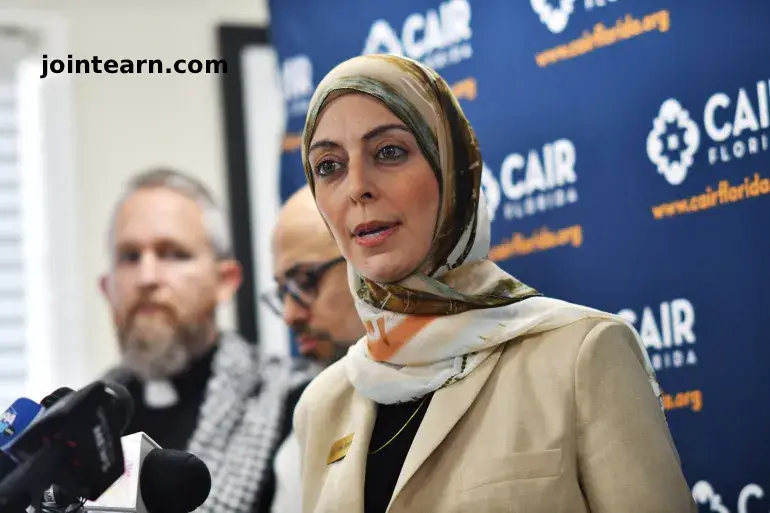
The Council on American-Islamic Relations (CAIR) announced that it is preparing to file a lawsuit against Florida Governor Ron DeSantis following his executive order labeling the prominent civil rights organization as a “foreign terrorist” group. The move has sparked national debate over civil liberties, Islamophobia, and the politicization of security policies in the United States.
CAIR Responds to DeSantis’s Controversial Decree
Hiba Rahim, interim executive director of CAIR-Florida, told Al Jazeera that while the designation will have no immediate legal effect on the organization, it could fuel Islamophobia in Florida and across the nation.
“We’ll continue doing the work that we do every day to defend civil liberties and protect American Muslims, and to protect the community at large and to uphold the Constitution,” Rahim stated.
DeSantis issued the decree on Monday, urging state agencies to act against anyone who provides “material support” to CAIR. Critics argue that such a state-level designation is largely symbolic, as only the federal government has the authority to label organizations as terrorist entities.
CAIR is a domestic organization with chapters across the U.S. and hundreds of employees who are American citizens, making it legally impossible to classify the group as a foreign organization.
Legal Context and Previous Actions
The term “material support to terrorism” carries serious criminal implications, but CAIR has not faced formal accusations of criminal activity. Legal experts note that state authorities could pursue investigations if evidence existed, rather than relying on symbolic labeling.
DeSantis’s actions mirror recent measures by Texas Governor Greg Abbott, who last month issued a similar declaration.
Founded in 1994, CAIR is the largest Muslim American civil liberties organization, advocating for free speech, religious freedom, and protection of civil rights. The organization has a history of high-profile lawsuits, including cases reaching the U.S. Supreme Court, and has defended Muslim Americans’ rights to advocate for Palestinian issues.
DeSantis’s Executive Order and Political Implications
In his order, DeSantis also labeled the Muslim Brotherhood as a terrorist organization. The decree references Israel, citing concerns over Hamas and its actions in the West Bank.
Rahim criticized the governor for prioritizing “Israel First” policies over the protection of Florida’s citizens, noting that DeSantis held his first official cabinet meeting as governor in Israel in 2019. She highlighted recent cases affecting Palestinian Americans, including the death of Sayfollah Musallet and the imprisonment of 16-year-old Mohammed Ibrahim, and said the governor has remained silent.
“What type of priorities is he showing the people of Florida when he elevates an ‘Israel First’ policy and ignores the needs of the Floridian people?” Rahim told Al Jazeera.
Rahim also emphasized CAIR’s patriotism, describing the organization as “America First”, while challenging DeSantis’s loyalties.
Legal Battle Expected
DeSantis stated he would welcome a lawsuit, arguing that litigation would allow the state to subpoena CAIR’s financial records. Rahim responded confidently, saying:
“We welcome it as well, and we will see him in the courtroom.”
Legal analysts suggest that any attempt to prosecute CAIR at the state level could face serious constitutional challenges, given the group’s domestic status and long-standing civil rights record.
Rising Islamophobia in the United States
The targeting of CAIR occurs amid a surge in anti-Muslim rhetoric and Islamophobia. Earlier this year, several right-wing Congress members introduced bills opposing Islamic law, which critics claim are politically motivated measures to demonize Muslims.
Anti-Muslim activism has also escalated at the grassroots level, including violent and racist incidents, such as attempts to burn the Quran during protests in Dearborn, Michigan.
Muslim American activist Ahmed Bedier described the situation as a coordinated effort to portray Muslims as a threat:
“This definitely feels like there is a coordinated campaign to convince Americans that somehow Muslims are the real enemies… targeting CAIR is a political stunt masquerading as a security policy.”
Federal authorities have yet to comment. The U.S. State Department, which alone can officially designate terrorist groups, has not responded to requests for comment.
Broader Political Context
The controversy also intersects with the 2024 presidential campaign dynamics. Former President Donald Trump has historically expressed anti-Muslim rhetoric but has also made efforts to engage with Muslim communities during campaign events. Rahim called on Trump to support CAIR based on facts and justice, urging all politicians to make decisions that uphold civil liberties.
Conclusion:
The legal clash between CAIR and Governor DeSantis reflects ongoing tensions over civil rights, Islamophobia, and political maneuvering in the United States. While the governor frames his actions as a security measure, rights advocates warn it risks further marginalizing Muslim communities and setting a dangerous precedent for targeting civil rights organizations based on political agendas.


Leave a Reply