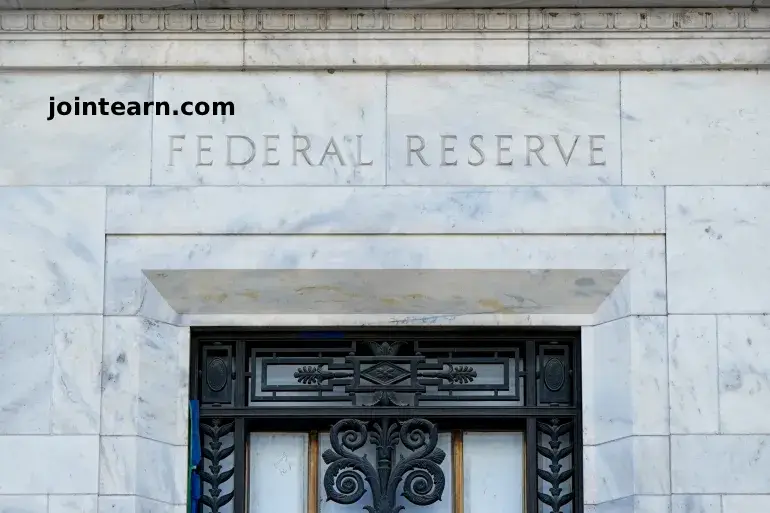
The United States Federal Reserve has lowered its benchmark interest rate by a quarter of a percentage point, marking the third and final rate cut of 2025. The central bank reduced the target range to 3.50–3.75 percent, citing slowing job growth, limited economic data, and persistent inflationary pressures.
Reasons Behind the Fed’s Interest Rate Cut
The Fed’s statement emphasized that job gains have slowed over the year and the unemployment rate edged up through September 2025. Inflation has risen since earlier in the year and remains “somewhat elevated,” contributing to the central bank’s cautious approach.
The decision was widely anticipated, with CME FedWatch indicating an 89 percent probability of a rate cut. However, the Fed faced unique challenges due to gaps in government economic data caused by a record-long 43-day federal shutdown, which prevented agencies such as the Department of Labor from gathering crucial information on employment, import and export prices, and the producer price index.
As a result, the latest reliable data available to the Fed was from September 2025, which showed the unemployment rate at 4.4 percent and core inflation at 2.8 percent.
Labour Market Trends and Economic Outlook
Fed Chair Jerome Powell highlighted that the labor market has been “cooling gradually,” slightly more slowly than previously expected. Recent reports indicate US labor costs increased 0.8 percent in Q3, slightly below projections.
Economists warn that next year could see a “jobless expansion,” where GDP continues to grow but employment gains remain modest. This trend could leave the economy vulnerable to shocks, as the labor market is a key defense against recession.
Ryan Sweet, managing director at Oxford Economics, explained: “The challenge facing the Fed next year is the potential jobless expansion, when GDP increases but employment gains are modest. This leaves the economy vulnerable to shocks because the labor market is the main firewall against a recession.”
Political Pressure and Fed Independence
Despite maintaining independence from partisan interference, the Fed has faced pressure from President Donald Trump to cut rates further. Trump has publicly criticized the Fed and emphasized the need for lower short-term rates.
The White House has also positioned Stephen Miran, a loyalist, on the Fed board. Miran has consistently pushed for more aggressive rate cuts, favoring half-percentage-point reductions instead of the 25 basis point cuts that the Fed adopted. During Wednesday’s decision, Miran voted for a 50-point cut, while governors Austan D. Goolsbee and Jeffrey R. Schmid voted against any cut. Other governors supported the 25-point reduction.
Analysts warn that elevated inflation, incomplete economic data, and political pressures may complicate the Fed’s strategy for 2026. Daniel Hornung, a policy fellow at Stanford Institute for Economic Policy Research, noted: “President Trump’s aggressive push for lower short-term rates could complicate the objective of bringing down longer-term borrowing costs.”
Fed Chair Powell’s Term and Upcoming Challenges
Jerome Powell’s term as Fed Chair expires in mid-May 2026. Trump has stated that support for immediate rate cuts would be a requirement for any nominee to lead the central bank. The Fed’s decisions are also influenced by upcoming Supreme Court rulings affecting board governance, including the potential removal of Fed Governor Lisa Cook following allegations of mortgage fraud. Powell declined to comment on the legal proceedings, stating, “We are not legal commentators.”
The December 2025 interest rate cut reflects the Fed’s careful balancing act between supporting economic growth, managing inflation, and navigating political pressures as the US heads into 2026.


Leave a Reply