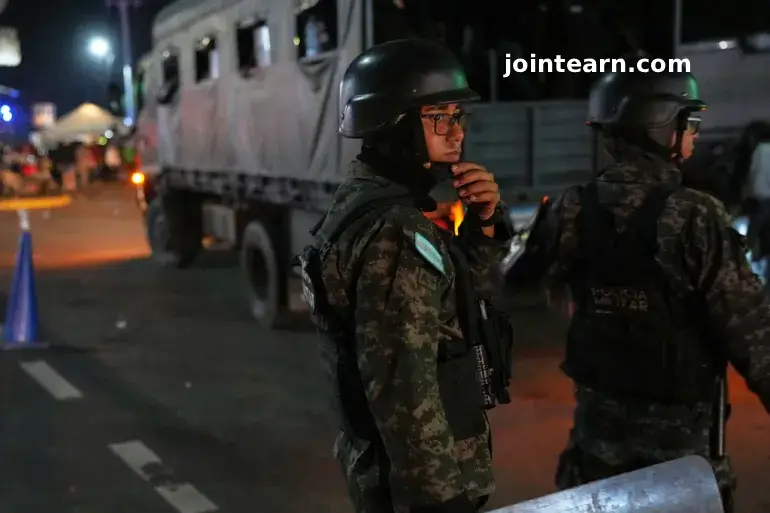
The Honduran military has vowed to ensure a peaceful and orderly transfer of power following the nation’s turbulent election, promising to respect official results despite allegations of fraud and foreign interference.
Armed Forces Chief Roosevelt Hernandez stated on Wednesday that the military, which historically intervened in politics—including the 2009 coup—will guarantee that the election outcome is honored.
“We have been clear. We will support and recognize the results,” Hernandez affirmed, emphasizing the military’s role in safeguarding democratic procedures during a contentious political period.
Contested Election and Allegations of Fraud
The 2025 Honduran election has been mired in controversy. Allegations of vote tampering, irregularities, and intimidation have arisen from multiple parties. Prior to voting, US President Donald Trump suggested that US funding to Honduras could be cut if his preferred candidate did not win, further fueling tensions.
President Xiomara Castro condemned the election as an “electoral coup,” citing procedural irregularities and potential fraud. Political opponents also accused the Libre Party, led by Castro, of exerting undue influence over election authorities.
Preliminary results indicate that Rixi Moncada, Libre’s presidential candidate, is trailing behind centre-right candidate Salvador Nasralla and Trump-backed Nasry Asfura, who leads by roughly 40,000 votes, representing about 1.32 percent of the total vote. Moncada has refused to recognize the outcome as legitimate, while Nasralla condemned Trump’s intervention, saying it may have cost him votes.
Military Deployment and Electoral Oversight
The National Electoral Council (CNE) faced technical issues during vote counting, heightening uncertainty. CNE leader Ana Paola Hall requested military support to secure ballot storage sites, signaling the armed forces’ critical role in maintaining electoral integrity.
Protests demanding transparency have largely remained peaceful, though tensions remain high, fueled by memories of previous contested elections and the violent repression following the 2009 coup. Civil society groups have urged calm, patience, and adherence to democratic norms.
Implications for Honduran Democracy
The military’s involvement in post-election security underscores Honduras’ fragile political environment. Observers note that international scrutiny will be key in ensuring fair vote certification and preventing escalations.
The situation also highlights the broader influence of foreign powers, including the United States, in Central American politics, and raises questions about the legitimacy of external interventions in domestic elections.
Honduras now faces a delicate transition, where the military, electoral authorities, political parties, and citizens must navigate a path toward stability and democratic accountability.


Leave a Reply