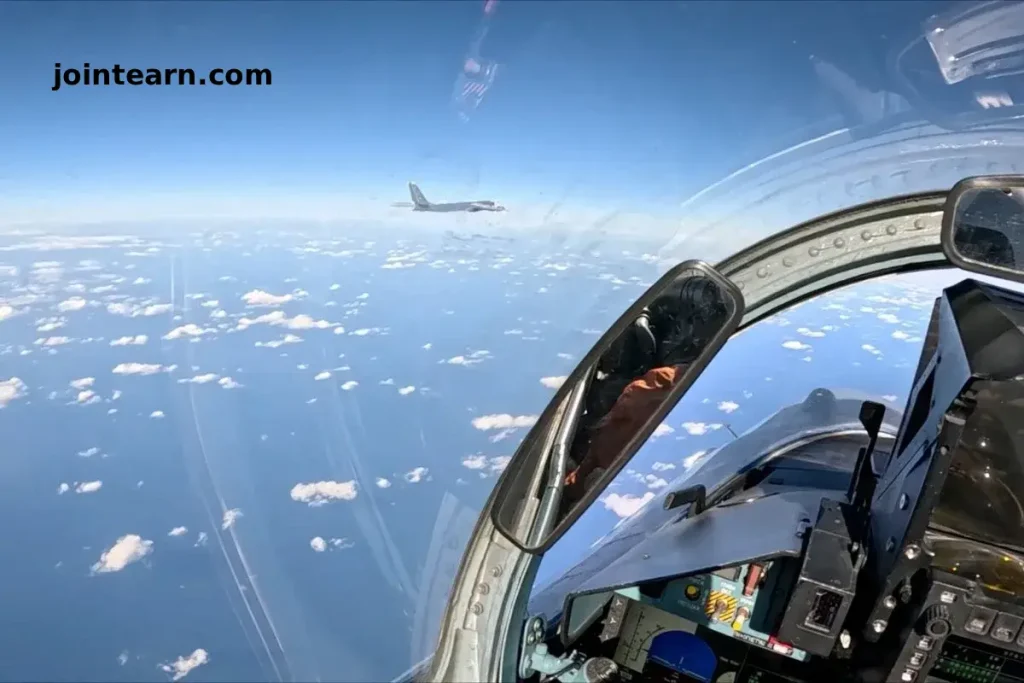
Japan and South Korea deployed fighter jets after Russian and Chinese aircraft conducted joint patrols near their territories, raising tensions in the East China Sea and western Pacific.
The Chinese and Russian militaries flew bombers and fighter jets as part of their 10th annual joint strategic air patrol exercise, which has been held each year since 2019, according to the Chinese Defence Ministry. Russian sources confirmed the exercises lasted approximately eight hours.
Japanese Response
Japan’s Defence Ministry called the joint patrol a “serious concern for national security,” sending fighter jets to monitor the Russian and Chinese aircraft. The patrol included two Russian Tu-95 nuclear-capable bombers meeting two Chinese H-6 bombers, joined by four Chinese J-16 fighter jets, flying a round-trip route between Okinawa and Miyako islands over international waters.
Earlier incidents have heightened tensions: last week, Chinese fighter jets reportedly targeted Japanese military planes with fire-control radar, a practice that signals potential engagement and forces evasive maneuvers. Beijing denied the claims, accusing Japan of endangering flight safety near the Liaoning aircraft carrier.
Prime Minister Sanae Takaichi warned last month that Japan could respond militarily if China attacked Taiwan and its actions threatened Japanese security.
Japan’s Defence Minister Shinjiro Koizumi stated that Japanese fighter jets had “strictly implemented air defense identification measures” during the patrols.
South Korean Response
South Korea also scrambled jets after seven Russian and two Chinese aircraft entered its Air Defense Identification Zone (KADIZ) off the eastern and southern coasts. Officials confirmed the planes did not violate territorial airspace.
“Our military detected the Chinese and Russian aircraft before they entered KADIZ and deployed Air Force fighter jets to take tactical measures in preparation for any contingencies,” South Korea said in a statement.
Regional Context
The patrols and military exercises come amid a diplomatic rift between Tokyo and Beijing, worsened by Takaichi’s remarks on Taiwan. Beijing responded by advising citizens against traveling to Japan and pausing seafood imports, previously suspended due to Fukushima nuclear plant water releases.
China claims Taiwan as its territory and has stepped up military and political pressure on the self-governed island, which rejects Beijing’s claims.
Key Takeaways:
- Japan and South Korea scrambled fighter jets in response to China-Russia joint patrols.
- Patrols included Tu-95 and H-6 bombers and J-16 fighter jets over international waters.
- Radar targeting incidents between Chinese and Japanese jets have increased regional tensions.
- The situation highlights concerns over Taiwan security and Indo-Pacific stability.


Leave a Reply