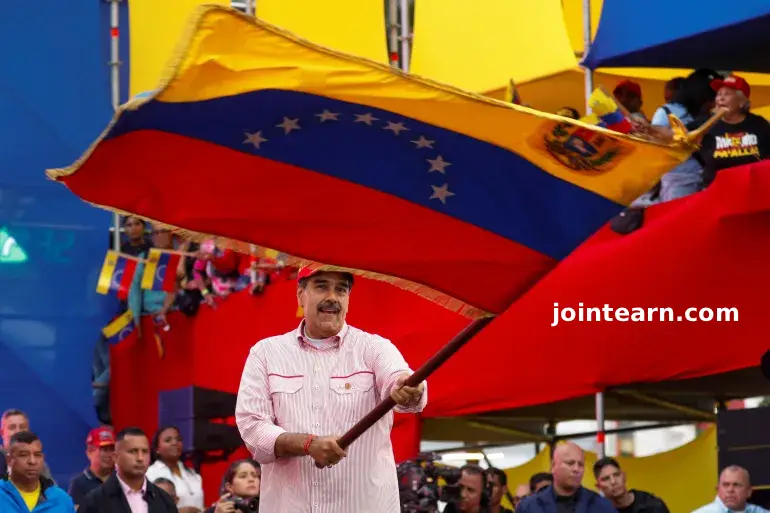
The Trump administration has escalated its pressure on Venezuela by imposing new sanctions targeting six oil tankers, including several vessels linked to President Nicolás Maduro’s inner circle. The sanctions also affect three nephews of Cilia Flores, Maduro’s wife, further intensifying the standoff between Washington and Caracas.
New Sanctions Target Maduro’s Family and Oil Sector
On December 12, 2025, the US Treasury Department announced the latest round of sanctions, which include freezing assets and imposing travel bans on key figures close to Maduro, including his nephews. Franqui Flores, Efrain Antonio Campo Flores, and Carlos Erik Malpica Flores—family members of Cilia Flores—are among those sanctioned.
The two nephews, Franqui and Efrain, were previously convicted in 2016 for attempting to carry out a multimillion-dollar cocaine deal. After serving part of their sentences, they were released in 2022 as part of a prisoner exchange with Venezuela.
In addition to these individuals, the US has sanctioned six crude oil tankers, accusing them of “deceptive and unsafe shipping practices” and continuing to finance Maduro’s regime. Four of the tankers are flagged in Panama, while others are registered in the Cook Islands and Hong Kong. These supertankers recently loaded crude oil from Venezuela’s state-run oil company, PDVSA.
US Push to Target Venezuelan Oil Sector
The sanctions reflect the US’s ongoing strategy to target Venezuela’s oil industry, which is crucial to the country’s economy. Washington has long claimed that Maduro’s regime is propped up by illegal oil trade, which fuels “narco-terrorism” and corruption.
The US is also targeting Panamanian businessman Ramon Carretero Napolitano, who allegedly facilitates the shipping of Venezuelan oil.
White House Press Secretary Karoline Leavitt stated that the US intends to seize Venezuelan oil cargos, including a recent shipment intercepted off Venezuela’s coast. The tanker, carrying 1.9 million barrels of oil, will be taken to a US port, where the legal process for the seizure will proceed.
Maduro’s Response: “Piracy” and Oil Protection
President Nicolás Maduro condemned the seizure, labeling it “an act of piracy” against a civilian merchant vessel. He insisted that the real motive behind the US actions was the theft of Venezuela’s oil resources. “It is the oil they want to steal, and Venezuela will protect its oil,” Maduro asserted in a speech.
The US, however, has made it clear that these actions are part of a broader campaign to cut off financial support for what it describes as Maduro’s “corrupt narco-terrorist regime.” The White House also warned of future sanctions and seizures as part of its ongoing pressure on Venezuela.
The Escalating Tensions and Implications for Oil Prices
Wednesday’s tanker seizure is the first of its kind since the Trump administration’s sanctions on Venezuela’s oil industry began in 2019. The action has already led to a sharp increase in global oil prices, highlighting the growing tensions between the US and Venezuela.
Leavitt reiterated that the US will not “stand by and watch sanctioned vessels sail the seas with black market oil,” emphasizing that the goal is to prevent the proceeds from fueling “rogue and illegitimate regimes around the world.”
What’s Next for Venezuela and the US?
With the new sanctions and the seizure of oil tankers, the diplomatic rift between Venezuela and the US has widened. Maduro continues to accuse Washington of seeking regime change to gain control of the country’s vast oil reserves. Meanwhile, the Trump administration has pledged to keep up its “maximum pressure” campaign, insisting that these measures are aimed at halting the flow of illicit resources that support Maduro’s government.
The US may soon target additional ships carrying Venezuelan oil, further escalating tensions in the region and possibly affecting global oil markets.


Leave a Reply