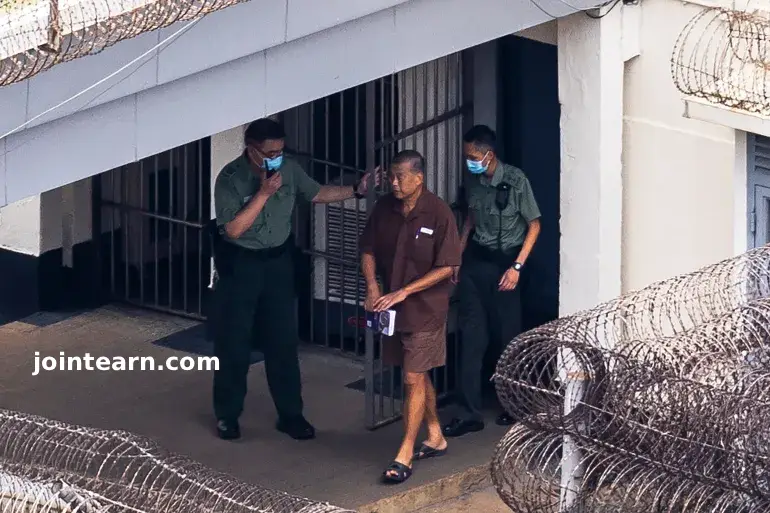
Jimmy Lai Found Guilty in Landmark Hong Kong National Security Trial
A Hong Kong court has convicted prominent pro-democracy activist and media entrepreneur Jimmy Lai on multiple conspiracy charges linked to China’s national security law, marking a pivotal moment in the territory’s ongoing crackdown on dissent.
On Monday, a panel of judges at Hong Kong’s High Court found the 78-year-old founder of the now-defunct Apple Daily newspaper guilty of three offences, including two counts of conspiring with foreign forces and one count of conspiracy to publish seditious materials. The verdict leaves Lai facing the possibility of life imprisonment.
The ruling has drawn swift condemnation from international human rights organisations, journalists’ groups and democracy advocates, who argue the case reflects the erosion of civil liberties and press freedom in the semi-autonomous Chinese territory.
A Closely Watched Test of Hong Kong’s Autonomy
Lai’s trial has been widely viewed as a critical test of Hong Kong’s “one country, two systems” framework — the governance model established when Britain returned the city to Chinese rule in 1997. Under the agreement, Hong Kong was promised a high degree of autonomy, including protections for freedom of expression, an independent judiciary and a free press.
Critics say those guarantees have steadily weakened since Beijing imposed the National Security Law (NSL) in 2020, following mass pro-democracy protests that rocked the city in 2019 and 2020.
Once regarded as one of Asia’s most open societies, Hong Kong has since seen a wave of arrests targeting opposition politicians, activists, journalists and publishers.
Judges Accuse Lai of ‘Masterminding’ Foreign Collusion
Delivering the verdict, Judge Esther Toh, alongside fellow judges Alex Lee and Susana D’Almada Remedios, accused Lai of persistently encouraging foreign governments — particularly the United States — to take actions against China and the Chinese Communist Party.
In an 855-page written judgment, the court described Lai as the “mastermind” behind a conspiracy aimed at undermining national security.
“There is no doubt that the first defendant harboured deep resentment and hostility toward the People’s Republic of China,” Judge Toh said in court.
Lai had pleaded not guilty to all charges and maintained throughout the proceedings that he never explicitly called for sanctions or punitive measures against China.
A Trial Marked by Length and Controversy
The case against Lai stretched over 156 days, making it one of the longest and most closely scrutinised national security trials since the law’s introduction. Lai himself testified for 52 days, repeatedly denying the prosecution’s claims.
Authorities presented 161 Apple Daily articles as evidence, arguing that the newspaper’s reporting and opinion pieces promoted hostility toward Beijing and encouraged foreign intervention.
Lai has been in detention since December 2020, following a series of arrests during the crackdown on the pro-democracy movement. Despite repeated bail applications, courts have consistently ruled that he posed a national security risk.
Apple Daily’s Closure and the End of an Era
Founded in 1995, Apple Daily grew into Hong Kong’s most influential pro-democracy newspaper, known for its outspoken criticism of Beijing and support for democratic reform.
In 2021, Hong Kong authorities froze the paper’s assets and arrested senior executives, including its editor-in-chief, during a police raid on its headquarters. Unable to operate without access to funds, the newspaper shut down later that year, publishing its final edition in June 2021.
For many observers, the closure symbolised the collapse of press freedom in Hong Kong.
Global Outcry From Press Freedom Groups
International watchdogs responded sharply to Monday’s verdict.
Reporters Without Borders (RSF) described the conviction as “unlawful” and based on “trumped-up national security charges”, warning that the ruling highlights the accelerating decline of media freedom in Hong Kong.
“The person on trial was not just Jimmy Lai — it was press freedom itself,” RSF’s director general Thibaut Bruttin said.
The Committee to Protect Journalists (CPJ) echoed those concerns, calling the conviction an act of persecution.
“Jimmy Lai’s only crime is defending democracy and running a newspaper,” said Beh Lih Yi, CPJ’s Asia-Pacific director, adding that the verdict demonstrates Hong Kong’s disregard for its own Basic Law protections.
Health Concerns and International Pressure
Lai’s legal team and family have repeatedly urged the court to consider his age and medical conditions, which include diabetes and high blood pressure. Despite these appeals, he has remained in custody throughout the trial.
International figures, including former and current world leaders, have previously called for Lai’s release. US President Donald Trump has been among those urging Hong Kong authorities to free him, framing the case as a violation of fundamental human rights.
What Comes Next
Jimmy Lai is scheduled to return to court on January 12 for a pre-sentencing hearing. It remains unclear whether he will pursue an appeal against the convictions.
As Hong Kong continues to enforce the national security law, the outcome of Lai’s case is likely to have lasting implications — not only for the city’s remaining independent media outlets, but also for its reputation as a global financial and legal hub.
For many observers, the verdict represents a defining moment in Hong Kong’s transformation — from a city known for free expression to one where dissent now carries the harshest of penalties.


Leave a Reply