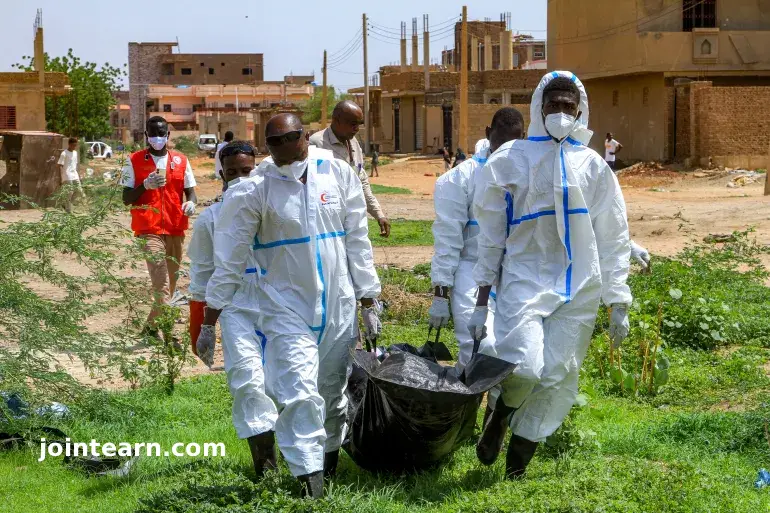
Families Confront Grief as Makeshift Graves Are Exhumed
For Iman Abdel-Azim, the grief of losing her brother in Khartoum North was compounded when she had to bury him in her home courtyard last year due to fighting between the Sudanese military and the Rapid Support Forces (RSF). Her brother succumbed to cholera amid the conflict, with medical care inaccessible.
Now, with Khartoum State beginning a campaign to exhume makeshift graves and relocate remains to cemeteries, Abdel-Azim faces a renewed wave of grief as she relives the trauma of losing her loved one.
Organized Exhumation Campaign
The exhumation initiative is overseen by state and local committees, including representatives from:
- Forensic medicine authorities
- Civil Defence
- Sudanese Red Crescent
- Neighbourhood management and services committees
Ahmed Abdel Rahman, executive director of Khartoum North, explained that the campaign aims to alleviate psychological burdens on families and improve health and humanitarian conditions in the capital region.
The process is led by the High Committee for Collecting the Remains of Those Who Died During the Battle of Dignity, and will proceed in stages:
- Identification of makeshift graves
- Notification of families
- Involvement of a family representative in exhumation and reburial
- Forensic supervision and full documentation of remains
Hisham Zain al-Abidin, director of the Forensic Medicine Authority in Khartoum State, confirmed that the campaign began after the Sudanese army regained control of Khartoum. By early 2026, Khartoum and its districts are expected to be free of makeshift graves.
Challenges Facing Exhumation Teams
Field teams are encountering several obstacles, including:
- Shortages of body bags, complicating safe handling of remains
- Sabotage of DNA preservation units by the RSF, hindering victim identification
To address these issues, unidentified bodies are being documented and reburied in graves designated for unidentified individuals. Zain al-Abidin called for cooperation from citizens and organizations to support the extensive work ahead.
Community Coordination and Family Involvement
Shireen Al-Tayeb Nour Al-Daem, vice president of the Steering and Services Committee in Khartoum North’s Shambat neighborhood, described the process:
- Surveying makeshift graves in homes, mosques, and public squares
- Informing families and coordinating their presence during exhumation
- Halting exhumations if no relatives are available
The committee also provides logistical support for field teams and ensures proper communication between families and medical/legal teams.
Humanitarian and Health Concerns
Many bodies remain unburied in the streets of Khartoum, some decomposed, presenting both identification challenges and public health risks. Authorities stress that the exhumation and reburial campaign is a critical step toward rebuilding and restoring safety in the war-torn city.
For families like Abdel-Azim’s, the process is a painful but necessary step in honoring their loved ones and ensuring proper burial rites.


Leave a Reply