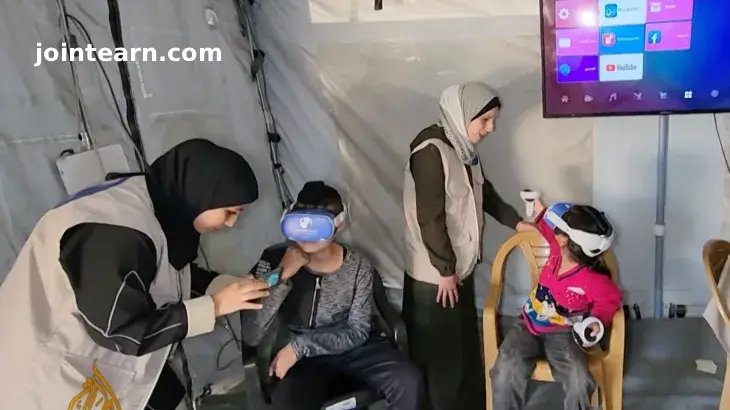
In the war-torn Gaza Strip, virtual reality (VR) technology is providing a rare escape for Palestinian children wounded and traumatized by more than two years of relentless conflict. In makeshift VR tents, injured children are transported to immersive digital worlds where the sounds of drones, destruction, and fear temporarily vanish.
A Brief Respite from War
Salah Abu Rukba, a young boy with a head injury, described the experience: “When I put on the headset, I forget the injury. I feel comfort as I forget the destruction, the war, and even the sound of the drones disappears.”
The VR sessions allow children to experience moments of normalcy, helping them cope with both physical pain and the psychological trauma caused by the prolonged conflict in Gaza.
Gaza MedTech Initiative
The project is run by Gaza MedTech, founded by Palestinian innovator Mosab Ali, who initially developed VR therapy to comfort his injured son. Tragically, Ali was later killed in an Israeli attack, but his initiative continues to provide relief to Gaza’s youngest victims.
Lama Abu Dalal, communication officer at Gaza MedTech, explained that the children constantly face reminders of the war in their daily lives. The VR headset allows them to momentarily reclaim a sense of childhood, offering emotional and psychological respite.
Evidence of VR’s Therapeutic Impact
Studies have demonstrated that VR therapy can be effective in treating post-traumatic stress disorder (PTSD) and other mental health disorders. In Gaza, however, sustaining the program is challenging due to the Israeli blockade, which limits the entry of spare parts and essential equipment.
Since a ceasefire went into effect on October 10, 2025, Israel has slightly increased humanitarian aid access, but restrictions remain, leaving psychological and medical support insufficient for the region’s urgent needs. Gaza authorities report 738 ceasefire violations by Israel since the agreement, further heightening stress and insecurity.
The Humanitarian and Mental Health Crisis
The United Nations estimates that over 90% of children in Gaza display severe signs of stress due to the ongoing violence. Long-term interventions will be necessary to help them recover from the psychological impact of the conflict.
UN bodies, including the World Health Organization (WHO) and the Office for the Coordination of Humanitarian Affairs (OCHA), as well as independent experts, have called for unimpeded access to Gaza for medical and psychological support, emphasizing that children’s mental health is at serious risk.
Conclusion
Virtual reality offers a glimmer of hope for Gaza’s war-affected children, providing brief moments of normalcy and relief amid the devastation. While the technology cannot replace long-term support, it demonstrates an innovative approach to psychological care for children in conflict zones, highlighting the urgent need for unrestricted humanitarian assistance.


Leave a Reply