Washington, DC – Thailand and Cambodia have reportedly agreed to resume a ceasefire along their disputed border, according to US President Donald Trump, who announced the development on social media following calls with both nations’ leaders. The announcement comes after a deadly five-day flare-up of cross-border fighting that has killed at least 20 people and displaced roughly half a million civilians on both sides.
President Trump stated on Truth Social that Thailand and Cambodia have agreed “to CEASE all shooting effective this evening, and go back to the original Peace Accord made with me, and them, with the help of the Great Prime Minister of Malaysia, Anwar Ibrahim.”
Background of the Border Conflict
The Thailand-Cambodia border dispute stems from a colonial-era map drawn in 1907 during French rule over Cambodia. Thailand has long contested parts of the demarcation, claiming inaccuracies in the map. Tensions have been further inflamed by a 1962 International Court of Justice ruling awarding sovereignty over the disputed territory to Cambodia, a decision that continues to provoke nationalist sentiment in Thailand.
The latest escalation began when a Thai engineering team was allegedly fired upon by Cambodian troops. In response, Thailand launched air strikes, escalating the violence over the week. Both countries have engaged in a propaganda war, blaming each other for reigniting the long-standing territorial conflict along the roughly 800-kilometre (500-mile) border.
Ceasefire History and Trump’s Involvement
The original ceasefire between Thailand and Cambodia was brokered in July 2025 by Malaysia and facilitated through pressure from President Trump, who reportedly threatened to withhold trade privileges unless both sides agreed. A formal meeting in October, attended by Trump and Malaysian Prime Minister Anwar Ibrahim, further codified the ceasefire.
However, the agreement broke down in November after Thai soldiers were wounded by landmines near the border. Since then, sporadic clashes and heightened tensions have persisted, complicating the implementation of a lasting peace.
Reactions and Verification
Neither Thailand nor Cambodia have independently confirmed the resumption of the ceasefire. Thai Prime Minister Anutin Charnvirakul told reporters that Cambodia bears the responsibility to enforce the agreement and said Trump had voiced support for a ceasefire during their call.
Reporting from Washington, Al Jazeera’s Kimberly Halkett noted that Trump is seeking to present himself as a global peacemaker through this intervention. “The US president has invested himself personally in all of this. He is keen to see this truce that was brokered in July resume,” Halkett said, adding that Trump has repeatedly highlighted his role in brokering international deals.
Humanitarian Impact
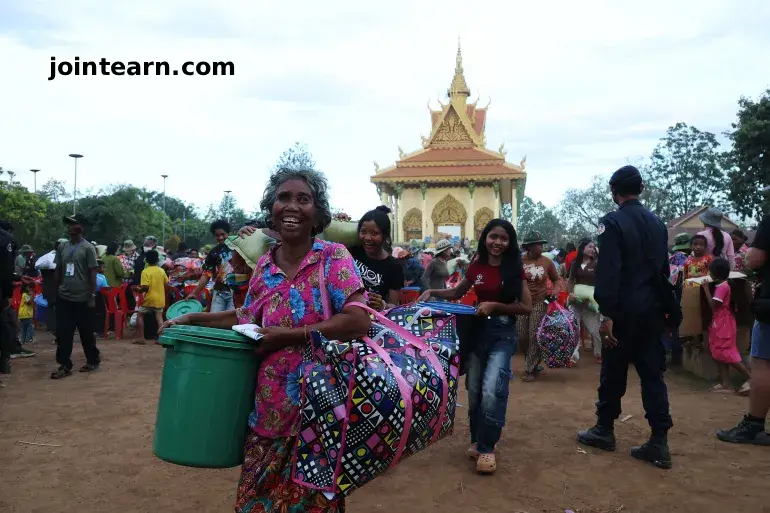
The fighting has already forced hundreds of thousands of civilians into refugee camps along the border. Images from Batthkav refugee camp in Cambodia show families carrying supplies and seeking shelter amid the chaos. Humanitarian agencies warn that continued clashes could exacerbate displacement, food shortages, and injuries among civilians.
Observers say that any renewed ceasefire will require careful monitoring and verification to prevent a repeat of previous violations. Both Thailand and Cambodia face pressure from regional partners and international organizations to uphold peace agreements and protect civilians along the border.
Key Takeaways
- Deadly clashes between Thailand and Cambodia have killed at least 20 people and displaced around 500,000.
- Trump announced the resumption of a ceasefire, but neither country has independently verified the claim.
- The border dispute dates back to colonial-era maps and a controversial 1962 ICJ ruling.
- Humanitarian conditions remain critical, with tens of thousands of civilians seeking shelter and aid.
- Observers emphasize the importance of monitoring to ensure any new ceasefire is enforced.


Leave a Reply