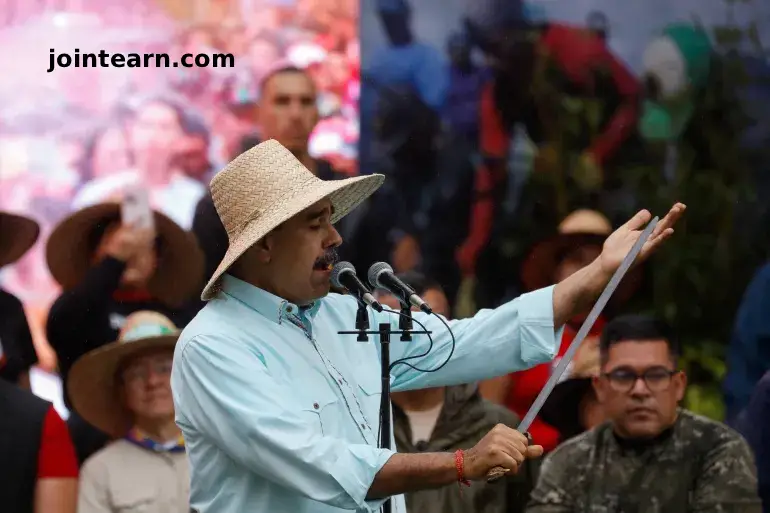
US Targets Maduro Family and Oil Network
The United States government has imposed fresh sanctions on three nephews by marriage of Venezuelan President Nicolas Maduro and six Venezuela-flagged oil tankers and shipping firms linked to them. The move comes as part of US President Donald Trump’s strategy to increase pressure on Caracas and weaken Maduro’s regime.
The new sanctions were announced by the US Treasury Department, targeting Franqui Flores, Carlos Flores, and Efrain Campo, along with Panamanian businessman Ramon Carretero Napolitano. The measures follow a recent US seizure of the oil tanker Skipper off Venezuela’s coast, marking a continuation of Washington’s aggressive stance toward Maduro’s government.
How the Sanctions Work
The sanctions effectively block access to US-held property and financial assets for targeted individuals. Any transactions with sanctioned entities by US citizens or companies are prohibited, with severe enforcement penalties.
The restrictions also extend to any entities owned 50% or more by sanctioned individuals, even if the company is not explicitly named, aiming to dismantle the network facilitating Venezuelan oil exports.
Targeted “Narco-Nephews” and Oil Operators
The sanctions focus on relatives of Maduro’s wife, Cilia Flores, known as the “narco-nephews.” Two of them had been convicted of drug trafficking in the US in 2016 but were granted clemency by President Biden in 2022.
Additionally, Carlos Erik Malpica Flores, a former national treasurer and PDVSA executive, was added back to the sanctions list. The six oil vessels sanctioned include:
- White Crane
- Kiara M
- H Constance
- Lattafa
- Tamia
- Monique
Treasury Secretary Scott Bessent stated that the sanctions are intended to cut off funding for what the US calls a “corrupt narco-terrorist regime.”
Trump Administration’s Rationale
The Trump administration claims the Maduro family oversees drug trafficking operations in Venezuela, and that the sanctions are a direct repudiation of Biden-era diplomatic efforts.
Trump’s policy signals a return to a “maximum pressure” strategy, aiming to dismantle the financial and operational networks that sustain Maduro. The move also seeks to weaken Venezuela’s petro-state economy, where oil accounts for up to 95% of export revenues.
US Oil Companies Still Active in Venezuela
Despite sanctions, Chevron remains the only major US oil company permitted to operate in Venezuela. Chevron secured a licence from the Biden administration in 2022, allowing it to continue operations outside US sanctions.
The firm partners with state-owned PDVSA, accounting for approximately one-fifth of Venezuela’s official oil production. Production has increased from 128,000 barrels per day (bpd) in October 2025 to 150,000 bpd in November, reflecting Chevron’s ongoing operations under strict licensing agreements.
Background: US Sanctions on Venezuela
US sanctions on Venezuela date back to 2017, targeting financial networks, PDVSA, and associated oil exports. These measures have been expanded to include:
- Blocking property and assets of Venezuelan officials and business leaders.
- Sectoral restrictions on PDVSA and related oil exports.
- Visa restrictions and travel bans for Venezuelan leaders accused of undermining democracy or committing human rights violations.
- Sanctions on the Cartel de los Soles, labelled as a terrorist organization in November 2025.
These measures have contributed to a collapse of Venezuela’s economy, reducing oil production from 3.6 million bpd in the late 1990s to under 1 million bpd, triggering hyperinflation and debt defaults.
Methods Venezuela Uses to Evade Sanctions
Despite US restrictions, Venezuela under Maduro has employed a variety of tactics to circumvent sanctions:
- Operating a shadow fleet of older oil tankers with falsified tracking and switched flags.
- Mislabeling oil shipments to disguise Venezuelan crude.
- Using transshipment at sea to move oil between sanctioned and non-sanctioned vessels.
- Creating shell companies in tax havens to obscure ownership.
- Using cryptocurrency transactions to access foreign currency.
The recent seizure of the Skipper tanker is part of the US effort to disrupt these illicit networks.


Leave a Reply