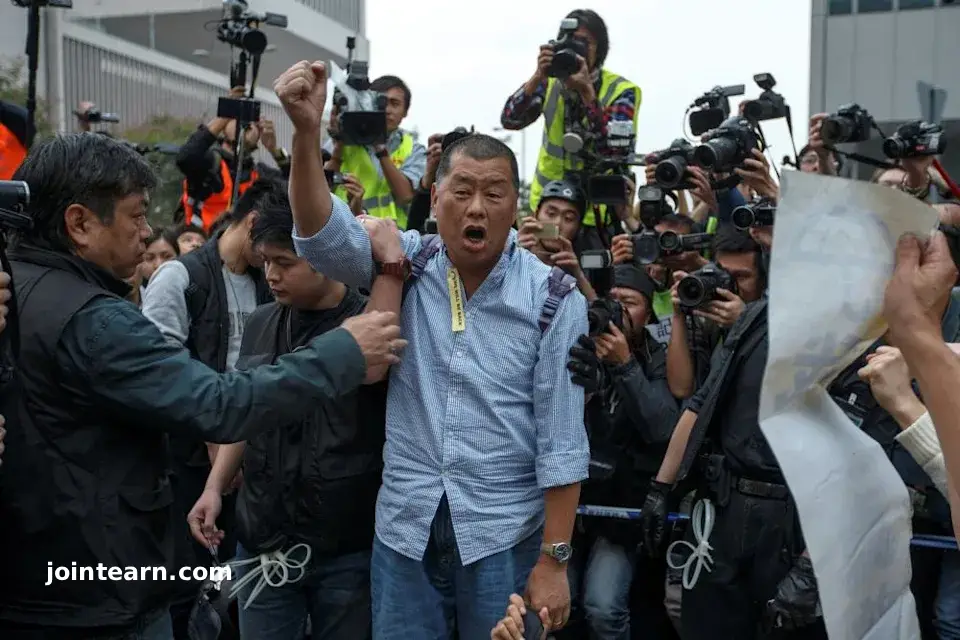
Hong Kong – Jimmy Lai, the 78-year-old founder of Apple Daily and lifelong pro-democracy activist, was convicted on national security charges on December 15, 2025, marking the latest chapter in a life deeply intertwined with Hong Kong’s fight for democracy.
The verdict, widely anticipated, concludes a landmark trial that highlighted the city’s shrinking political freedoms and Beijing’s crackdown on dissent. Lai, long a thorn in the side of Chinese authorities, faces up to life imprisonment for his role in alleged conspiracies to collude with foreign powers and publish material deemed seditious under Hong Kong’s National Security Law (NSL).
“The trajectory of his life reflects the history of Hong Kong itself,” said Kevin Yam, an Australian-Hong Kong lawyer.
From Child Labourer to Billionaire Media Tycoon
Lai’s life was a classic rags-to-riches story. Born in China, he moved to Hong Kong at the age of 12, working as a child laborer in garment factories. Over time, he built a retail empire with Giordano, before launching Next Magazine and eventually founding Apple Daily, a media powerhouse that earned him the nickname “Rupert Murdoch of Asia.”
His early business moves were driven by ambition and curiosity, not politics. However, the 1989 Tiananmen Square massacre in Beijing radicalized him politically, spurring his transition from businessman to activist. Lai’s media outlets became known for fearless investigations, pro-democracy reporting, and sharp criticism of Chinese leadership.
Apple Daily and Activism
Apple Daily became a central voice for Hong Kong’s pro-democracy movement, covering stories that challenged both local and mainland Chinese authorities. Lai personally wrote provocative editorials, famously criticizing Chinese Premier Li Peng and supporting major protest movements, including Occupy Central (2014) and the 2019 anti-extradition bill protests.
His activism drew intense backlash. He was physically attacked, his businesses and homes were raided, and he was subjected to surveillance and harassment. Despite repeated warnings, he refused to leave Hong Kong, stating he wanted to support his journalists and fight for the city he considered home.
“For them, I am a troublemaker… It is hard for them not to clamp down on me and silence me,” Lai once told a biographer.
National Security Trial and Conviction
Lai’s trial, spanning nearly two years, involved delays, legal challenges, and government interventions. He pleaded not guilty to three charges: one of conspiracy to publish seditious material and two of conspiracy to collude with foreign powers. Judges ruled that he harbored “hatred and resentment” toward China and sought the Communist Party’s downfall, even at the potential cost to Hong Kong and mainland citizens.
His prosecution included references to his contacts with US politicians, including former President Donald Trump, Vice President Mike Pence, former Secretary of State Mike Pompeo, and House Speaker Nancy Pelosi. Lai’s supporters argue these connections were purely in support of democracy and human rights, not foreign interference.
Health Concerns and Family Advocacy
Lai has been incarcerated since 2020, either on remand or serving sentences for protest-related offenses. His family has raised alarms about his declining health, including significant weight loss and complications related to diabetes. Authorities say he has received adequate care, though he has reportedly spent long periods in solitary confinement.
Lai’s children, especially Sebastien Lai, have campaigned internationally for his release, criticizing the UK government for not leveraging its influence more strongly.
Legacy: Hong Kong’s Fall and Resistance
The closure of Apple Daily in 2021, after police raids and arrests of top executives, was a watershed moment for Hong Kong’s press freedom. Despite its tabloid style, the newspaper was a symbol of independent reporting, with Hongkongers buying over a million copies of its final edition.
Lai’s life mirrors the arc of Hong Kong’s democratic aspirations: rising hope, resistance to authoritarianism, and a harsh crackdown. Friends and observers note that his commitment to activism, even at the cost of personal safety, defines his legacy.
“He’s someone who’s done everything he can… I don’t think anybody looking at his life would think he could have done more,” said Sebastien Lai.
As Jimmy Lai faces potential life imprisonment, his story continues to highlight the shrinking space for political freedoms in Hong Kong and the enduring courage of its pro-democracy advocates.


Leave a Reply