Hong Kong – December 15, 2025: Jimmy Lai, the prominent Hong Kong pro-democracy media tycoon and founder of Apple Daily, now faces life imprisonment following a conviction on multiple national security and sedition charges. This ruling marks one of the most significant and closely watched judicial decisions since Hong Kong returned to Chinese sovereignty in 1997.
Rights groups and international observers have condemned the verdict, calling it a “sham conviction” and a blatant attack on press freedom. Britain, highlighting Lai’s status as a British citizen, reaffirmed its stance that the prosecution was “politically motivated” and demanded his immediate release. The timing of the conviction is particularly sensitive, occurring just weeks ahead of an anticipated visit to Beijing by UK Prime Minister Keir Starmer.
The Trial and Charges Against Jimmy Lai
Jimmy Lai, now 78, has been imprisoned since late 2020, serving multiple sentences linked to pro-democracy protests that cumulatively approach a decade. Monday’s conviction came after a highly controversial trial lasting over two years. Judges described Lai as a “mastermind” orchestrating conspiracies intended to destabilize the Chinese government.
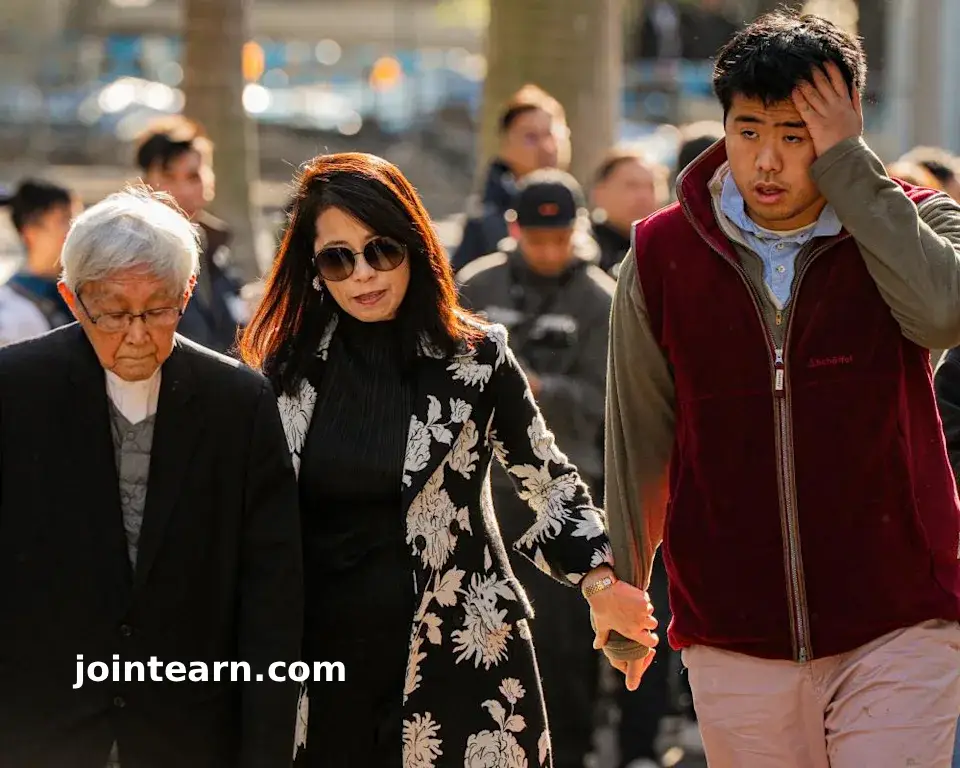
Lai appeared in the West Kowloon District Court, flanked by armed guards, wearing a grey jacket. His family, including wife Teresa Lai and son Lai Shun-yan, were present. Supporters and onlookers filled the main courtroom and several overflow rooms to witness the historic verdict.
The charges against Lai included:
- Conspiracy to publish seditious publications
- Two counts of foreign collusion, under Hong Kong’s 2020 national security law (NSL) and the British colonial-era sedition law
Prosecutors accused Lai of using Apple Daily and international political connections to lobby for sanctions and punitive actions against Chinese and Hong Kong authorities. Despite his not-guilty pleas, judges concluded in an 855-page ruling that the evidence was “clear” and compelling.
High Court Judge Esther Toh stated, “There is no doubt in our mind that the first defendant never wavered in his intention to destabilize the governance of the CCP, and despite the enactment of the national security law, he was intent on continuing, though in a less explicit way.”
Lai has the option to appeal, with the next court date set for January 12, 2026.
International and Local Reactions to the Verdict
The ruling drew immediate reactions from both supporters and critics:
- Hong Kong authorities, including Chief Executive John Lee and Security Police Chief Steve Li, hailed the verdict as the result of a “professional” judicial process. Beijing endorsed Hong Kong authorities’ actions, emphasizing support for efforts “punishing criminal acts that endanger national security.”
- Rights and press organizations condemned the verdict. The Committee to Protect Journalists called it a “sham conviction” and a “disgraceful act of persecution,” emphasizing the erosion of press freedoms guaranteed under Hong Kong’s Basic Law.
- Amnesty International and Human Rights Watch described the conviction as cruel, predictable, yet deeply troubling. Elaine Pearson of HRW said, “The Chinese government’s mistreatment of Jimmy Lai aims to silence everyone who dares to criticize the Communist Party.”
- Taiwan’s Mainland Affairs Council also voiced concern, stating that the ruling symbolized the systematic erosion of Hong Kong’s freedoms, democracy, and judicial independence.
Apple Daily and Associated Entities Also Found Guilty
Alongside Jimmy Lai, three entities associated with Apple Daily—Apple Daily Limited, Apple Daily Printing Limited, and AD Internet Limited—were found guilty of the two foreign collusion charges. Lai consistently maintained that he never sought to influence foreign policy, only hoping that international pressure might safeguard Hong Kong’s freedoms.
Critics of the Hong Kong government note that the national security law has sometimes been applied retrospectively, citing evidence from events before the law’s enactment as part of Lai’s prosecution. The court highlighted that Lai had harbored longstanding resentment toward the Chinese Communist Party, and that his intentions to solicit U.S. leverage against China predated the NSL.
Security and Public Presence at West Kowloon Court
On the day of the verdict, West Kowloon District Court was heavily guarded, with both uniformed and plainclothes officers present. Media coverage was extensive, though fewer members of the public attended compared to previous high-profile trials, such as the Hong Kong 47 case.
Supporters, some arriving the night before, displayed symbolic gestures of solidarity, including holding bright red apples in honor of Apple Daily. Meanwhile, allegations circulated that pro-Beijing groups had reserved seats to limit the attendance of Lai supporters and international observers.
Concerns Over Jimmy Lai’s Health
Throughout the trial, concerns about Lai’s health were repeatedly raised by his family and advocates. He has reportedly endured solitary confinement and measures aimed at demoralization. Hong Kong authorities have rejected these claims. Observers warn that the risk to his health increases with prolonged imprisonment, emphasizing the human cost of the political and judicial processes.
Global Implications of Jimmy Lai’s Conviction
Lai’s conviction is widely seen as emblematic of Hong Kong’s shrinking democratic space and the tightening grip of Beijing over the city. Advocates for press freedom argue that the trial and its outcome reflect a fundamental shift in Hong Kong’s common-law tradition, reinforcing fears of censorship and political persecution.
The international community continues to scrutinize the case, framing it as a pivotal moment for press freedom, democracy, and legal independence in Hong Kong.


Leave a Reply