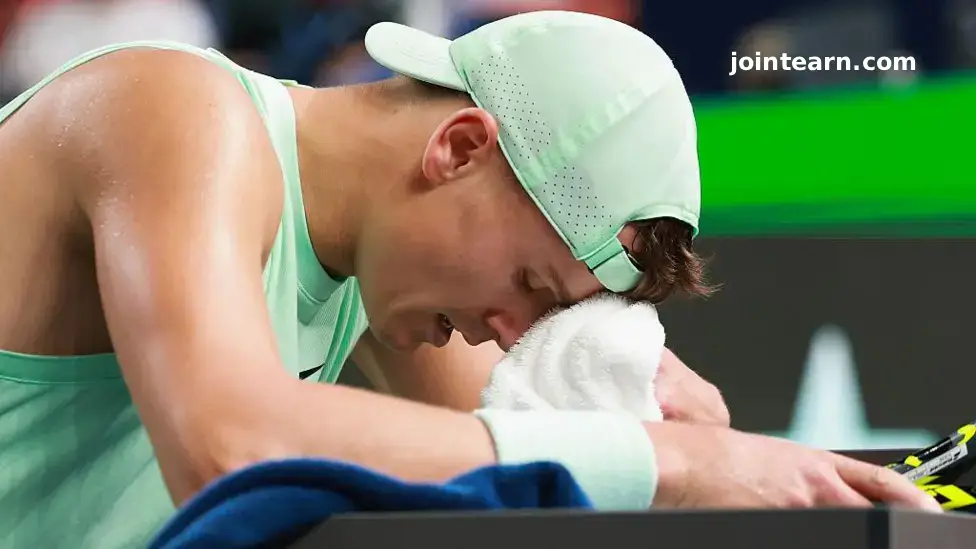
The ATP (Association of Tennis Professionals) has announced a new extreme heat rule set to take effect in the 2026 season, aimed at protecting players competing under high-temperature conditions. The updated policy allows players in best-of-three sets singles matches to take a 10-minute cooling break, a move similar to the system the WTA has used for over 30 years to safeguard players on the women’s tour.
New Heat Policy Following Player Safety Concerns
The decision comes after multiple incidents where players struggled in extreme conditions. At the Shanghai Masters in October, daytime temperatures reached 34°C with 80% humidity, forcing world number 15 Holger Rune to seek medical treatment during his third-round match. Rune later reportedly asked officials, “Do you want a player to die on court?” highlighting the urgent need for player protections.
In a statement, the ATP said the new policy is designed for “strengthening protections for players competing in extreme conditions.”
How the Rule Works
The ATP’s extreme heat policy is based on the Wet Bulb Globe Temperature (WBGT), a standard metric for measuring heat stress in direct sunlight. The WBGT accounts for temperature, humidity, wind speed, sun angle, and cloud cover, ensuring an accurate assessment of extreme playing conditions.
Under the new rule:
- If WBGT reaches 30.1°C or higher during the first two sets of a best-of-three match, either player can request a 10-minute cooling break.
- During the break, players may hydrate, change clothing, shower, and receive coaching under supervision from ATP medical staff.
- Play will be suspended entirely if the WBGT exceeds 32.2°C, prioritizing player health above all else.
Player Safety and Tournament Management
The ATP emphasized that the heat rule is intended to provide a structured, medically supported approach to extreme temperatures. It aims to safeguard player health while improving conditions for spectators, officials, ball persons, and tournament staff.
This change comes after repeated criticism of harsh conditions at recent tournaments. Players across both tours have reported struggling with extreme heat, including:
- Emma Raducanu retiring from her first-round match due to dizziness.
- Novak Djokovic describing tournament conditions as “brutal.”
- Giovanni Mpetshi Perricard saying he felt like he was “dying on the court.”
- Jelena Ostapenko revealing she suffered heat stroke during a match.
The WTA heat rule, in place since 1992, has been widely adopted and used at tournaments throughout the year, ensuring women players are protected from heat-related risks. The ATP’s new rule brings a similar level of protection to the men’s tour for the first time.
Why the ATP Heat Rule Matters
With global temperatures rising and more tournaments taking place in hot climates, the introduction of a formal heat break policy is seen as a critical step in player welfare. Fans and analysts have welcomed the rule, noting that it not only protects athletes but also preserves the quality of matches by preventing exhaustion-related errors.
Players, coaches, and tournament officials can now plan with the assurance that extreme heat will be managed systematically, creating a safer and more competitive environment for everyone involved in professional tennis.


Leave a Reply