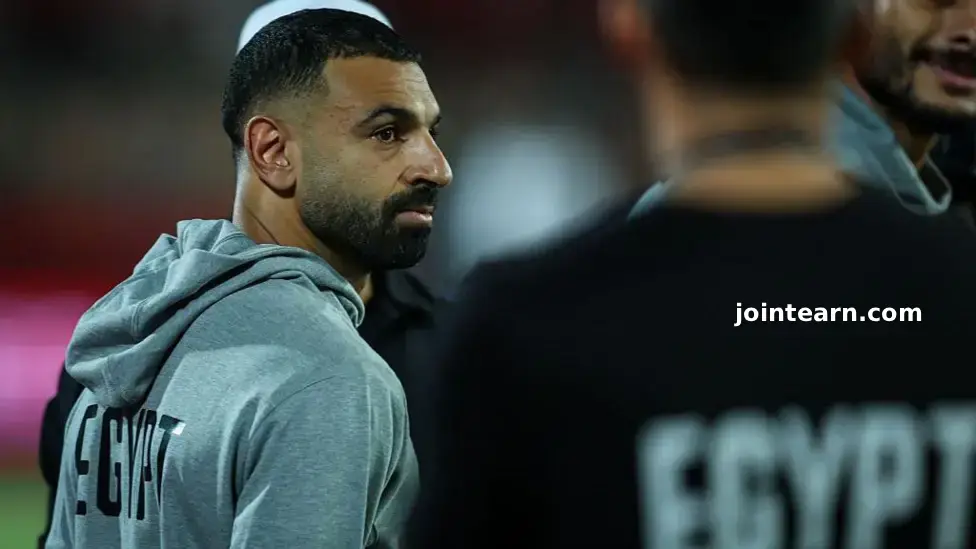
In Cairo, the first thing that overwhelms you is not the traffic or the noise, but the sheer scale of humanity. Egypt is home to roughly 120 million people, with more than 23 million living in the capital alone. Against that backdrop, it becomes easier to understand why Mohamed Salah’s recent comments about Liverpool sparked such an intense and emotional reaction across the country.
When Salah claimed in a televised interview that Liverpool had effectively “thrown him under the bus,” the response in Egypt was immediate and explosive. What may have been viewed in England as a controversial airing of grievances was, back home, interpreted as a moment of public disrespect toward a national icon.
A Nation Takes It Personally
Former Egypt assistant coach Diaa El-Sayed, who has known Salah since his teenage years, described the reaction as unprecedented.
“This interview felt like a revolution in Egypt,” he said. “Almost everyone here stands with Salah. People also saw how Liverpool supporters reacted at Anfield, and that mattered.”
While British pundits and former players criticised Salah for speaking out, in Egypt the narrative was entirely different. To many Egyptians, Salah is not just a footballer—he is a symbol of national pride and global recognition.
Before his rise at Liverpool, English football had limited reach among Egyptian fans. Today, Salah’s presence has transformed viewing habits, allegiances, and even political symbolism.
More Than a Footballer: Egypt’s “Fourth Pyramid”
Salah’s influence in Egypt extends far beyond the pitch. During the 2018 presidential election, over a million voters famously crossed out official candidates and wrote Salah’s name instead. The gesture was symbolic, but it illustrated the depth of his cultural importance.
In Cairo, he is often referred to as the “Fourth Pyramid”—a living monument alongside Egypt’s ancient wonders.
In Ramses Square, a bustling transport hub that Salah once passed through daily during exhausting journeys to training as a teenager, disbelief turned to anger when news broke that he had been benched for multiple matches and omitted from Liverpool’s Champions League squad for a key fixture.
“When Liverpool played in Milan, all of Egypt supported Inter,” said former Egyptian FA spokesperson Osama Ismail. “That tells you everything.”
“He Is Our Son”
As Egypt’s national team prepared for the Africa Cup of Nations (Afcon), the focus shifted from anger to unity. At the Cairo International Stadium, where Egypt defeated Nigeria in a friendly, the prevailing mood was one of solidarity.
Egypt’s Minister of Sports personally welcomed Salah upon his return, reinforcing the sense that this was not merely a football issue but a national one.
“It felt like humiliation for one of our family,” explained Cairo-based journalist Ahmed Gamal Ali. “When one of our own is hurting, the reaction is instinctive. People didn’t stop to judge whether he was right or wrong—they supported him.”
Inside the national team camp, staff and players insist Salah remains the consummate professional. Coaches describe him as driven, focused, and determined to deliver success for Egypt, regardless of distractions at club level.
Afcon Ambition Still Burns Brightly
Despite his extraordinary club career, one major achievement remains missing from Salah’s résumé: an Africa Cup of Nations title. He has reached the final twice, only to fall short, and lifting the trophy remains a deeply personal ambition.
Winning Afcon with Egypt would cement his legacy at home in a way few other achievements could. It would also mirror the success of his childhood hero Mohamed Aboutrika, who won the tournament twice and inspired Salah’s early career.
Salah believes competing at the highest level in the Premier League gives him the best chance of reaching peak performance for international tournaments. For now, his focus is firmly on leading Egypt in Morocco.
What Next for Salah and Liverpool?
While Salah is away with the national team, discussions with Liverpool are expected to continue through his representatives. Publicly, the club has downplayed tensions, insisting there is no unresolved issue regarding team selection.
However, there is a growing sense that the long-standing relationship between Salah and Liverpool may be approaching a turning point. Neither side is believed to be seeking an immediate separation, but a move at the end of the season could suit all parties.
Interest from clubs in Saudi Arabia remains strong, and with Salah’s contract running until 2027, Liverpool face important decisions about their future plans.
Yet even if he were to leave Anfield, many believe Salah’s bond with the city would endure. Friends close to the player say he and his family love life in Britain and could one day return after his playing career ends.
Still Adored, Still Driven
Back in Cairo, Salah’s image is everywhere—on billboards, television adverts, and social media feeds. One recent commercial features his daughters asking why he still trains so hard after winning so much. His answer is simple and revealing: “Not yet. This is Egypt.”
At Anfield, the reception he received upon returning to action suggested that Liverpool supporters still hold him in the highest regard. In Egypt, that devotion has never wavered.
“Salah always wants to win,” said one fan outside the stadium. “Now he has even more motivation to prove he’s still one of the best. For us, he always will be.”
Egypt may not enter Afcon as favourites, but with Mohamed Salah leading the way, belief runs deep.


Leave a Reply