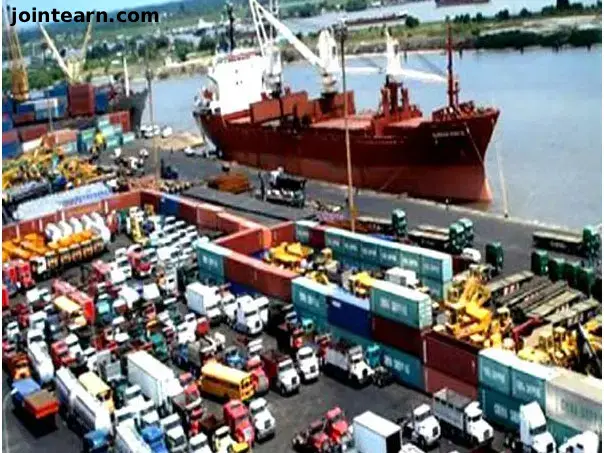
The Nigerian Ports Authority (NPA) has reported a 1,085% increase in export-laden containers, contributing to a 16.2% rise in overall cargo throughput to 33.52 million metric tonnes in the third quarter (Q3) of 2025, up from 28.84 million tonnes in the same period last year.
Operational data from NPA highlighted strong growth in container operations, which were a major driver of the improved performance. Total container traffic rose 18.9% to 546,931 Twenty-foot Equivalent Units (TEUs) compared with 460,038 TEUs in Q3 2024.
- Import-laden containers increased 33.1% to 268,713 TEUs, up from 201,839 TEUs a year earlier.
- Export-laden containers surged to 69,039 TEUs, from just 5,812 TEUs in Q3 2024.
The growth in export containers led to a 21.5% reduction in empty container movements, indicating better balance between imports and exports and stronger momentum in non-oil export activities.
Vessel traffic also rose during the quarter, with 1,074 ship calls, up 8.4% from 991 vessels in Q3 2024. Total Gross Registered Tonnage (GRT) increased 18% to 42.64 million from 36.13 million, reflecting larger vessel sizes calling Nigerian ports.
By port location, Tin Can Island Port accounted for the largest share of vessel calls at 22.7%, closely followed by Apapa Port at 22.2%. Onne and Lekki ports contributed 18.9% and 18.4%, respectively, while Calabar Port recorded 2.1%. In terms of vessel size, Lekki Port received the largest ships, averaging 57,244 GRT, followed by Onne (51,276 GRT), Apapa (35,556 GRT), Tin Can Island (34,400 GRT), and Delta ports (18,677 GRT).
A breakdown of cargo throughput by port revealed that Lekki Port drove 46.8% of total cargo handled in Q3 2025, followed by Onne (17%), Apapa (15.1%), and Tin Can Island (10%). Calabar Port recorded the lowest share.
By cargo type, liquid bulk accounted for 53.8%, containerized cargo 26.6%, dry bulk 11.3%, and other general cargo 8.2%.
NPA Managing Director, Abubakar Dantsoho, attributed the strong performance to the Federal Government’s export-driven economic reforms and growing investor confidence. He highlighted that improvements in operational efficiency, port modernization, export processing terminals, and digital platforms like the electronic truck call-up system have reduced congestion, improved turnaround time, and positioned Nigerian ports as key players in regional trade.
Analysts say the Q3 figures underscore the maritime sector’s rising contribution to Nigeria’s non-oil export growth, aligning with the nation’s broader economic diversification agenda.


Leave a Reply