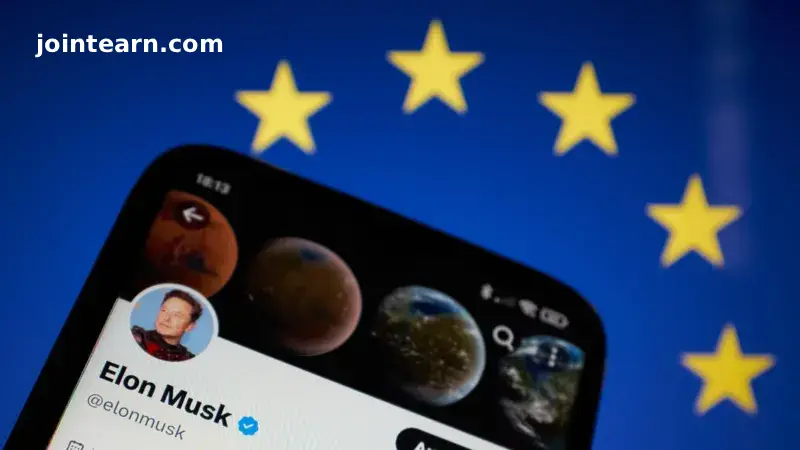
Elon Musk’s social media platform X has banned the European Commission from running ads on its site, just days after the EU imposed a €120 million (£105 million) fine over the platform’s controversial blue tick verification system.
The dispute marks another high-profile clash between Elon Musk’s X and international regulators, following fines and legal challenges in multiple countries regarding platform policies, transparency, and user safety.
Background: EU Digital Services Act Fine
On 5 December 2025, the European Union’s regulatory body issued a €120 million fine to X under the Digital Services Act, the first such penalty under the law. The fine targeted X’s blue check verification system, which the EU deemed “deceptive” because the platform was allegedly failing to verify user identities meaningfully.
The European Commission warned that the lack of verification could expose users to scams, impersonation fraud, and manipulation by malicious actors, while also criticizing X for failing to provide transparency in advertising and restricting researcher access to public platform data.
Following the fine, the platform was given 60 days to respond before facing potential additional penalties.
X Blocks European Commission Ads
Shortly after the fine, X effectively banned the European Commission from advertising on its platform. Nikita Bier, a senior official at X, accused the EU regulator of trying to “take advantage” of a system exploit to promote a post about the fine.
“It seems you believe that the rules should not apply to your account. Your ad account has been terminated,” Bier said, highlighting the platform’s firm stance against what it considered misuse.
The European Commission responded by insisting that it “always uses all social media platforms in good faith” and was simply leveraging tools available to corporate accounts.
Musk Responds to the Fine
Elon Musk reacted on X, calling the EU “should be abolished” and retweeting another user comparing the Commission’s action to fascism. The move drew attention from U.S. political figures, with Secretary of State Marco Rubio and the Federal Communications Commission (FCC) claiming that the EU was unfairly censoring U.S.-based companies. Rubio emphasized that “the days of censoring Americans online are over.”
How the Dispute Started
The controversy reportedly began when Bier noticed the Commission activating a rarely-used ad account to promote a post about the fine. X claimed the Commission’s post contained a link that misled users, tricking them into thinking it was a video and artificially increasing its reach.
“This exploit had never been abused like this and has now been removed,” Bier said.
Ad accounts on X are separate from user profiles and are primarily used by organizations to run promoted posts and analyze paid advertising campaigns.
Global Regulatory Tensions
This incident is the latest in a series of disputes between X and international regulators:
- Brazil (2024): Brazil’s Supreme Court lifted a ban on X after the platform paid 28 million reais ($5.1 million; £3.8 million) and blocked accounts accused of spreading misinformation.
- Australia (2023): The Australian internet safety watchdog fined X A$610,000 ($386,000; £317,360) for failing to cooperate with a probe into anti-child abuse measures.
These past clashes underscore ongoing concerns over platform accountability, user safety, and regulatory compliance for Musk’s global social media network.
What’s Next for X and the EU
X’s refusal to allow the European Commission to advertise adds a new chapter to the ongoing tension between social media companies and government regulators worldwide. With the 60-day deadline for compliance looming, analysts predict further legal and political debates could emerge if X fails to meet EU requirements regarding verification, transparency, and researcher access.
For now, Musk continues to position X as a platform resistant to regulatory oversight, igniting both political and public discussion about the limits of corporate control and government regulation in the digital age.


Leave a Reply