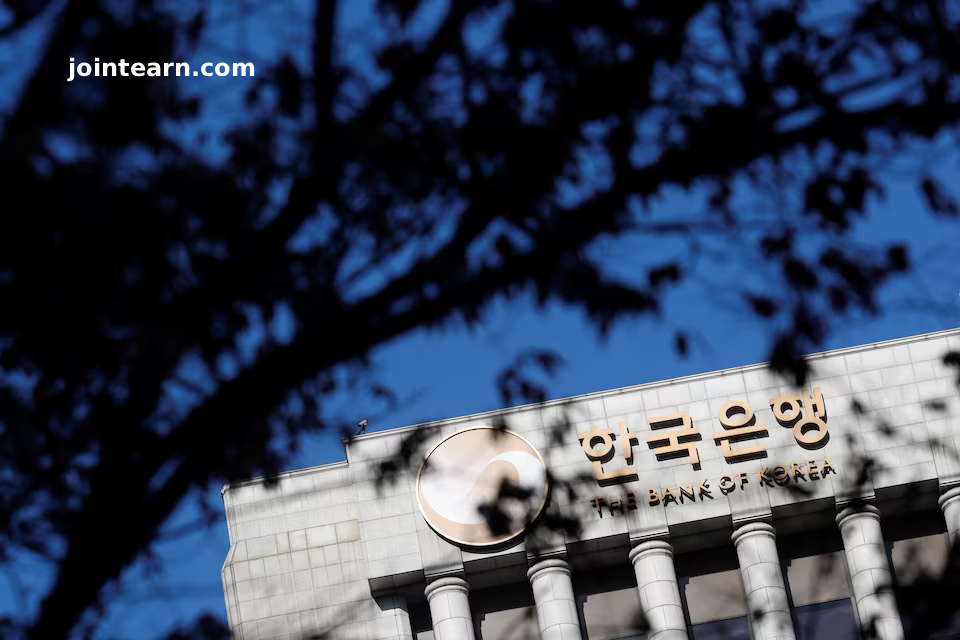
South Korea’s central bank cautioned on Wednesday that headline inflation in 2026 could surpass earlier forecasts if the won remains weak against the U.S. dollar. The warning comes as the Bank of Korea (BOK) monitors currency volatility and potential spillover effects on domestic prices.
Won’s Weakness Could Push Inflation Higher
In its biannual inflation report, the Bank of Korea noted that if the KRW/USD exchange rate stays near the current level of 1,470 won per dollar, consumer price growth could rise to the early-to-mid 2% range, slightly exceeding the central bank’s projections.
The BOK explained that a sustained high dollar-won rate could feed through to higher import prices, which in turn may increase domestic inflationary pressures.
Governor Rhee Chang-yong emphasized the importance of managing foreign exchange stability, particularly in light of a promised $350 billion investment fund under South Korea’s trade deal with the U.S. “Dollar outflows must be carefully monitored to avoid destabilizing the won,” he said.
Recent Inflation Trends
- Headline inflation in South Korea reached 2.4% in November 2025, staying above the BOK’s 2% target for the third consecutive month.
- The continued inflation overshoot has heightened the central bank’s sensitivity to currency movements, particularly against the backdrop of rising dollar-denominated investments by domestic institutions.
Governor Rhee also called on the National Pension Service (NPS), the world’s third-largest pension fund, to consider macroprudential factors more closely when investing overseas. He reiterated the need for currency hedging strategies to prevent large foreign equity purchases from further weakening the won.
National Pension Service and FX Market Impact
The NPS has been increasing overseas equity allocations, buying dollars in the onshore foreign exchange market. While this strategy diversifies its portfolio, it has contributed to downward pressure on the won. On Wednesday, the won fell 0.5% to 1,480.4 per dollar, approaching a 16-year low.
Analysts warn that sustained depreciation of the won could raise import costs, especially for energy and commodities, feeding into higher headline inflation in 2026.
Bank of Korea’s Policy Implications
The BOK faces a delicate balancing act:
- Containing inflationary pressures fueled by a weaker won.
- Ensuring financial stability amid rising dollar outflows.
- Supporting economic growth while avoiding excessive currency intervention.
Governor Rhee stressed that the central bank will remain vigilant in maintaining foreign exchange stability while carefully monitoring inflation trends.
Conclusion
A persistently weak won could push South Korea’s inflation above projections in 2026, according to the Bank of Korea. With headline inflation already above target and the NPS driving dollar demand through overseas investments, the central bank faces heightened pressure to manage currency volatility without stifling economic growth.


Leave a Reply