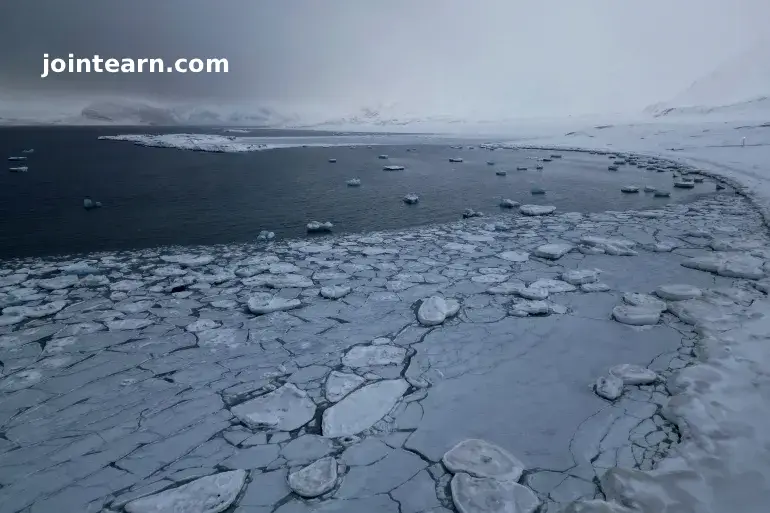
The Arctic is experiencing unprecedented warming, with 2025 officially recorded as the hottest year in the region since 1900. A new report highlights alarming temperature rises, shrinking ice, and declining snow cover, underscoring the urgent need for global climate action. Meanwhile, countries including the United States, Russia, and Norway are pressing ahead with oil and gas exploration in the Arctic, despite clear warnings from climate scientists.
Arctic Temperatures Hit Historic Highs
The 2025 Arctic Report Card, published by the U.S. National Oceanic and Atmospheric Administration (NOAA), reveals that surface air temperatures across the Arctic from October 2024 to September 2025 were the highest ever recorded in more than a century. Scientists describe the region as warming “far faster than the rest of the planet,” with some areas experiencing temperature increases multiple times the global average.
According to the report, last year’s record-high temperatures capped off a decade of extreme warming in the Arctic, demonstrating a clear trend of rising temperatures. The study was compiled by 112 authors from 13 countries, reflecting a broad international consensus on the severity of Arctic climate change.
Alarming Loss of Ice and Snow Cover
Satellite observations over the past 47 years show that the Arctic’s winter sea ice reached its lowest levels in March 2025, while summer snow cover in June has decreased by half compared to levels six decades ago. These losses are not only significant for the Arctic ecosystem but also have global implications, affecting weather patterns, sea levels, and ocean currents.
Experts warn that shrinking ice cover accelerates warming through the albedo effect, where less ice reflects less sunlight, further heating the planet. This feedback loop highlights the urgent need for climate mitigation strategies to protect the Arctic.
U.S. Government and Climate Reporting Challenges
The NOAA report marks the 20th annual Arctic Report Card and is part of the agency’s ongoing efforts to track climate changes. However, reporting on climate issues has faced political challenges. During a press conference, NOAA’s acting chief scientist, Steven Thur, emphasized the importance of documenting changes without explicitly linking them to fossil fuels or climate change, reflecting a cautious approach influenced by recent U.S. administrations.
The Sabin Center for Climate Change Law at Columbia University has documented instances where federal agencies removed climate-related content from official websites, including pages on wildfire vulnerability and broader climate assessments. These changes have raised concerns about transparency in public climate reporting.
Arctic Oil Drilling Plans Continue Amid Warming
Despite the alarming environmental trends, several nations are pursuing oil, gas, and mining projects in the Arctic. Russia, the United States, and Norway are expanding offshore drilling initiatives, capitalizing on newly accessible areas as ice melts. In October 2025, Kremlin investment envoy Kirill Dmitriev announced plans for a 112km rail link between Siberia and Alaska to facilitate joint energy projects involving Russia, China, and the U.S.
The Trump administration’s new offshore drilling program includes 21 five-year oil and gas leases from the Gulf of Alaska to the High Arctic. These initiatives are in stark contrast to public sentiment, as a 2024 poll by the United Nations Development Programme (UNDP) and Oxford University revealed that 80% of people worldwide support stronger climate action.
Legal and Ethical Accountability for Arctic Polluters
Countries and corporations continuing fossil fuel exploration in the Arctic are increasingly facing legal scrutiny. Recent rulings by the International Court of Justice (ICJ) emphasize the responsibility of polluters to mitigate environmental damage, highlighting that ignoring climate risks carries both ethical and legal consequences.
Environmentalists warn that Arctic drilling could accelerate global climate change, disrupt local ecosystems, and threaten indigenous communities dependent on the fragile Arctic environment.
Conclusion: Arctic Warming Signals Urgent Global Action
The 2025 Arctic Report Card underscores a sobering reality: the Arctic is warming at an unprecedented rate, ice and snow are rapidly disappearing, and human activities continue to exacerbate the crisis. Urgent action is needed to limit global warming, enforce environmental protections, and transition toward sustainable energy alternatives before the Arctic reaches irreversible tipping points.


Leave a Reply