Mass Protests Erupt Across Slovakia
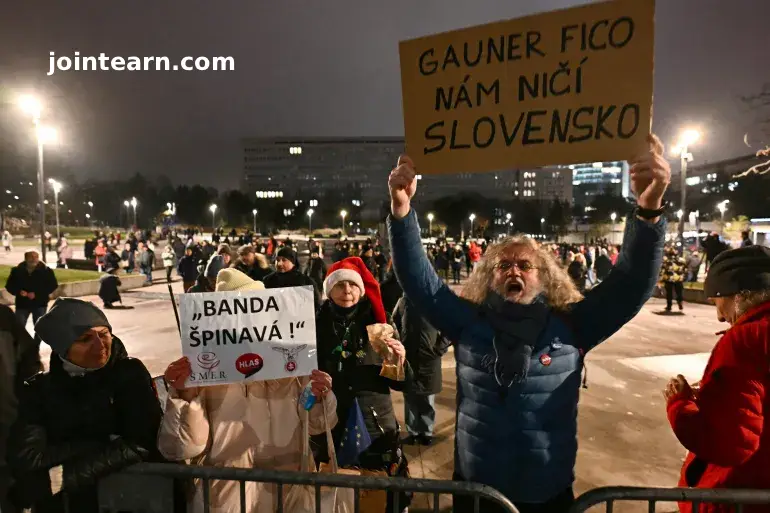
Thousands of Slovaks took to the streets on December 15, 2025, to protest controversial judicial reforms proposed by Prime Minister Robert Fico’s leftist-nationalist government. Demonstrations were held in the capital, Bratislava, as well as eight other cities, reflecting growing public discontent over changes that critics say undermine the rule of law in Slovakia.
Protesters called on President Peter Pellegrini, traditionally an ally of Fico, to veto the proposed reforms, which include dismantling the whistleblower protection agency and modifying the legal framework for crown witnesses.
Opposition Leaders Condemn Government Actions
The largest opposition party, Progressive Slovakia, organized the protests. Party leader Michal Simecka addressed the crowd in Bratislava, warning that the government had metaphorically “taken a chainsaw to the rule of law.”
“Slovakia is the only country where the government approves laws to make life easier for criminals and the mafia,” Simecka said, according to live video coverage.
Protesters waved Slovak and European Union flags while carrying placards with slogans like “Fico’s government is helping Mafia” and chanting “Enough of Fico!” and “Shame!”
Public Outcry Over Whistleblower and Legal Reforms
The judicial reforms have drawn particular criticism for abolishing the whistleblower protection office, which safeguarded individuals exposing corruption and misconduct. Additionally, the government has revised the penal code, affecting the treatment of crown witnesses in criminal cases.
Critics argue that these changes are part of a broader strategy to weaken accountability and favor political allies, echoing concerns raised in Hungary under Prime Minister Viktor Orban’s administration.
Fico Government Defends Reforms
Prime Minister Fico’s administration defended the measures, claiming that the whistleblower office had been politically manipulated and that the legal reforms were necessary to streamline governance.
Other changes under the Fico government include:
- Weakening criminal codes for financial crimes
- Revamping the public broadcaster
- Pushing constitutional changes asserting national sovereignty over select European Union laws
These moves have drawn scrutiny from the European Commission, which monitors adherence to EU legal standards and anti-corruption measures.
Historical Context of Protests in Slovakia
Fico’s government, which returned to power in 2023, has faced repeated public demonstrations, including large protests against a perceived pro-Russian foreign policy earlier this year. Tuesday’s rally is considered one of the largest protests since February 2025, underscoring persistent dissatisfaction with government policies.
Many Slovaks feel that these reforms threaten democratic institutions, transparency, and the fight against corruption, fueling fears of democratic backsliding in the country.
Voices from the Protests
Several demonstrators expressed frustration at the erosion of civic protections and the government’s perceived alignment with oligarchic interests. Signs reading “Gangster Fico destroys our Slovakia” and “For Christmas I wish to get a reason to be proud that I live here” captured the mood of disillusionment among citizens.
Protesters also highlighted concerns that these reforms could weaken Slovakia’s position within the European Union, and undermine public trust in judicial and governmental institutions.
Implications for Slovakia and the EU
The protests signal growing domestic and international concern over judicial independence in Slovakia. Analysts warn that continued reforms favoring political consolidation may trigger increased EU intervention, including:
- Monitoring compliance with EU legal and anti-corruption standards
- Potentially linking EU funding to democratic governance measures
- Heightened scrutiny of Slovakia’s judicial and legislative decisions


Leave a Reply