Kyiv, Ukraine – Once a vital partner in China’s early economic expansion, Ukraine faces the challenge of rebuilding political and economic ties with Beijing after years of tension worsened by Russia’s full-scale invasion.
In the 1990s, Ukraine exported steel, iron ore, corn, sunflower oil, and even Soviet-era weapons to China. Notably, Kyiv sold China a range of military hardware—from helicopter and tank engines to radar systems—culminating in the 1998 transfer of the unfinished Varyag aircraft carrier, later turned into China’s first operational carrier, Liaoning.
China’s Role in Ukraine’s Drone Industry
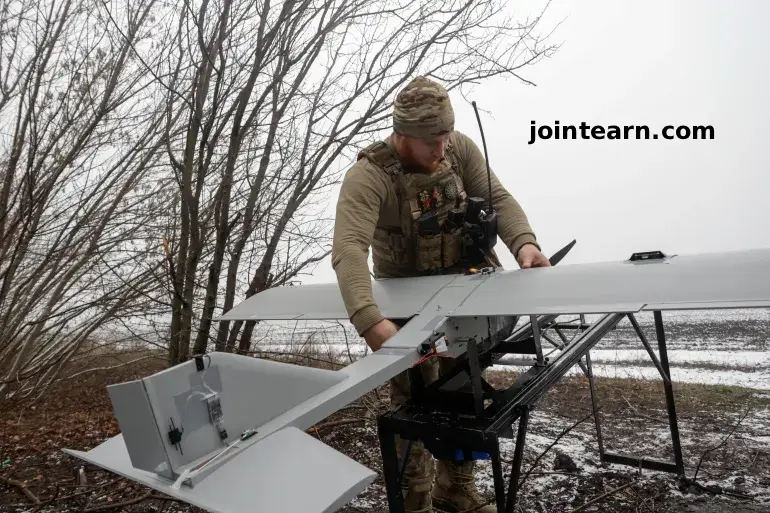
During the ongoing war with Russia, Chinese components have become critical to Ukraine’s drone and unmanned systems industry. Engines, flight controllers, batteries, thermal cameras, and navigation modules—primarily sourced from China—form the backbone of Ukraine’s millions-strong loitering munitions output, providing a crucial advantage on the battlefield.
Andrey Pronin, a pioneer of Ukrainian drone warfare, emphasized:
“China can end the war in one day by just turning off exports of key components to either us or the Russians.”
Despite efforts to localize production, Ukraine still relies on China for critical materials, including lithium salts, neodymium magnets, navigation chips, and thermal sensors, giving Beijing disproportionate leverage.
The Strategic Importance of Restoring China Ties
Kyiv’s challenge extends beyond military needs. China remains one of Ukraine’s largest trading partners, importing grain, steel, vegetables, oil, and soybeans. In 2020, trade turnover reached $15.4 billion, nearly one-seventh of Ukraine’s foreign trade.
Political ties, however, are at “point zero,” according to analyst Vadym Denysenko, after Beijing was seen as Russia’s international backer during conflicts starting in 2014. Analysts stress that restoring a strategic partnership is critical for Ukraine’s post-war recovery, especially as its geography positions it as a key corridor for the Belt and Road Initiative.
Plans for post-war reconstruction could include:
- Modernizing Ukraine’s railway network to European standards to facilitate trade.
- Expanding ports on the Danube to improve access for Chinese goods.
- Hosting Chinese industrial plants for cars, machinery, and technology.
- Leveraging Ukraine’s expertise in aerospace, pharmaceuticals, and nuclear energy for joint projects.
Kyiv-based analyst Igar Tyshkevich notes that this strategy would strengthen Ukraine as a “hub nation” in Eurasian trade routes, boosting its economic independence and countering Russian influence.
Aleksey Kushch, another Kyiv analyst, added that failing to restore China ties could cost Ukraine globally, as it would reduce engagement with the Global South, including key regions in Asia, Africa, and Latin America.
Ukraine as a Bridge in Eurasian Trade
Experts envision Ukraine as part of a “Eurasian Steppe Corridor”, linking northeast China via Kazakhstan and the Southern Caucasus to the Black Sea. This corridor could establish Ukraine as a critical transit hub for Eurasian trade, integrating post-war reconstruction with long-term economic resilience and reducing dependence on Western-only supply chains.
“Everything should be done so that goods move across the Eurasian Steppe Corridor, not foreign troops,” Kushch said.
As Kyiv plans its post-war recovery, rebuilding economic and political ties with China is not optional but essential, ensuring Ukraine’s integration into global supply chains and its position as a strategic trade bridge between Europe and Asia.


Leave a Reply