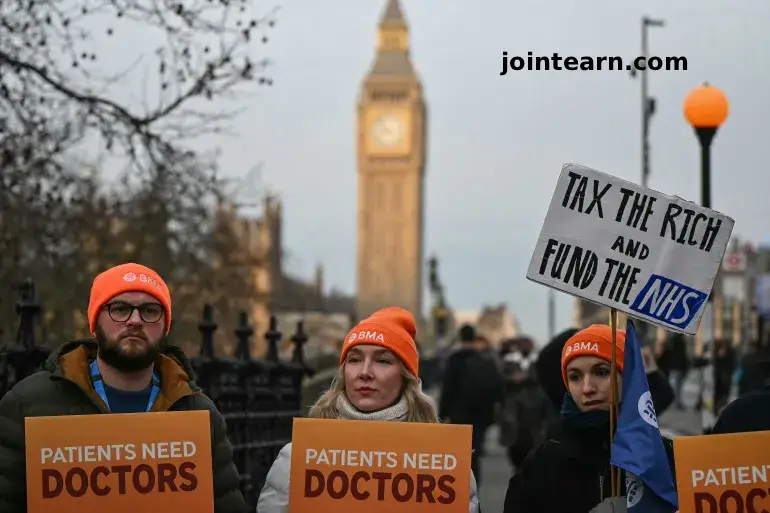
Resident doctors in England have launched a five-day strike, the latest in a long-running dispute over pay, working conditions, and the availability of positions for qualified medical professionals. The walkout, organised by the British Medical Association (BMA), is expected to continue until 07:00 GMT on Monday.
Prime Minister Criticizes Strike
During Prime Minister’s Questions in Parliament on Wednesday, Keir Starmer condemned the strike, describing it as “dangerous and utterly irresponsible.” He urged striking doctors not to abandon patients and to collaborate with the government on improving conditions within the National Health Service (NHS).
“My message to resident doctors is: don’t abandon patients,” Starmer said. “Work with us to improve conditions and rebuild the NHS.”
The Prime Minister also criticized the previous Conservative government for leaving the NHS “absolutely on its knees,” citing years of underfunding and staffing shortages.
Strike Details and Participation
The walkout began at 07:00 GMT on Wednesday and will last five days. Resident doctors, formerly known as junior doctors, make up nearly half of England’s medical workforce.
The strike follows an online ballot by the BMA, in which about 30,000 members voted to reject the government’s proposal, triggering industrial action. The main issues cited are:
- Pay disparities: Doctors want salaries restored to 2008–2009 levels in real terms after years of below-inflation pay rises.
- Job shortages: There is a shortage of training posts for doctors wishing to specialise and progress in their careers.
Jack Fletcher, a BMA representative, highlighted the dual crisis:
“There is a jobs crisis, where doctors are trained but unable to secure roles, and there is a pay crisis. We must value our doctors in this country. Last year, more doctors left the profession than at any point in the past decade.”
Impact on the NHS
The strike comes amid heightened pressure on the NHS, as flu-related hospitalizations in England have risen by more than 50% in early December. Health authorities across Europe have warned of an unusually early and severe flu season.
During the strike, NHS England has confirmed that fewer doctors will be on duty. Hospitals are prioritizing life-saving care, and non-essential appointments and procedures may be postponed.
The government’s latest offer of a 22% pay rise, negotiated by Health Secretary Wes Streeting, fell short of the 29% demanded by the union. The BMA continues to call for full pay restoration and the creation of new, permanent training posts for doctors.
Why Resident Doctors Are Striking
Resident doctors argue that years of pay erosion combined with limited career opportunities have made the profession unsustainable. The strike reflects broader systemic issues within the NHS, including:
- Staff shortages in hospitals and clinics across England
- Rising workloads and burnout among healthcare professionals
- Insufficient support for career progression and specialization
- The financial strain caused by inflation on doctors’ salaries
The BMA emphasizes that the strike is intended to force a long-term solution, rather than a temporary fix.
Public and Political Reaction
The strike has sparked debate across the UK. Supporters argue that fair pay and sufficient training positions are essential to retain talented doctors and maintain NHS standards. Critics, including the Prime Minister, warn that patient care could be compromised during the walkout.
The government has yet to announce negotiations or adjustments to its offer, but discussions are expected to continue as the strike progresses.
Key Takeaways
- Resident doctors in England have begun a five-day strike over pay and job shortages.
- The strike is organized by the British Medical Association (BMA).
- Doctors seek full pay restoration and creation of new training posts.
- NHS England will prioritize life-saving care amid flu season and staffing pressures.
- The strike underscores broader issues in the NHS, including staff retention and workplace conditions.


Leave a Reply