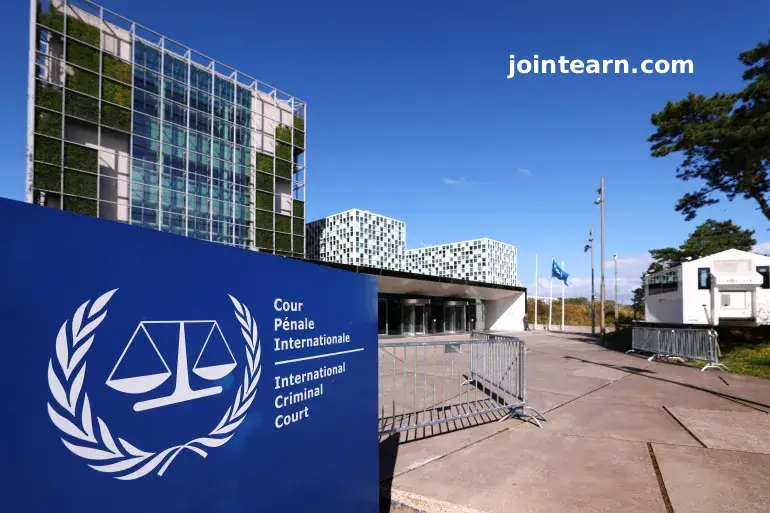
The United States has imposed a new round of sanctions against staff members of the International Criminal Court (ICC), targeting two judges involved in a ruling that rejected Israel’s attempt to halt the court’s Gaza war crimes investigation.
The sanctions affect Judge Gocha Lordkipanidze of Georgia and Judge Erdenebalsuren Damdin of Mongolia. The US government cited their participation in the December 15 decision, in which the ICC voted to continue investigating alleged Israeli war crimes, despite opposition from Washington.
US Statement on ICC Sanctions
In a statement, US Secretary of State Marco Rubio criticized the judges for allegedly supporting ICC efforts to investigate, arrest, detain, or prosecute Israeli nationals without Israel’s consent.
“The ICC has continued to engage in politicized actions targeting Israel, which set a dangerous precedent for all nations,” Rubio said.
The United States has consistently argued that the ICC has exceeded its jurisdiction, as neither the US nor Israel are members of the court. The administration claims that investigating Israeli or US citizens violates national sovereignty.
History of US Sanctions Against the ICC
The December sanctions are the latest in a series of economic and individual penalties the Trump administration has imposed on ICC personnel. Past actions include:
- February 2025: Broad sanctions against ICC staff and supporters investigating US and allied personnel.
- June 2025: Sanctions on four judges, two involved in US personnel probes in Afghanistan, and two linked to arrest warrants for Israeli officials.
- August 2025: Sanctions extended to additional judges and ICC prosecutors.
- September 2025: Three NGOs assisting ICC investigations against Israel—Al Haq, Al Mezan, and the Palestinian Centre for Human Rights—were also sanctioned.
Critics warn these measures could intimidate prosecutors, judges, and witnesses worldwide, potentially undermining international justice.
ICC Response
The ICC condemned the new sanctions as a “flagrant attack against the independence of an impartial judicial institution.” It reaffirmed its commitment to continue investigations despite political and economic pressure.
“When judicial actors are threatened for applying the law, it is the international legal order itself that is placed at risk,” the court stated.
The sanctions partially respond to the ICC’s November 2024 decision to issue arrest warrants for Israeli Prime Minister Benjamin Netanyahu and former Defence Minister Yoav Gallant for alleged war crimes in Gaza. Warrants were also issued for several Hamas leaders, some of whom were subsequently killed during Israeli operations.
Global Reactions
- Sarah Leah Whitson, executive director of Democracy for the Arab World Now (DAWN), criticized the US for “coddling Israeli war criminals” and called for accountability for interference in international justice.
- David van Weel, Dutch foreign minister, emphasized the need for international courts to operate independently, supporting the ICC and its staff.
- Israeli officials have welcomed US sanctions, framing them as support for Israel’s military actions.
Context: Gaza Conflict
The sanctions come amid ongoing conflict in Gaza, where Israeli military operations have reportedly killed over 171,000 Palestinians since October 7, 2023. The Trump administration also announced sanctions on 29 Iranian vessels and companies allegedly linked to Tehran, highlighting its broader foreign policy stance in the region.
Conclusion
The latest US sanctions underscore the tensions between Washington and international judicial bodies, particularly regarding investigations of Israel and US allies. While the ICC maintains its mandate, the move raises questions about the future independence of international law enforcement and the court’s ability to prosecute alleged war crimes without political interference.


Leave a Reply