The United States has carried out a “massive strike” against Islamic State (IS) targets in Syria, in retaliation for a deadly ambush on American forces in the country earlier this month. The operation, codenamed Operation Hawkeye Strike, involved fighter jets, attack helicopters, and artillery, targeting more than 70 IS positions across central Syria.
Background: Deadly Palmyra Ambush
The US strike comes after an attack on 13 December in Palmyra, which left two US soldiers and a civilian interpreter dead. The soldiers were identified as Sgt Edgar Brian Torres Tovar, 25, and Sgt William Nathaniel Howard, 29. Three other US personnel were injured during the incident, which occurred in an area outside the Syrian government’s direct control.
President Donald Trump emphasized the US response, stating:
“We hit every site flawlessly… We are striking very strongly against IS strongholds.”
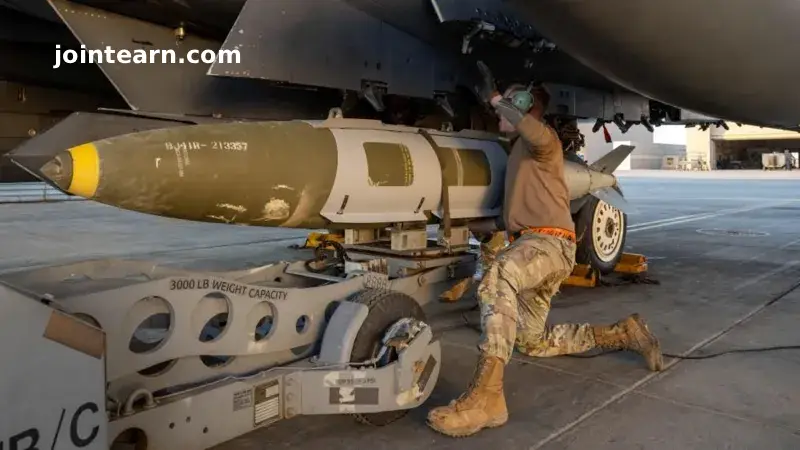
Centcom, which directs US military operations in Europe, Africa, and the Indo-Pacific, confirmed that the strike employed over 100 precision munitions targeting IS infrastructure and weapons caches. Jordanian aircraft also participated in the operation.
Operation Hawkeye Strike
The strike began at 16:00 Eastern Time (21:00 GMT) on Friday. Centcom commander Admiral Brad Cooper said:
“We will continue to relentlessly pursue terrorists who seek to harm Americans and our partners across the region.”
Rami Abdel Rahman, head of the Syrian Observatory for Human Rights (SOHR), reported that at least five IS members were killed, including a cell leader responsible for drone operations in Deir ez Zor province. IS has not publicly commented on the operation, and independent verification of all targets is pending.
US Defence Secretary Pete Hegseth described the operation as “not the beginning of a war—it is a declaration of vengeance,” adding:
“If you target Americans—anywhere in the world—you will spend the rest of your brief, anxious life knowing the United States will hunt you, find you, and ruthlessly kill you.”
International Context
The strike highlights ongoing US military efforts in Syria, which date back to 2015, primarily to train and support local forces against IS. Although IS lost its last territorial stronghold in Syria in 2019, the jihadist group continues to operate in the region, with the UN estimating 5,000–7,000 fighters still active across Syria and Iraq.
Syria has recently joined an international coalition to combat IS and pledged cooperation with the US. This follows a visit to the White House in November by Syrian President Ahmed al-Sharaa, a former jihadist leader whose coalition toppled Bashar al-Assad’s regime in 2024, marking a “new era” in US-Syria relations.
Conflicting Reports
While Centcom stated that the Palmyra ambush was carried out by an IS gunman, the SOHR reported that the attacker was a member of the Syrian security forces. No group has claimed responsibility, and the identity of the gunman has not been released.
Key Takeaways
- US conducts major retaliatory strike on IS positions in Syria following Palmyra ambush.
- Operation Hawkeye Strike involved over 100 precision munitions, targeting 70+ IS sites.
- Two US soldiers killed and three injured in December attack.
- Strike demonstrates continued US military commitment in Syria and ongoing fight against IS.
- Syria has pledged cooperation with the US as part of a wider anti-IS coalition.
The operation underscores the US military’s readiness to respond decisively to attacks on American forces abroad, sending a clear message to terrorist groups in the region.


Leave a Reply