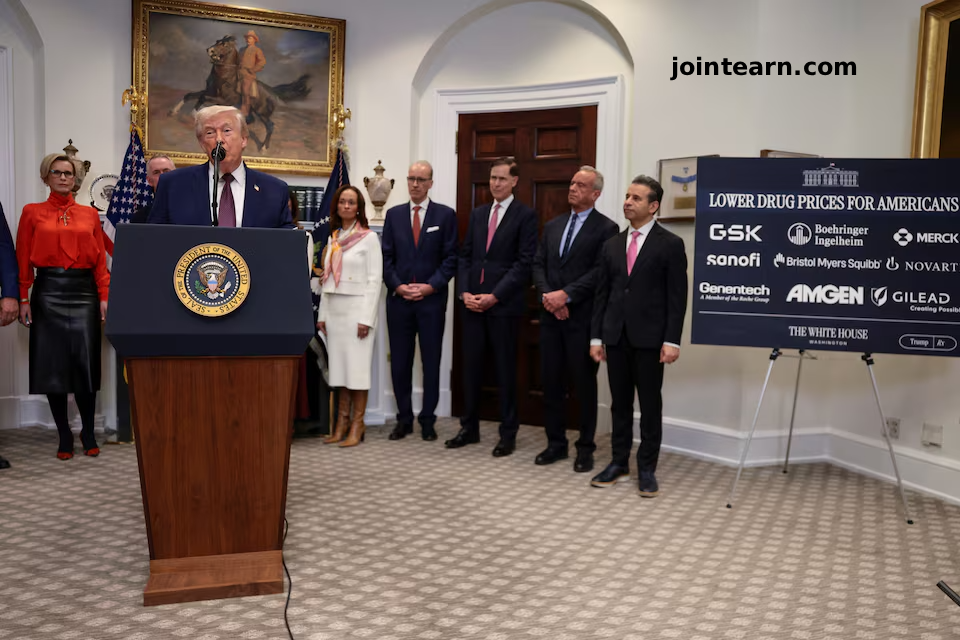
December 19, 2025 – Washington, D.C. – In a landmark move aimed at reducing the cost of prescription medicines for Americans, U.S. President Donald Trump announced agreements with nine leading pharmaceutical companies to significantly cut drug prices for Medicaid beneficiaries and cash-paying patients. The deal represents a major step in Trump’s ongoing effort to align U.S. drug costs with prices in other developed nations.
The pharmaceutical giants involved in this initiative include Bristol Myers Squibb, Gilead Sciences, Merck, Roche’s U.S. unit Genentech, Novartis, Amgen, Boehringer Ingelheim, Sanofi, and GlaxoSmithKline (GSK). These companies collectively agreed to substantial price reductions on most medicines sold to the government’s Medicaid program, which provides health coverage for low-income individuals, seniors, and other vulnerable populations.
U.S. Prescription Drug Prices Among the Highest Globally
During a White House press conference, President Trump emphasized that the United States had long been subsidizing the rest of the world through high drug prices, saying, “We were subsidizing the entire world. We’re not doing it anymore.” Americans currently pay significantly more for prescription drugs than patients in other developed nations, often nearly three times the cost. By negotiating these price reductions, the administration hopes to ease the financial burden on U.S. consumers while promoting more affordable access to essential medicines.
Details of the Pharmaceutical Price Reduction Agreements
The agreements include several key initiatives designed to reduce costs and improve accessibility:
- Medicaid Drug Price Cuts – All nine companies agreed to reduce prices for medicines sold under Medicaid, promising “massive savings” for widely used treatments. While Medicaid represents only around 10% of U.S. drug spending, these cuts will still help lower costs for millions of Americans.
- Direct-to-Consumer Discounts – Select medications will be sold directly to cash-paying patients through platforms such as the new TrumpRx website, with discounts reaching up to 70% off list prices.
- International Price Alignment – New drugs will be launched in the U.S. at prices comparable to those in other wealthy nations, addressing the longstanding gap in global drug pricing.
- Expanded Manufacturing and R&D Investment – Participating companies pledged more than $150 billion for U.S.-based research, development, and manufacturing, including Merck’s contribution of $70 billion. Some companies will also donate drug ingredients to the U.S. Strategic National Stockpile.
- Three-Year Tariff Exemption – In return for participating in the program, drugmakers will receive a temporary exemption from potential tariffs, easing investor concerns about regulatory pressures.
Highlighted Drug Programs
Several companies provided specific examples of drugs affected by the new deals:
- Merck will sell diabetes medications Januvia, Janumet, and Janumet XR directly to consumers at roughly 70% off list prices. Its experimental cholesterol drug enlicitide is also expected to be offered through direct-to-consumer channels.
- Bristol Myers Squibb announced it will provide its blockbuster blood thinner Eliquis to Medicaid for free.
- Amgen will offer its migraine treatment Aimovig and arthritis drug Amjevita at a discounted rate of $299 per month, a reduction of 60% to 80%.
- Sanofi plans to make its medicines for infections, heart disease, and diabetes available at average savings of about 70% through TrumpRx and other direct-to-patient platforms.
Impact on U.S. Healthcare and Investors
Although the deals promise significant savings for Medicaid recipients and cash-paying patients, most Americans with standard health insurance may see limited benefits, as their costs are often determined by fixed co-pays or co-insurance based on list prices. However, investors responded positively, with stock prices for participating companies rising 1% to 3%, as the agreements reduced the threat of tariffs and clarified the financial impact of the price cuts.
Looking Ahead: Future Pharma Engagement
Officials from Regeneron, Johnson & Johnson, and AbbVie are in discussions with the administration and are expected to participate in future initiatives via the TrumpRx platform. Collectively, these programs represent a significant step toward more transparent, affordable, and equitable drug pricing in the U.S., with potential benefits for patients, healthcare providers, and the pharmaceutical industry.


Leave a Reply