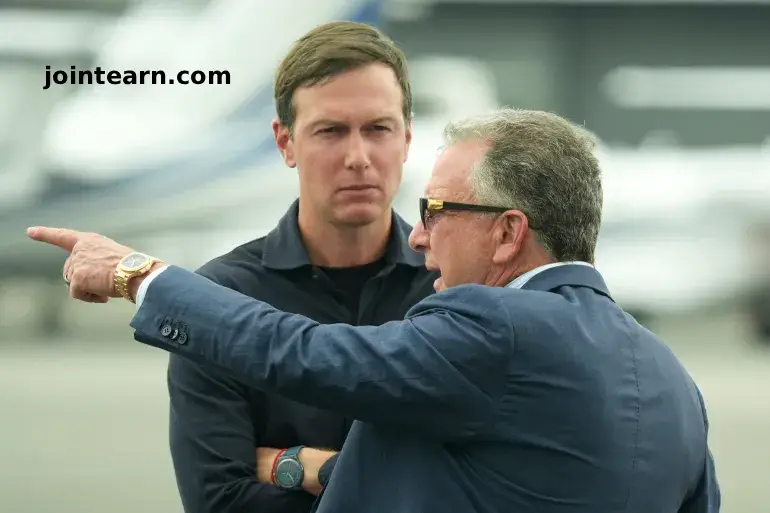
The United States has described the latest round of discussions with Russia and Ukraine in Miami as “constructive and productive,” signaling a renewed push to end the ongoing conflict that has plagued Eastern Europe for nearly four years. The meetings, led by US Special Envoy Steve Witkoff and White House adviser Jared Kushner, aimed to advance the implementation of a 20-point plan proposed by former President Donald Trump to resolve the war in Ukraine.
Key US-Russia-Ukraine Meetings in Miami
On Sunday, December 22, 2025, Steve Witkoff met with delegations from Ukraine, Europe, and Russia in separate sessions at Miami, Florida. According to Witkoff, the discussions focused on aligning strategies, coordinating timelines, and sequencing critical next steps to advance peace efforts.
In addition to Witkoff, Jared Kushner, former presidential adviser and Trump’s son-in-law, also participated in the high-level meetings, emphasizing the United States’ ongoing diplomatic involvement in the Russia-Ukraine conflict.
“Particular attention was given to discussing timelines and the sequencing of next steps,” Witkoff and Ukrainian official Rustem Umerov said in a joint statement. “These discussions are crucial to establishing a shared strategic approach between Ukraine, the United States, and Europe.”
Four Key Documents Discussed
The Miami meetings focused on four major documents shaping the peace process:
- The 20-point peace plan: Based on former President Trump’s initial proposals, adapted in coordination with European partners.
- Multilateral security guarantee framework: A plan outlining international commitments to Ukraine’s safety.
- US Security guarantee framework for Ukraine: Specific security assurances provided by the United States.
- Economic and prosperity plan: Designed to support Ukraine’s post-war reconstruction and economic growth.
These documents form the foundation for ongoing negotiations between Kyiv, Moscow, and Western allies.
Russia’s Response and Key Challenges
Despite optimism from the United States, Russian officials have expressed skepticism about the current approach. Kirill Dmitriev, a special envoy of Russian President Vladimir Putin, met with Witkoff earlier in the week and returned to Moscow to report on the discussions. Kremlin spokesperson Dmitry Peskov noted that while Russia values US engagement, it views some European-proposed amendments as potentially slowing the peace process.
Putin’s top aide, Yury Ushakov, emphasized that Russia perceives Europe as “pro-war” and warned that these dynamics complicate the negotiation framework. Nevertheless, Russia remains formally committed to achieving peace in Ukraine, according to Witkoff’s statements.
European Involvement: Macron and EU Support
French President Emmanuel Macron expressed support for renewed dialogue with Russia, and the Kremlin confirmed Putin’s willingness to engage in talks. Macron’s office welcomed the development, signaling potential European involvement in facilitating a ceasefire and long-term peace.
The EU has already pledged $100 billion in funding for Ukraine over the next two years, a move Ukrainian President Volodymyr Zelenskyy described as “historic” and essential for the country’s recovery.
Ukraine’s Perspective
President Zelenskyy has called the Miami talks “constructive,” noting that discussions are progressing at a relatively rapid pace. However, he cautioned that a final resolution depends heavily on Russia’s willingness to genuinely end the conflict. A major sticking point remains Moscow’s demand to retain certain territories it has captured since the February 2022 invasion.
Zelenskyy and European allies have developed their own 20-point version of the peace plan, which reflects adjustments to Trump’s initial proposal and attempts to balance territorial and security concerns.
Outlook for Peace
While the Miami meetings did not produce an immediate breakthrough, the discussions represent a significant diplomatic step in the ongoing efforts to end the war in Ukraine. US officials emphasized that careful coordination, transparent timelines, and multilateral cooperation remain essential to achieving lasting peace.
With ongoing dialogue between the United States, Ukraine, Russia, and Europe, the world continues to watch closely, hoping that the nearly four-year-old conflict may finally move toward resolution.


Leave a Reply