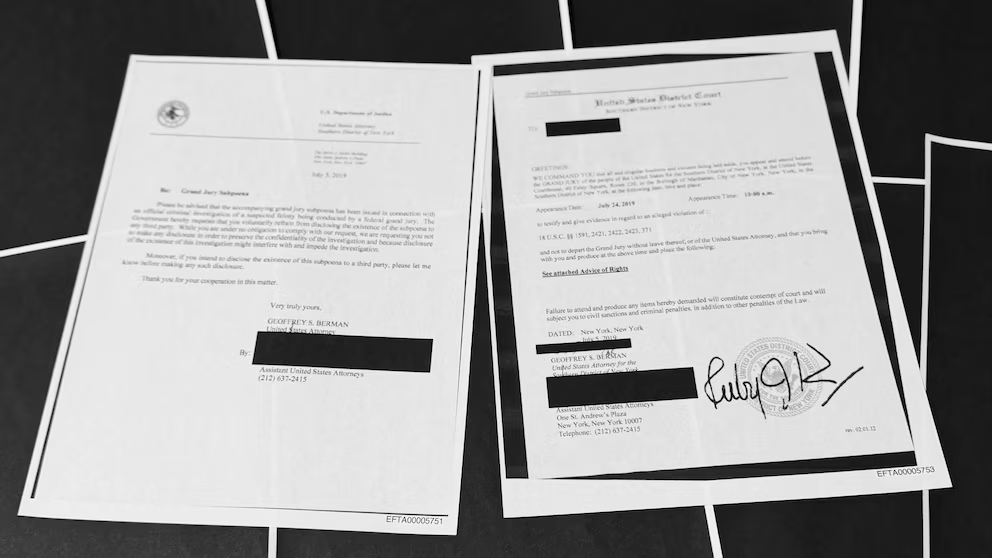
The U.S. Department of Justice (DOJ) has released an initial batch of documents related to convicted sex offender Jeffrey Epstein, following a congressional mandate requiring the files to be made public. The tranche includes photos, videos, and investigative records, but many pages have been heavily redacted, and Democrats and some Republicans have criticized the DOJ for not meeting the legal deadline.
Key Figures Named in the Files
The newly released documents reference numerous high-profile individuals, though inclusion in the files does not indicate wrongdoing:
- Former President Bill Clinton – Seen in multiple photos, including in a pool and in a hot tub with Epstein. Clinton has repeatedly denied knowledge of Epstein’s criminal activities. His spokesman has criticized the DOJ for suggesting wrongdoing by publicly associating him with Epstein.
- Donald Trump – Court filings allege that Epstein introduced a 14-year-old girl to Trump at Mar-a-Lago in the 1990s, though no accusations have been made directly against Trump. White House officials defended the president’s transparency regarding the files.
- Prince Andrew, Duke of York (Andrew Mountbatten-Windsor) – Appears in images showing him lying across laps of women; his spokesperson denies any wrongdoing.
- Ghislaine Maxwell – Epstein’s co-conspirator is seen in photos, including one at 10 Downing Street, with no context for her visit.
- Other celebrities – The DOJ release also includes photos of Michael Jackson, Diana Ross, Chris Tucker, and Mick Jagger, though the context and dates of the images remain unclear.
Contents and Context
The released files include a wide variety of materials:
- Investigative reports and grand jury documents – Many pages are heavily redacted to protect the identity of victims or ongoing investigations. CBS reports that at least 550 pages were fully blacked out.
- Photos and videos – Some images were removed after the initial release to protect victims’ privacy, then partially re-added.
- Alleged threats and victim reports – Artist Maria Farmer reported in 1996 that Epstein had stolen photos of her underage sisters and threatened her, an account confirmed in the released documents.
Deputy Attorney General Todd Blanche explained that careful vetting is required before releasing hundreds of thousands of pages to ensure that victims’ identities are protected.
Legal and Political Fallout
The incomplete and redacted release has prompted frustration from lawmakers. Representative Ro Khanna and Republican Congressman Thomas Massie criticized the DOJ, arguing that the department’s release did not fully comply with the Epstein Files Transparency Act. Both have suggested potential actions, including impeachment or prosecution, if delays continue.
Blanche confirmed that several hundred thousand more pages remain under review and will be released in the coming weeks. The DOJ emphasized the need to balance transparency with victim protection, a process that has slowed full disclosure.
Key Takeaways
- Inclusion in the Epstein files does not indicate criminal involvement.
- Many pages are heavily redacted or withheld to protect victims.
- The files provide insight into Epstein’s connections across politics, entertainment, and business.
- Lawmakers on both sides of the aisle are closely monitoring the DOJ’s compliance with the transparency mandate.
The Epstein files release is expected to continue over the coming weeks, with additional materials providing further clarity on the scope of Epstein’s network and activities.


Leave a Reply