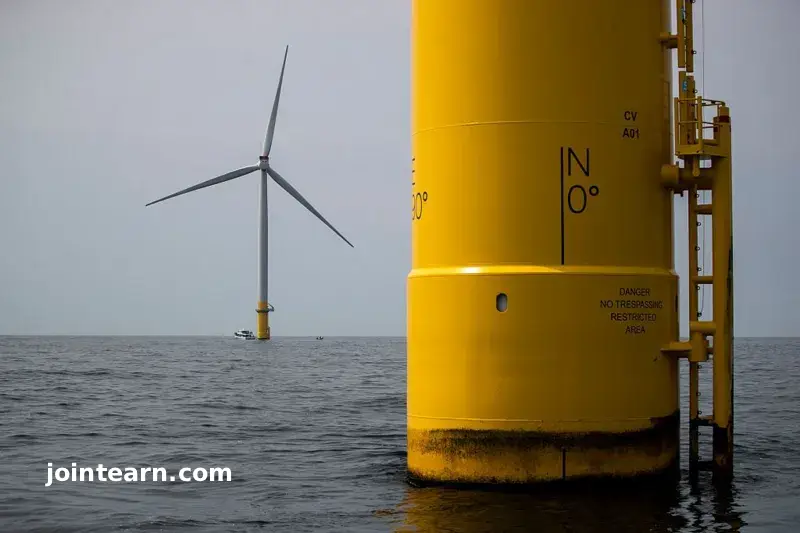
The U.S. Department of the Interior has issued an immediate pause on offshore wind energy projects along the Atlantic coast, citing national security concerns. The decision affects five major projects currently under construction in New York, Virginia, Massachusetts, Rhode Island, and Connecticut.
National Security and Radar Concerns
Interior Secretary Doug Burgum explained that the pause addresses potential risks from radar interference. Large-scale wind farms could create “clutter” that either obscures real moving targets or produces false signals, complicating the ability to differentiate between friendly and hostile aircraft.
In an interview with Fox Business, Burgum referenced drone strikes in conflicts such as Russia-Ukraine and Iran-Israel, emphasizing that offshore wind turbines near population centers could exacerbate vulnerabilities in U.S. airspace monitoring.
“The rapid evolution of adversary technologies necessitates caution,” Burgum said, noting that the pause would allow officials to evaluate these risks before allowing further construction.
Impact on Energy Companies and Markets
The pause immediately impacted renewable energy firms:
- Dominion Energy’s Virginia offshore wind farm, which has two pilot turbines operating safely for five years, saw its shares drop more than 3%.
- Orsted, the Danish renewable giant, experienced a 12% decline in its stock price.
- Vestas, a turbine manufacturer, saw shares fall by 2.6%.
Dominion Energy stated that its project is located far offshore and “does not raise visual impact or national security concerns.” The company emphasized that its pilot turbines have operated without incident, suggesting that the pause may not be justified in their case.
Political and Economic Reactions
State officials and renewable energy advocates have criticized the move. Connecticut Governor Ned Lamont called the decision “erratic” and warned that it would raise electricity costs in Connecticut and across the region. He added that the pause threatens jobs and the economic predictability of ongoing clean energy projects.
Earlier this month, a federal judge struck down President Trump’s previous attempt to ban new wind energy projects, ruling it “arbitrary and capricious and contrary to law.” However, the current pause demonstrates that the administration remains skeptical of offshore wind energy’s role in the U.S. energy grid.
Trump has consistently opposed wind power, claiming it is unreliable and drives up costs. In January, on the first day of his administration, he issued a memorandum halting permits and leases pending review. In response, 17 U.S. states, led by New York, filed lawsuits claiming the ban threatened the survival of the American wind industry.
Future Energy Considerations
The pause comes amid growing energy demand in the U.S., particularly due to the expansion of artificial intelligence firms and other high-energy industries. Meanwhile, Trump Media, the parent company of Truth Social, announced a move into the energy sector by merging with fusion energy company TAE Technologies, signaling a continued focus on alternative energy solutions outside of wind power.


Leave a Reply