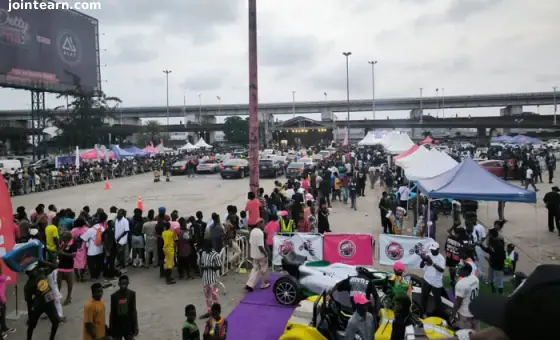
The National Automotive Design and Development Council (NADDC), under the leadership of Mr. Joseph Osanipin, has endorsed the initiative of showcasing locally manufactured motorsport cars at the Lagos AutoFest 2025. He described the event as a significant step forward for Nigeria’s automotive industry and a boost to job creation.
The Event:
At the event, three Made-in-Nigeria race cars—WP1, WP2, and WP3—drew attention for their high-speed performances and Formula One-style displays. The cars, designed and assembled in Nigeria, were branded with NADDC stickers and received praise for their impressive capabilities.
Lagos AutoFest 2025, a major automotive and entertainment festival organized by Work and Play Promotions in partnership with the BMW Club of Nigeria, transformed the Marina waterfront into a motorsport hub. The festival featured drag racing across key roads such as Marina Road, Kakawa Street, and Broad Street, bringing together over 100 car and bike enthusiasts and attracting thousands of spectators.
Promoting Local Innovation:
Mr. Adeoye Ojuoko, producer and promoter of Work and Play Motorsport, highlighted that the initiative is designed to promote Made-in-Nigeria vehicles and establish a sustainable motorsport culture in the country. He emphasized that while the engines of the vehicles are imported, the assembly and design of the cars are done locally. Ojuoko further explained that the project is focused on demonstrating Nigeria’s engineering potential while also creating employment opportunities through motorsport.
He said: “We have been producing motorsport cars since 2017. These cars are manufactured in Nigeria, with only the engines imported. Our goal is to showcase Nigerian engineering capacity, test what we build, and create employment through motorsport.”
Ojuoko also pointed out that local production significantly reduces costs, keeps funds circulating within the Nigerian economy, and supports local factories. He compared the cost of importing a Formula-style race car, which could run into millions of naira, to the ₦20 million it costs to produce the cars locally.
Request for Support:
Ojuoko called on NADDC to formally certify the locally produced race cars and assist in scaling up production nationwide. He stressed that for the automotive industry to truly grow, there needs to be a focus on local manufacturing and testing. He said, “To grow the automotive industry, we must build locally, test locally, and race locally.”
Additionally, Ojuoko proposed the creation of an automotive and motorsport hub to allow more Nigerians to design, build, and test race cars. He praised the Lagos State Government and NADDC for their crucial support, which he believes has been instrumental in the project’s success.
Conclusion:
The success of AutoFest 2025 highlights the potential for the Nigerian automotive sector, especially in motorsport, to make a significant contribution to the country’s economy. The combination of motorsport, culture, and entertainment at the event not only showcased Made-in-Nigeria race cars but also featured supercar displays, cultural showcases, and live music performances, celebrating Nigerian heritage.
With ongoing backing from the NADDC and Lagos State Government, the motorsport industry is set to grow, creating jobs and fostering innovation.


Leave a Reply