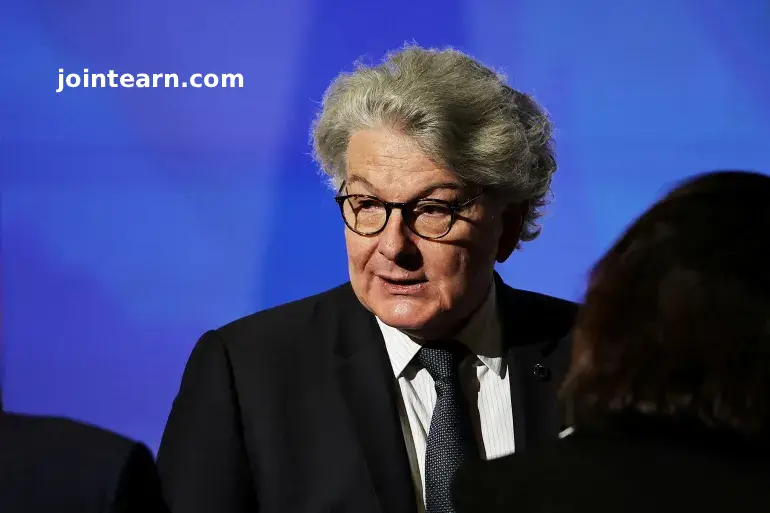
Washington, D.C. – The United States government has imposed visa restrictions on five European figures, including former European Commissioner Thierry Breton, accusing them of pressuring tech companies to suppress American viewpoints on social media platforms.
The announcement, made on December 24, 2025, comes amid escalating tensions between the US and European Union over digital regulations, particularly the EU’s Digital Services Act (DSA).
US Officials Accuse Europeans of Censorship
US Secretary of State Marco Rubio described the individuals as “radical activists” who advanced censorship crackdowns by foreign states against American speakers and companies.
- Rubio said on X: “For far too long, ideologues in Europe have led organized efforts to coerce American platforms to punish American viewpoints they oppose. The Trump Administration will no longer tolerate these egregious acts of extraterritorial censorship.”
Thierry Breton, who served as EU Commissioner for the Internal Market from 2019–2024, was identified as the primary target. Breton has been associated with the DSA, designed to combat misinformation, hateful speech, and disinformation on online platforms.
Other individuals affected include:
- Imran Ahmed, CEO of the Centre for Countering Digital Hate
- Josephine Ballon and Anna-Lena von Hodenberg, leaders of HateAid (Germany)
- Clare Melford, head of the Global Disinformation Index (GDI)
US officials claimed Breton and others allegedly used the DSA to threaten Elon Musk ahead of an interview with former President Donald Trump.
European Response: ‘Witch Hunt’ and Rejection
Breton condemned the visa ban as a “witch hunt,” comparing the situation to the McCarthy era. He added: “To our American friends: Censorship isn’t where you think it is.”
The European Commission criticized the move, calling it an attempt to undermine European digital sovereignty.
- French President Emmanuel Macron said the measures amounted to intimidation and coercion.
- French Foreign Minister Jean-Noel Barrot stressed that the DSA was democratically adopted in Europe with no extraterritorial reach.
- German Foreign Minister Johann Wadephul echoed that the bans were unacceptable.
Ballon and von Hodenberg of HateAid described the US action as an attempt to obstruct EU law enforcement, while GDI called it “immoral, unlawful, and un-American”, labeling it an authoritarian attack on free speech.
Rising US-EU Tensions Over Digital Regulation
The US claims the DSA and similar European rules have been used to censor right-wing voices and suppress opposition to policies such as immigration.
- Recent fines against Elon Musk’s X platform for DSA violations worsened tensions.
- Washington warned that European businesses like Accenture, DHL, Mistral, Siemens, and Spotify could face retaliatory measures.
- The White House also suspended a tech cooperation deal with the UK due to its Online Safety Act.
The US move signals a new escalation in digital diplomacy disputes, with both sides accusing each other of overreach and censorship.


Leave a Reply