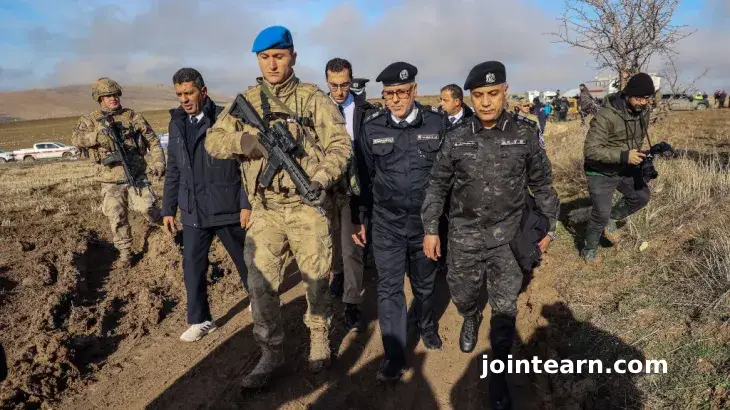
Ankara, Turkiye – December 25, 2025 – Officials from Libya and Turkiye have intensified their investigation into a fatal plane crash near Ankara that claimed the life of Libya’s army chief of staff, General Mohammed Ali Ahmed Al-Haddad, along with seven other people. Forensic teams are examining the wreckage while preparations for repatriating the bodies are ongoing.
Details of the Crash
The private jet, a Dassault Falcon 50, reported an electrical malfunction shortly after taking off from Ankara Esenboğa Airport, bound for Tripoli, Libya. According to Turkiye’s head of communications, Burhanettin Duran, the aircraft requested an emergency landing just 16 minutes after departure.
Radar contact was lost three minutes later as the plane descended, and the wreckage was discovered near the village of Kesikkavak in Ankara’s Haymana district. Eight individuals died in the crash, including three crew members and five passengers, among them General Al-Haddad.
Joint Libya-Turkiye Investigation
A delegation led by Libya’s Criminal Investigation Department chief, Major General Mahmoud Ashour, visited the Ankara Chief Public Prosecutor’s Office to coordinate with Turkish authorities on the ongoing inquiry. Investigators are conducting forensic examinations, including DNA testing, due to the severity of the crash and scattered remains.
The Turkiye Ministry of Interior deployed search and rescue teams immediately after the incident, and multiple agencies are involved in determining the cause of the accident.
Funeral Plans Delayed
The repatriation of General Al-Haddad’s body to Libya has been delayed, with funeral prayers initially planned for Thursday now likely postponed to Saturday. Officials cited the complex recovery process and the need for thorough DNA testing as reasons for the delay.
Al-Haddad was widely regarded as a central figure in strengthening Libya’s military institutions, particularly in western Libya, a region marked by divisions and control by powerful armed groups and militias. His death leaves a significant void in the country’s military leadership.
Regional and Political Significance
The crash adds to ongoing challenges in Libya, a country already dealing with political instability and fragmented control. International and regional authorities have stressed the importance of a transparent investigation to determine whether the accident was caused by technical failure or other factors.
Libya has declared a period of mourning, and military and government officials are under pressure to ensure that the investigation and repatriation process proceed swiftly and respectfully.


Leave a Reply