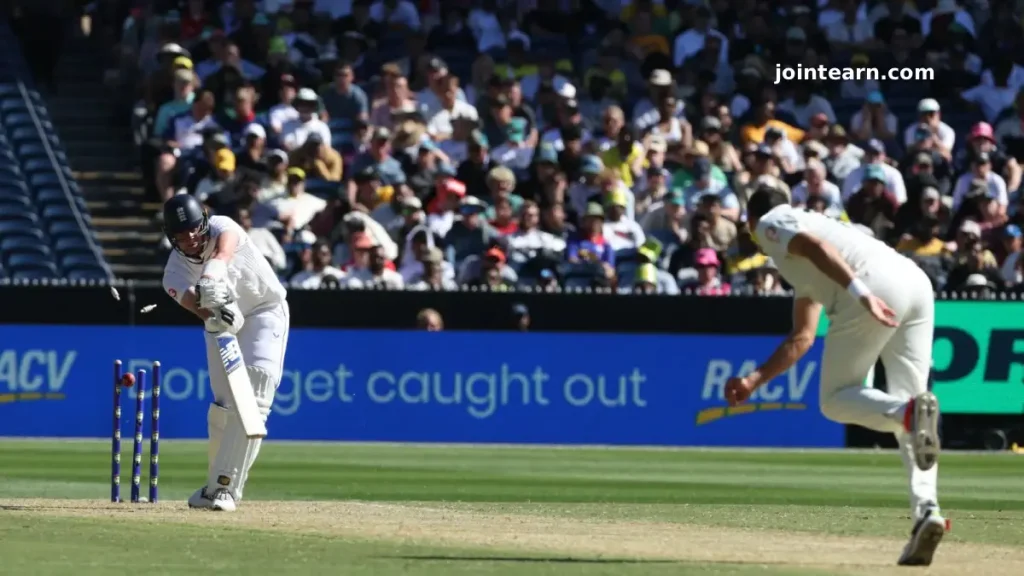
Michael Vaughan Criticises ‘Unfair’ MCG Pitch After Wicket-Frenzied Ashes Day
Former England captain Michael Vaughan has labelled the pitch at the Melbourne Cricket Ground (MCG) as “unfair” after an extraordinary opening day of the fourth Ashes Test saw batters struggle severely in conditions heavily favouring bowlers.
A staggering 20 wickets fell on day one of the Boxing Day Test, with Australia dismissed for 152 before England were skittled for 110, producing one of the most chaotic days in modern Ashes history. Vaughan believes the surface offered too much assistance to the bowlers, creating an imbalance that undermined the contest between bat and ball.
Speaking on Test Match Special, Vaughan acknowledged the spectacle but questioned whether the surface was appropriate for Test cricket.
“We’re always looking for a fair balance between bat and ball. I thought that was unfair for the batters,” Vaughan said.
“The pitch has done plenty. There’s been loads of movement. I don’t like seeing a pitch do so much.”
Historic Day for Wickets at the MCG
The carnage in Melbourne marked the most wickets to fall on the first day of an Ashes Test since 1909, surpassing even the 19 wickets that fell on day one of the first Test in Perth earlier in the series.
According to CricViz data, 48% of deliveries on the opening day seamed more than 0.75 degrees, a remarkably high figure. In fact, across the past decade of Test cricket in Australia, only four Tests have seen more pronounced seam movement on day one.
The difficulty of batting was reflected in the PitchViz rating, which graded the surface at 8.7 out of 10 for difficulty – making it the second most challenging day-one pitch in Australia over the past 101 Tests where 40 or more overs were bowled.
Entertainment vs Fairness Debate
While Vaughan conceded the near-capacity 94,199 crowd would have felt entertained, he questioned whether excitement alone justified the conditions.
“They’ll have gone home royally entertained,” he said.
“But this isn’t Test cricket on this type of pitch.”
Despite England trailing by 46 runs, Vaughan suggested the surface could yet offer the tourists their best opportunity to salvage pride in what has otherwise been a punishing series.
“This England team can chase,” Vaughan added.
“Australia are favourites, but don’t rule England out.”
He also pointed to the impact of multiple heavy rollers already used on the pitch, with another scheduled before play resumes, potentially easing batting conditions later in the match.
Groundsman Decisions Under Scrutiny
Melbourne Cricket Club head groundsman Matt Page left 10mm of grass on the surface, a length considered unusually long by Test standards. Page explained it followed the same preparation that produced a five-day Test against India the previous year.
Australia captain Steve Smith had warned pre-match that the pitch looked “quite furry” and predicted significant seam movement.
BBC chief commentator Jonathan Agnew felt the pitch offered assistance without being a “minefield,” but others disagreed.
Former Australia great Glenn McGrath was critical of the amount of grass left on the wicket.
“That pitch has too much life in it for Test cricket,” McGrath said.
“Ten millimetres of grass is too much – seven would have been better.”
McGrath suggested the curator may have prioritised how the pitch would behave on days three to five, particularly with warmer weather expected to reduce moisture and pace later in the game.
Cook Raises Concerns Over Modern Batting
Former England captain Sir Alastair Cook also weighed in, describing the surface as heavily tilted in favour of the bowlers.
“You put it in the right area and it’s going to nip either way,” Cook said.
“It’s a bit of an unfair contest. Watching that, you wonder how batters are meant to survive.”
Vaughan went further, suggesting the struggles exposed deeper issues within modern batting technique.
“We’re seeing pitches that do a little – seam or spin – and batters can’t cope,” he said.
“The technical foundations we’ve been used to for generations seem to have gone.”
No Draws, Plenty of Drama at Boxing Day Tests
Since a placid Boxing Day Test in 2017, where only 24 wickets fell across five days, none of the last seven festive Tests at the MCG have ended in a draw. The previous Ashes Test at the venue in 2021 was completed inside three days, with England collapsing to 185 and 68 as Scott Boland starred.
Whether the pitch settles or continues to dominate the contest, the Melbourne surface has already ensured this Test will be remembered as one of the most extreme batting examinations in Ashes history.


Leave a Reply