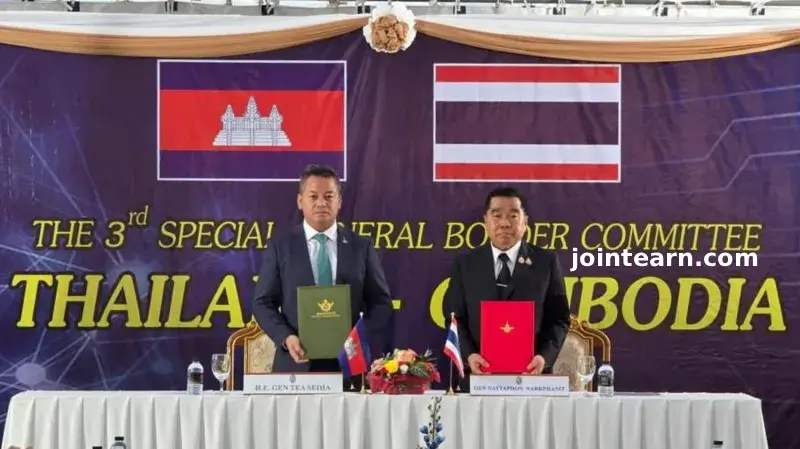
Thailand and Cambodia have announced an immediate ceasefire, ending nearly three weeks of intense clashes along their long-disputed border. The announcement came from the defence ministers of both countries during a joint statement at a border checkpoint in Chanthaburi province, Thailand.
The ceasefire, which took effect at noon local time (05:00 GMT) on Saturday, freezes the front lines where they currently stand and allows civilians in border areas to return home, after nearly one million people were displaced and hundreds of soldiers killed in recent fighting.
Key Terms of the Ceasefire
- The ceasefire will be monitored for 72 hours, after which 18 Cambodian soldiers detained by Thailand since July are scheduled to be released.
- Both countries have agreed to remove landmines in contested areas.
- The agreement aims to prioritize the safe return of civilians to their homes.
Thailand’s Defence Minister Natthaphon Narkphanit emphasized the importance of political will:
“This ceasefire is a test for the other party’s sincerity. Should the ceasefire fail or be violated, Thailand retains its legitimate right to self-defence under international law.”
Unlike previous ceasefires, which collapsed due to renewed violence, this truce comes after days of diplomatic talks encouraged by China and the United States.
Background to the Conflict
The Thailand-Cambodia border dispute dates back more than a century but escalated significantly in 2025. Tensions rose after a group of Cambodian women sang patriotic songs in a disputed temple, leading to clashes.
- In May, a Cambodian soldier was killed.
- In July, five days of heavy fighting left dozens of soldiers and civilians dead.
- Earlier this month, clashes resumed, with both sides blaming each other for violations.
Thailand carried out air strikes on Cambodian positions in Preah Vihear province, targeting fortified military sites after civilian evacuations. Cambodia described the strikes as “indiscriminate attacks” affecting civilian homes.
Challenges for Lasting Peace
Political and nationalist pressures in both countries make the durability of the ceasefire uncertain. Cambodia has suffered significant losses in soldiers and military equipment and has been pushed back from positions along the border, raising potential grievances.
Previous ceasefire attempts, including the Kuala Lumpur Peace Accords, brokered with intervention from Malaysia and former US President Donald Trump, were suspended after injuries to Thai soldiers from landmines, demonstrating the fragility of peace efforts in the region.
Diplomatic Context
The renewed ceasefire reflects intensive diplomacy and regional pressure to stabilize the border and protect civilians. Both countries have committed to dialogue and monitoring to prevent future clashes, although success will depend heavily on mutual compliance and political will.


Leave a Reply