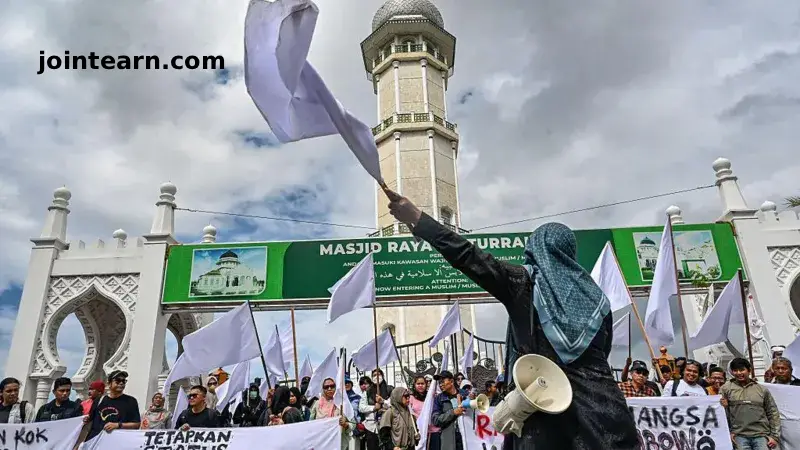
In Indonesia’s Aceh province, residents are raising white flags as a symbol of distress and international solidarity, demanding urgent aid following deadly floods caused by a rare cyclone in November. The disaster has killed more than 1,000 people, displaced hundreds of thousands, and left many communities without clean water, food, electricity, or medical supplies.
White Flags Signal Urgent Call for Help
For weeks, residents in Aceh have hung white flags on rooftops, along riverbanks, and outside mosques. While traditionally a symbol of surrender, protesters emphasize that the flags are a distress signal to attract international attention, highlighting the slow pace of the government’s flood response.
Among the demonstrators was a young girl holding a sign: “I am just three years old, I want to grow up in a safe and sustainable world.” Protesters like Husnul Khawatinnissa explained, “The flags do not mean we are giving in. They are a distress signal to grab the attention of friends outside, to let them know the conditions in Aceh today are very bad.”
Government Response Criticized
The flood crisis has exposed weaknesses in President Prabowo Subianto’s administration, which has been criticized as reactive, disorganized, and disconnected from the realities on the ground. Despite calls for foreign aid and a national disaster declaration, Prabowo has insisted that Indonesia can manage the situation independently.
Provincial authorities, however, have reached out to the United Nations and international aid organizations for support. While the government claims to have disbursed 60 trillion rupiah ($3.6 billion) for reconstruction, many residents report ongoing shortages of basic necessities.
The governor of North Aceh, Ismail A Jalil, broke down publicly earlier this month, pleading for faster assistance and questioning whether the central government fully understands the severity of the crisis.
Impact on Local Communities
Entire villages have been destroyed, while damaged roads and infrastructure have left communities isolated. Survivors report widespread sickness, starvation, and unsafe living conditions.
Rindu Majalina, a mother of three, described the desperate situation: “We fight like zombies for every bit of supply delivered to our village because we are starving… It has been very painful and miserable. Everything has come to a complete standstill—from markets to schools to offices. My children don’t know if they’ll ever be able to go back to school.”
For many, these floods are a painful reminder of the 2004 Boxing Day tsunami, which devastated Aceh and killed approximately 230,000 people across the region. While the tsunami relief involved massive international aid, residents feel the current response is insufficient.
Controversy Over Foreign Aid
Several countries, including the United Arab Emirates, have offered emergency aid—such as rice and relief packages—but these have been returned by Indonesian authorities, citing central government guidance. Analysts suggest that Prabowo’s refusal to accept international assistance is driven by a desire to assert sovereignty and avoid foreign scrutiny, even as it leaves residents vulnerable.
Political experts, including Vidhyandika Djati Perkasa, note that opening the door to foreign aid would expose the administration to criticism, potentially undermining the president’s image. Environmentalists have also criticized the government for expanding palm oil plantations, which may have worsened flooding through deforestation.
Public Outrage and Continuing Crisis
The ongoing humanitarian crisis in Aceh has sparked anger among residents, prompting protests and calls for more rapid relief. Demonstrators like Nurmi Ali have publicly questioned how long they must endure unsafe conditions, saying: “How long more do we have to wash ourselves in mud and floodwaters?”
Despite the government’s statements that relief efforts are underway, many Acehnese continue to face extreme hardship, lacking access to essential services and struggling to recover from the disaster.
Conclusion
The floods in Aceh province underscore the challenges Indonesia faces in disaster management, highlighting the critical need for efficient aid distribution, international cooperation, and long-term infrastructure planning. While white flags across Aceh signal desperation, they also represent a plea for solidarity and urgent action from the international community to help communities recover and rebuild.


Leave a Reply