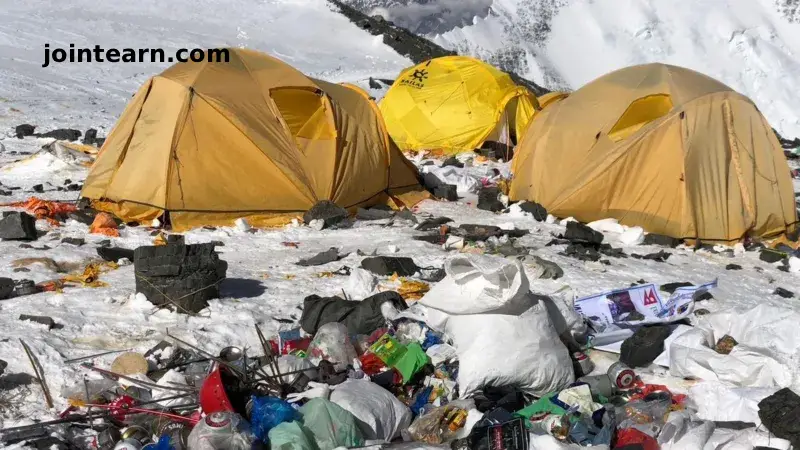
Nepalese authorities have announced that the Mount Everest waste deposit scheme will be scrapped after 11 years, citing its failure to tackle the mountain’s escalating trash problem. The initiative, which required climbers to pay a $4,000 deposit, refundable only if at least 8kg (18lbs) of waste was brought down, was intended to reduce the growing environmental burden on the world’s highest peak.
Despite years of implementation, waste continues to accumulate, particularly at higher camps, prompting officials to declare the program ineffective. Himal Gautam, director at Nepal’s tourism department, told the BBC that the deposit scheme had become an administrative burden and “failed to show a tangible result.”
The Challenge of Everest Waste Management
The trash problem on Everest is concentrated at higher camps, where monitoring is limited and logistics are complex. Tshering Sherpa, CEO of the Sagarmatha Pollution Control Committee (SPCC), explained that climbers typically only bring back oxygen bottles from higher camps, while tents, cans, and packaged food containers are left behind, resulting in piles of garbage.
On average, a climber produces up to 12kg (26lbs) of waste over their multi-week expedition for acclimatization and climbing. The deposit scheme required them to return less trash than they actually produced, further undermining its effectiveness.
Monitoring and Enforcement Gaps
Apart from a checkpoint above the Khumbu Icefall, there has been little monitoring of climbers’ waste disposal, a factor authorities say has contributed to the scheme’s failure. Most of the deposit money was refunded, suggesting climbers brought down trash—but largely from lower camps, not the critical higher-altitude areas.
New Non-Refundable Fee and Clean-Up Plan
Nepal plans to introduce a non-refundable $4,000 clean-up fee per climber, which will be used to establish a checkpoint at Camp Two and fund mountain rangers tasked with ensuring climbers bring down all waste from higher camps. This initiative forms part of a five-year mountain clean-up action plan.
Officials say the new approach addresses long-standing concerns from the Sherpa community, which has criticized the previous deposit system for its lack of enforcement and transparency. Mingma Sherpa, chairperson of Pasang Lhamu rural municipality, explained:
“We had been questioning the effectiveness of the deposit scheme because no one was penalized for leaving trash behind. This new fee will create a fund to support monitoring and cleanup efforts.”
Mount Everest’s Growing Environmental Pressure
With climbing numbers increasing each year—averaging around 400 climbers annually, plus many supporting staff—the environmental impact on Everest has become increasingly visible. Trash includes not only discarded equipment and packaging but also human waste, which does not decompose in freezing temperatures at high altitude.
Clean-up campaigns have traditionally focused on lower camps, where logistics are simpler. By deploying rangers to higher altitudes and creating a dedicated fund, Nepal hopes to effectively manage waste and maintain sustainable mountaineering practices on Everest.


Leave a Reply