Introduction: China Hosts Crucial Thailand-Cambodia Ceasefire Talks
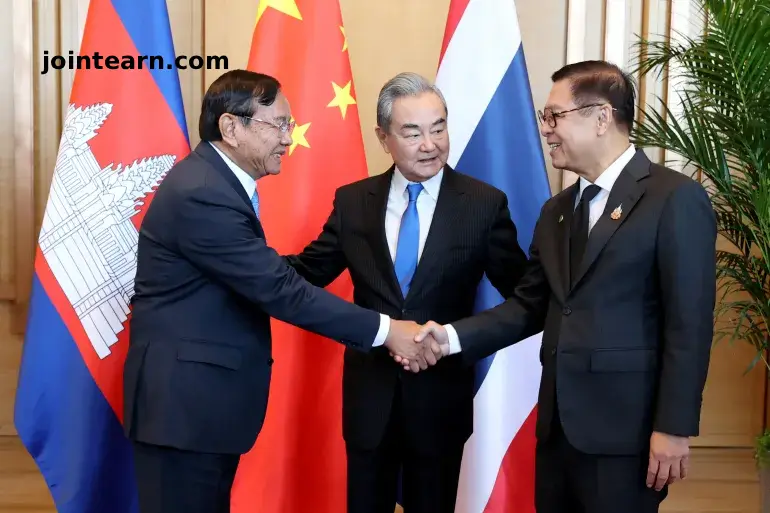
Thailand and Cambodia have taken steps to consolidate a fragile ceasefire after weeks of deadly fighting along their shared border. The two countries’ foreign ministers met in Yunnan province, southwestern China, for a two-day negotiation facilitated by Chinese Foreign Minister Wang Yi. The talks aimed to restore peace, security, and stability along the 800-kilometer (500-mile) border, where over 100 people have died and more than half a million civilians have been displaced during recent clashes.
Objectives of the Talks: Building Trust and Security
The China-hosted meetings were framed as a mutual confidence-building initiative. Both sides sought to rebuild political trust, prevent further escalation, and establish mechanisms for long-term peace.
Key goals included:
- Reinforcing the ceasefire agreement signed on Saturday, freezing troop positions.
- Arranging the return of 18 captured Cambodian soldiers if both sides adhered to the truce.
- Coordinating efforts on demining, cybercrime prevention, and allowing displaced civilians to safely return home.
Chinese Foreign Minister Wang Yi described the talks as “beneficial and constructive,” highlighting an important consensus to restore dialogue and stability.
Statements from Thai and Cambodian Leaders
Thai Foreign Minister Sihasak Phuangketkeow expressed cautious optimism after the discussions:
“We haven’t resolved everything, but we are making progress in the right direction. We have to keep up the momentum.”
Meanwhile, Cambodian Foreign Minister Prak Sokhonn emphasized the importance of a lasting ceasefire:
“We don’t want to return to the past. The ceasefire must be permanent and firmly respected and implemented.”
The joint communique issued by Xinhua confirmed that Bangkok and Phnom Penh agreed to rebuild political mutual trust, achieve a turnaround in relations, and maintain regional peace.
Alleged Violations and Ongoing Tensions
Despite the positive diplomatic signals, tensions persisted. The Thai military accused Cambodia of violating the ceasefire, reporting over 250 drones entering Thai territory on Sunday night. The Thai army labeled the incident as a provocation and warned it might reconsider the planned release of the 18 Cambodian soldiers.
Cambodia’s Sokhonn downplayed the drone flights as a “small issue,” assuring that both countries agreed to investigate and resolve the matter quickly.
Border Area Observations: Aftermath of Fighting
The border region, particularly in Banteay Meanchey province, remains heavily affected by recent hostilities. An Al Jazeera reporting team observed:
- Villages abandoned by civilians, with improvised bunkers and signs of hasty evacuation.
- Land littered with shrapnel and unexploded ordnance, highlighting ongoing risks for returning residents.
- A tense calm, with silence in the conflict zone but no resolution yet to the territorial disputes fueling the conflict.
Al Jazeera’s Assed Baig noted:
“But the longer the guns remain silent, the greater the chance this fragile calm can turn into lasting peace.”
Steps Toward Peace: Cooperation on Security and Civilian Return
The ceasefire agreement also outlined additional measures to strengthen peace and cooperation:
- Joint demining operations along the border.
- Collaboration on cybersecurity and crime prevention.
- Humanitarian provisions to facilitate the return of displaced civilians.
While the ceasefire is holding, both countries recognize the fragile nature of the agreement and the importance of continued diplomacy, oversight, and mediation to prevent a return to hostilities.
Conclusion: A Fragile but Promising Peace
The Thailand-Cambodia ceasefire talks in Yunnan represent a critical step toward stabilizing Southeast Asia’s border region. While accusations of violations and lingering mistrust remain, the dialogue mediated by China has laid the groundwork for a more permanent resolution. Continued diplomatic engagement, combined with enforcement of agreements on troop movements, civilian safety, and border security, will be essential to transform this temporary truce into lasting peace.


Leave a Reply