Introduction: Hamas Confirms Key Leadership Losses
Hamas, the Palestinian political and militant organization, has officially confirmed the deaths of Abu Obeida, spokesperson of its armed wing the al-Qassam Brigades, and Mohammed Sinwar, the group’s former leader in Gaza. The announcement marks the first public acknowledgment of the deaths of these high-profile figures during the ongoing conflict with Israel.
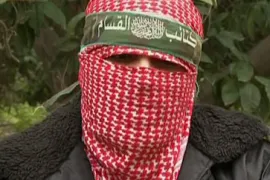
The al-Qassam Brigades released a video statement on Monday introducing a new masked spokesperson who revealed Abu Obeida’s real identity as Hudhayfah Samir Abdullah al-Kahlout, signaling the continuation of Hamas’s media strategy despite significant leadership losses.
Leadership Changes and Historical Context
Abu Obeida became the face of Hamas’s media communications during a devastating two-year war in Gaza, frequently issuing updates on battlefield movements, ceasefire breaches, and prisoner exchanges. Mohammed Sinwar, who succeeded Hamas military commander Mohammed Deif, had guided the organization through a “critically difficult phase” before his death.
The al-Qassam Brigades also confirmed the deaths of several other senior commanders, including:
- Mohammed Shabanah, head of the Rafah Brigade
- Hakam al-Issa
- Raed Saad
These losses are part of a broader pattern of targeted Israeli operations that have eliminated numerous top Hamas political and military leaders over the past two years, including Yahya Sinwar, Mohammed Deif, and Ismail Haniyeh.
Timeline of Recent Deaths
- May 2025: Israel reports killing Mohammed Sinwar.
- August 2025: Abu Obeida reportedly killed by Israeli forces.
- September 2025: Abu Obeida issues his last statement before Israel’s renewed assault on Gaza City, designating the area a combat zone.
These targeted strikes have significantly impacted Hamas’s leadership structure, prompting the appointment of new commanders and spokespersons to maintain operational continuity.
Hamas Stance on Ceasefire
The new al-Qassam spokesperson reiterated Hamas’s commitment to the ceasefire established over two months ago, despite “repeated Israeli violations.” He emphasized the group’s refusal to disarm, stating:
“Our people defend themselves and will not give up their weapons as long as the occupation remains… We will not surrender, even if we have to fight with our fingernails.”
Hamas urged the international community to pressure Israel to respect the truce, highlighting the group’s claimed right to respond to violations.
Humanitarian Impact and Casualties
Since the ceasefire on October 11, 2025, at least 414 Palestinians have been killed and 1,145 wounded, with 680 bodies recovered, according to the Palestinian health ministry. Since the start of the war on October 7, 2023, the total death toll in Gaza has risen to 71,266, with 171,222 injured.
The conflict continues to have a devastating humanitarian impact, with ongoing displacement, infrastructure destruction, and civilian casualties highlighting the urgent need for sustained diplomatic efforts.
Conclusion: Hamas Leadership and the Future of Gaza
The confirmation of Abu Obeida and Mohammed Sinwar’s deaths underscores the ongoing volatility in Gaza and the strategic losses suffered by Hamas. Despite these challenges, the group has maintained its organizational structure and continues to assert its position in ongoing ceasefire negotiations.
Observers note that Hamas’s ability to replace key leaders and sustain operations amid conflict will play a crucial role in shaping the next phase of the Israel-Palestine conflict.


Leave a Reply