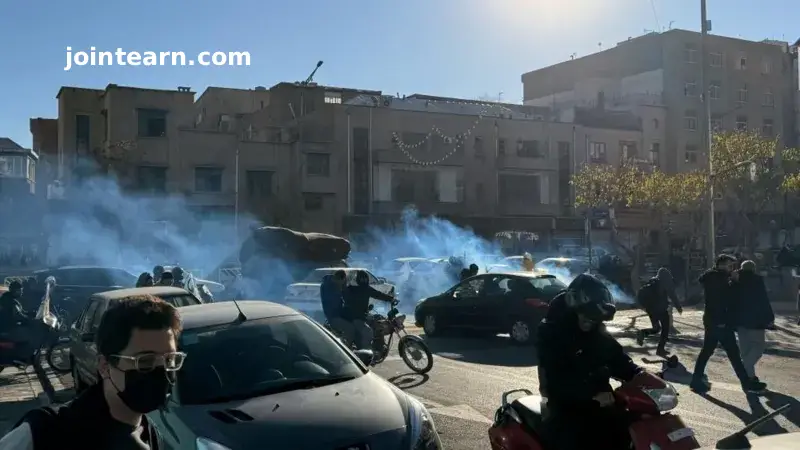
Iran’s foreign minister, Abbas Araghchi, has condemned former US President Donald Trump’s warning about the ongoing protests in Iran, calling it “reckless and dangerous.” Trump had stated that the United States would intervene if peaceful demonstrators were harmed during the unrest, prompting a firm response from Tehran.
Background: Protests Across Iran
The protests began in Tehran as shopkeepers expressed anger over a sharp fall in the value of the Iranian rial against the US dollar. Over the week, demonstrations spread to multiple cities, with university students joining in, and people chanting against the country’s clerical rulers.
As of Saturday morning, reports indicate that at least eight people have died during the demonstrations, though BBC has not independently verified the figures. The deaths were reported in various cities including Lordegan, Azna, Kouhdasht, Fuladshahr, and Marvdasht.
Trump’s Warning and Iran’s Response
Trump posted on social media on Friday:
“If Iran shots [sic] and violently kills peaceful protesters, which is their custom, the United States of America will come to their rescue.”
Iranian officials reacted strongly. Araghchi wrote on X:
“Given President Trump’s deployment of the National Guard within US borders, he of all people should know that criminal attacks on public property cannot be tolerated.”
He added that Iran’s armed forces were on high alert, stating that they “know exactly where to aim” if there is any attack, and emphasized that Iran would forcefully reject any interference in its internal affairs.
Clashes and Casualties
The protests have included running battles between security forces and demonstrators. Semi-official sources reported multiple casualties:
- Lordegan: Two protesters, Ahmad Jalil and Sajjad Valamanesh, killed in clashes
- Azna: Three fatalities reported
- Kouhdasht: One death
- Fuladshahr and Marvdasht: One death each reported
The Fars news agency did not specify whether all casualties were protesters or security personnel, and human rights group Hengaw confirmed some of the deaths as demonstrators.
Political Reactions Within Iran
Iranian authorities have balanced firmness with caution.
- President Masoud Pezeshkian said he would listen to the “legitimate demands” of protesters.
- Prosecutor General Mohammad Movahedi-Azad warned that any attempt to create instability would face a “decisive response.”
- Iran’s UN Ambassador Amir-Saeid Iravani called on the UN Security Council to condemn Trump’s statement, asserting that the United States would bear responsibility for any escalation.
Context: Comparisons to 2022 Uprising
These demonstrations are the most widespread since the 2022 protests following the death of Mahsa Amini, a young woman who died in custody after being accused of improperly wearing her veil. While not yet on the same scale, the current protests highlight economic grievances and political frustration across Iranian society.
International Tensions
Trump’s statement, coupled with Iran’s strong response, has heightened tensions between the US and Iran, underscoring the sensitivity of foreign commentary on domestic protests. Previous US actions, including strikes on Iran’s nuclear sites and retaliatory attacks, serve as a backdrop to the current escalation.


Leave a Reply