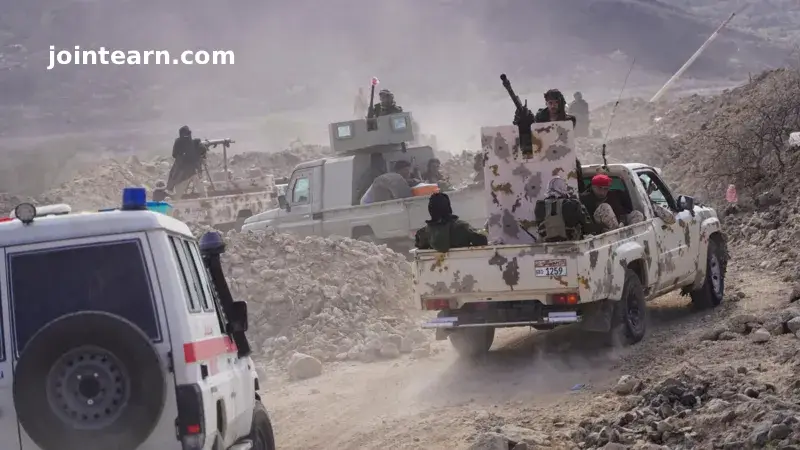
Saudi Arabia has urged Yemen’s southern factions to attend a comprehensive dialogue in Riyadh, following a dramatic escalation in southern Yemen that has brought the kingdom into direct confrontation with the United Arab Emirates (UAE).
The move comes after UAE-backed separatist forces, part of the Southern Transitional Council (STC), launched offensives in eastern Yemen, pushing to declare independence for southern Yemen—a region historically separate until unification with the north in 1990.
Background: Fractured Alliances in Yemen
The UAE and Saudi Arabia have long been allies in Yemen’s civil war, intervening on behalf of the internationally recognized government. However, differences have emerged:
- The STC, backed by the UAE, controls most of southern Yemen, including Aden and the oil-rich Hadramawt province, bordering Saudi Arabia.
- The Saudi-backed Presidential Leadership Council (PLC), established in 2022 to unite anti-Houthi factions, has seen its authority challenged by the STC’s military advances.
On 2 December 2025, the STC launched a large-scale offensive in eastern Yemen, claiming it was necessary to “restore stability” and combat Houthis, al-Qaeda, and Islamic State (IS) forces. The PLC condemned the operation as a rebellion, warning it could fracture Yemen and destabilize the region.
Saudi Arabia Calls for Dialogue
The Saudi foreign ministry announced a conference in Riyadh, inviting all southern factions to discuss “just solutions to the southern cause.” The ministry emphasized that the dialogue was designed to reduce tensions and prevent further escalation.
Saudi Arabia’s statement came after the Saudi-led coalition conducted air strikes against STC positions in Hadramawt and at the port of Mukalla. Seven people were killed in one strike on an STC camp, while earlier strikes destroyed vehicles and equipment at Mukalla, which the coalition claimed were weapons shipments from the UAE.
The UAE denied the allegations, stating that the shipments were intended for Emirati forces operating in Yemen and did not contain weapons.
UAE Withdrawal and Ongoing Tensions
Following the air strikes, Yemen’s Presidential Council canceled a joint defense pact with the UAE and ordered its forces to leave within 24 hours. The UAE initially denied responsibility for the STC’s recent military campaigns but later confirmed it would withdraw its remaining forces.
Experts note that the UAE’s withdrawal does not signal a reduction in STC ambitions. According to researchers:
- The UAE has relied largely on special forces and proxy networks, not large troop deployments, since 2019.
- The STC’s push for southern independence remains unchanged, with leaders like Aidarous al-Zubaidi consistently advocating for autonomy.
An STC spokesperson confirmed:
“Our intentions have always been clear… to establish an independent state. It is the right of the people of the south to choose their fate.”
Humanitarian Impact and Regional Concerns
The recent clashes have exacerbated Yemen’s humanitarian crisis:
- Over 19 million people require humanitarian assistance, with severe food insecurity.
- Families in contested areas like Hadramawt are preparing for potential escalations, stockpiling essentials and limiting travel.
Experts warn that the Saudi-UAE rivalry in Yemen could intensify the conflict, noting that Saudi Arabia shares 1,500 km of border with Yemen, while the UAE does not. Analysts liken the standoff to a proxy conflict between two wealthy, powerful states, heightening regional instability.
Context: Yemen’s Civil War
Yemen’s conflict began in 2014, when Houthis seized northern Yemen, including Sanaa. Saudi Arabia and the UAE intervened in 2015 to restore the government’s authority.
Since then:
- The STC and other southern separatists initially cooperated with the government but later seized Aden and southern territories.
- The country has suffered over 150,000 deaths, widespread displacement, and one of the world’s worst hunger crises.
The current escalation represents a proxy showdown between Saudi Arabia and the UAE, with southern Yemeni factions caught in the middle.


Leave a Reply