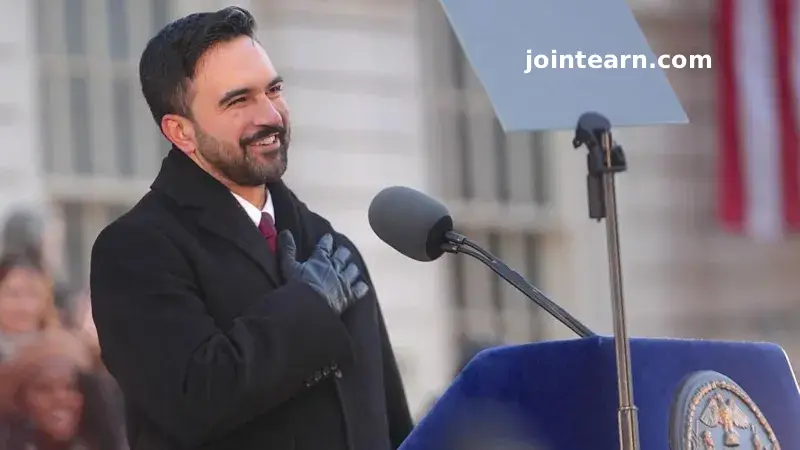
On the first freezing winter day of 2026, New York City Mayor Zohran Mamdani was sworn into office amid thousands of cheering New Yorkers and progressive allies. The 34-year-old Democratic socialist, who won an unexpected victory in November, promised to tell a “new story” for the city, pledging an ambitious agenda focused on safety, affordability, and abundance.
“City Hall will deliver an agenda where government looks and lives like the people it represents,” Mamdani told the crowd in his inaugural address.
His platform includes universal childcare, free public buses, city-run grocery stores, and other transformative policies. But turning these campaign promises into reality will require navigating a complex political landscape and overcoming significant obstacles. Experts and analysts highlight four major challenges that could define Mamdani’s first year in office.
1. Funding His Ambitious Policy Agenda
Mamdani’s platform addresses cost-of-living pressures, including freezing rent hikes for subsidized housing units and providing free childcare and public transport. While some initiatives, such as freezing rents, can be implemented administratively, other proposals face major funding challenges.
- Government experts warn that the state and city budget shortfalls could limit Mamdani’s ability to finance expansive programs.
- He has proposed raising taxes on the wealthy and increasing the corporate tax rate from 7.25% to 11.5%, estimating potential revenue of $9 billion.
- However, achieving these tax reforms requires state government approval, which may not align with Governor Kathy Hochul’s political calculations, especially ahead of her re-election campaign.
“The big roadblock for the things he’d like to do are the financial capacity of the state and the political willingness of the governor,” said Robert Shapiro, professor of international and public affairs at Columbia University.
2. Managing Relations with the Federal Government
Leading up to the election, former President Donald Trump criticized Mamdani as a “communist” and threatened to withhold federal funding. Despite a surprisingly cordial first meeting in November, tensions could emerge as the mayor implements policies opposed by the federal government, especially on immigration and social services.
- Mamdani has pledged to maintain New York City as a city of immigrants, emphasizing that immigrants are central to the city’s workforce, culture, and leadership.
- While federal interventions such as National Guard deployments have not targeted New York, previous enforcement measures, including immigration raids, highlight potential areas of conflict.
Balancing city priorities with federal oversight will require diplomatic skill and negotiation, particularly in a politically polarized environment.
3. Engaging Business Leaders and Wall Street
Mamdani’s electoral victory initially sparked concerns among business leaders, some of whom threatened to leave the city due to his progressive tax policies.
- To build bridges, Mamdani has reached out to corporate leaders, including JPMorgan Chase CEO Jamie Dimon, and real estate developer Jeffrey Gural, both of whom expressed cautious support.
- Still, skepticism remains about his experience managing New York City’s complex economy, with concerns that higher taxes on corporations and the wealthy could drive investment away.
“Any mayor of New York needs cooperation from business leaders, especially finance and real estate, which play huge roles here,” said NYU politics professor Patrick Egan.
Maintaining a spirit of cooperation with Wall Street and developers will be critical for financing public projects and ensuring economic stability.
4. Addressing Public Safety
Crime and public safety remain central to New Yorkers’ priorities. While New York saw a decline in homicides and shootings in 2025 to near-record lows, ongoing challenges persist, including homelessness, quality-of-life crimes, and mental health crises.
- Mamdani has proposed creating a Department of Community Safety, investing in mental health programs, crisis response, and outreach workers, including in subway stations.
- Maintaining Police Commissioner Jessica Tisch from the previous administration may help reassure residents and business owners about continuity in policing practices.
- Experts argue that public safety is a prerequisite for success: if residents feel unsafe, other ambitious policy initiatives may be met with resistance.
“If people feel safe here, they can tolerate other challenges. If they don’t, there’s little else they will accept,” said Democratic strategist Howard Wolfson.
Conclusion
Mayor Mamdani’s ambitious, progressive vision for New York City positions him as a transformative figure, but delivering on his promises will require navigating:
- Budget constraints and funding his policy agenda
- Federal-state relations and potential White House conflicts
- Building trust with business leaders and investors
- Maintaining public safety and social stability
Success in these areas will determine whether Mamdani can transform New York into the “city of abundance” he promised, or whether the city’s political, financial, and social complexities will slow progress.


Leave a Reply