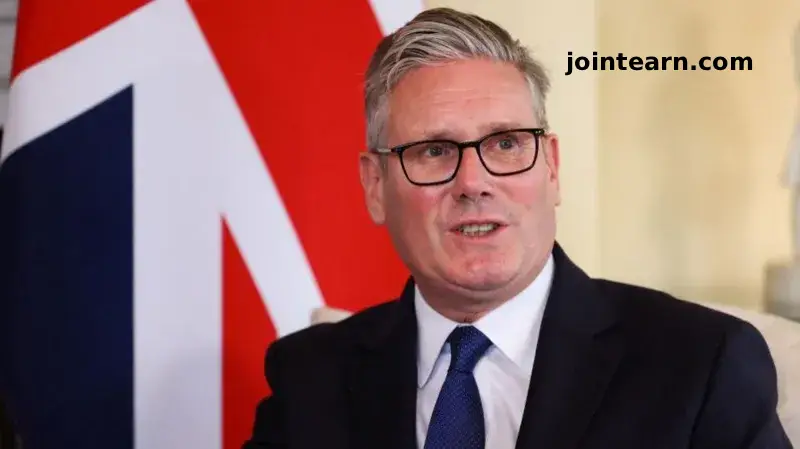
UK Prime Minister Sir Keir Starmer has declined to comment on whether the recent US military operation in Venezuela, which led to the capture of President Nicolás Maduro, may have violated international law. Speaking to the BBC on Sunday with Laura Kuenssberg, Starmer emphasized that the UK had no involvement in the strikes and that he was awaiting all facts before making any judgment.
Starmer’s Position on International Law
During the interview, Starmer stressed his long-standing commitment to international law but refrained from criticizing the US operation directly. He stated:
“I’ve been a lifelong advocate of international law and the importance of compliance with international law. But I want to ensure that I’ve got all the facts at my disposal, and we haven’t got that at the moment.”
The prime minister confirmed that he had not spoken with former US President Donald Trump about the operation, which resulted in Maduro and his wife being taken into US custody. He also reaffirmed that around 500 British citizens in Venezuela were being supported by the UK embassy and advised to shelter in place due to the unstable situation.
UK Government Response
Starmer’s office has indicated that the UK is monitoring developments closely and will discuss the evolving situation with US counterparts in the coming days. On X, the prime minister posted that the UK “regarded Maduro as an illegitimate president” and would support a safe and peaceful transition to a legitimate Venezuelan government reflecting the will of the people.
Darren Jones, chief secretary to the prime minister, told Sky News that the UK was “not entirely clear” on what Trump meant by saying the US would temporarily run Venezuela. He emphasized that any legal assessment of US actions is a matter for international courts.
Reactions Across UK Politics
The US strikes have drawn reactions from across the UK political spectrum.
- Conservative leader Kemi Badenoch said she would “not rush to judgment” and emphasized listening to Venezuelans risking their lives for democracy.
- Shadow foreign secretary Dame Priti Patel noted the illegitimacy and repressive nature of Maduro’s regime and expressed hope that the operation would support democratic norms in Venezuela.
- Scottish First Minister John Swinney (SNP) stressed the importance of upholding the rules-based international system despite Maduro’s authoritarianism.
- Liberal Democrat leader Sir Ed Davey and Green Party leader Zack Polanski criticized the strikes as illegal under international law, warning that such actions could embolden other authoritarian leaders.
- Reform UK leader Nigel Farage argued that the operation might serve as a deterrent against future Russian or Chinese aggression.
- European Union top diplomat Kaja Kallas called for adherence to the UN Charter and careful international monitoring of the situation.
Context of the US Operation
The military strikes in Venezuela were carried out as part of a non-international armed conflict, according to US authorities, targeting Maduro’s regime, which they accuse of operating a narco-terrorist network and conducting irregular warfare against the US. Elite Delta Force units were reportedly deployed, and Maduro was transported to New York City to face drug and weapons charges.
The US administration has defended its actions as legal under the laws of armed conflict, aimed at protecting the United States from drug trafficking and cartels. Critics, however, including a former ICC chief prosecutor, argued that the strikes could constitute a planned, systematic attack against civilians during peacetime, raising serious concerns under international human rights law.
Implications for UK-US Relations
Starmer emphasized that the UK faces a more volatile international environment than in recent years. He described his responsibility to maintain strong relations with the United States, stating:
“It is my responsibility to make sure that relationship works as the prime minister of this country, working with the president of the United States. And not only have I stepped up to that responsibility, I have made it my business, and I do get on with President Trump.”
The ongoing situation in Venezuela represents a complex geopolitical challenge, balancing support for Venezuelan democracy, the rule of international law, and maintaining strategic relations with the US.


Leave a Reply