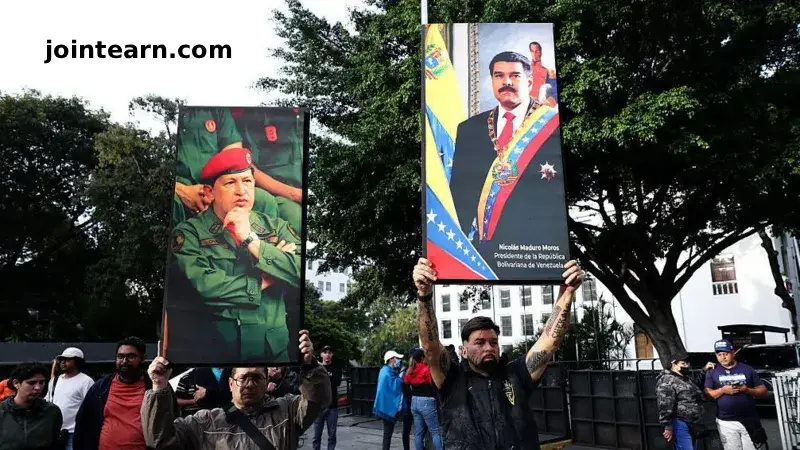
Leaders around the world have responded with a mixture of condemnation, concern, and support following the US capture of Venezuelan President Nicolás Maduro in a large-scale military operation on Saturday. The strike, which also detained Maduro’s wife, has sparked intense debate over sovereignty, international law, and geopolitical stability.
Maduro and his wife were flown to New York City, where they face drug trafficking and weapons charges in US courts. The operation was authorized under former US President Donald Trump, who stated that the United States would “run Venezuela” temporarily until a safe and orderly transition to a legitimate government could be established.
Reactions from Latin America
Neighboring Latin American countries have voiced strong opposition to the US strikes:
- Brazilian President Luiz Inácio Lula da Silva described the action as “an unacceptable line” and warned that violating international law could lead to global instability and chaos.
- Colombian President Gustavo Petro condemned the operation as “an assault on the sovereignty” of Latin America.
- Chilean President Gabriel Boric expressed concern and urged a peaceful resolution to Venezuela’s ongoing crisis.
- Cuban President Miguel Díaz-Canel labeled the US attack a “criminal action,” while Uruguay’s government issued a statement expressing serious concern and rejecting military intervention.
- Meanwhile, Argentine President Javier Milei, a Trump ally, welcomed the move, posting on social media: “Freedom moves forward. Long live freedom.”
The Venezuelan government, led by Interior Minister Diosdado Cabello, urged citizens to remain calm and trust the military, while calling for international voices to condemn the US operation.
Global Reactions
International responses have varied widely:
- China condemned the US operation, stating it was “deeply shocked” by the use of force against a sovereign nation.
- Russia labeled it “an act of armed aggression,” while Iran called the strikes a violation of national sovereignty.
- The European Union, through top diplomat Kaja Kallas, reiterated that Maduro lacks legitimacy and stressed that any transition of power must follow international law.
- French President Emmanuel Macron emphasized that the change of power should be peaceful, democratic, and respect the will of the Venezuelan people, citing hopes that opposition leaders could ensure stability.
- German Chancellor Friedrich Merz highlighted the complexity of the US operation and stressed that international law must govern such interventions.
- UN Secretary-General António Guterres expressed alarm, warning that the strikes set a “dangerous precedent” and violated international norms.
Reactions from the United States and Allies
In the US, political responses were also divided:
- Senate Minority Leader Chuck Schumer described the operation as reckless due to the lack of Congressional authorization and absence of a plan for post-operation governance.
- Israeli Prime Minister Benjamin Netanyahu praised Trump for “bold and historic leadership on behalf of freedom and justice.”
- Canadian Foreign Minister Anita Anand called for respect for international law while expressing support for the Venezuelan people.
- Norwegian Foreign Minister Espen Barth Eide stated that “the American intervention in Venezuela is not in accordance with international law,” underscoring the principle that international law applies universally.
UK Position
UK Prime Minister Sir Keir Starmer has refrained from commenting on whether the US operation violated international law. In a BBC interview, Starmer emphasized the UK’s non-involvement in the strikes and the need to gather facts before assessing the legal implications.
Starmer clarified that the UK considered Maduro an illegitimate leader and would support a safe transition to a legitimate government. The UK is also actively monitoring the safety of approximately 500 British citizens in Venezuela, urging them to shelter in place or adjust travel plans as the situation evolves.
Geopolitical Implications
The strikes have heightened tensions across Latin America and the broader international community. While some leaders view the operation as a step toward restoring democracy in Venezuela, others warn it undermines sovereignty, international law, and global stability.
Analysts say that the operation could redefine US influence in the Western Hemisphere, affect relations with allies and adversaries alike, and establish a precedent for unilateral military interventions.


Leave a Reply