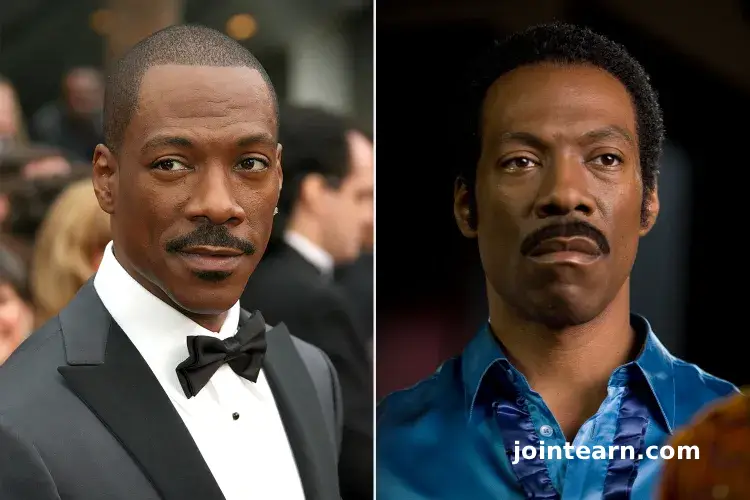
Hollywood legend Eddie Murphy recently opened up about a memorable moment in his career—leaving the 2007 Academy Awards early after losing the Best Supporting Actor Oscar for his performance as James Early in Dreamgirls. In a candid interview with Entertainment Weekly about his Netflix documentary Being Eddie, Murphy shared the reasoning behind his early exit, clearing up decades of speculation and giving fans a glimpse into the emotional realities of awards season.
The 2007 Oscars: Why Murphy Left Early
Murphy, 64, recalled that after losing the Oscar to Alan Arkin, he was repeatedly approached by fellow celebrities offering consolation. “Clint Eastwood came and rubbed my shoulder. And I was like, ‘Oh, no, no, I’m not gonna be this guy all night. Let’s just leave,’” Murphy explained. He emphasized that his departure wasn’t an act of anger or disrespect, but rather a decision to avoid dwelling on disappointment in front of others.
“I didn’t storm out. I was like, ‘I’m not gonna be the sympathy guy all night,’” he added. Murphy’s honesty sheds light on the pressures that actors face during high-stakes events like the Oscars, where public appearances often clash with personal feelings.
Predicting Alan Arkin’s Win
Murphy revealed that he had actually anticipated Arkin’s victory months before the awards. “Jeff Katzenberg invited me to see Little Miss Sunshine about six months before it came out,” Murphy said. “I watched Alan Arkin’s performance and told Jeff, ‘Now that performance right there is one of those performances that will steal somebody’s Oscar.’ And he did.”
Murphy described Arkin’s role as Edwin Hoover, the foul-mouthed yet lovable grandfather, as “hysterically funny” and intuitively moving. Despite his initial disappointment, Murphy admitted with a laugh, “No, I don’t feel like he stole mine. He deserved it.”
Lessons Learned About the Oscars
Reflecting on his Oscar nomination, Murphy shared that winning the coveted statuette is far from a straightforward process. “It’s more art than science,” he explained. “It’s not like, ‘Oh, you do this, and you do that, and you win the Oscar.’ It’s all this intangible stuff: campaigning, your past work, what people owe you… all of that comes into play.”
Murphy acknowledged that Arkin’s career-long achievements contributed to his deserving the award. “When you add all of that stuff together, he totally deserves his Oscar for his whole career. He’s an amazing actor,” Murphy said, emphasizing the respect he holds for his fellow performers.
Preparing for Awards Shows Can Be Stressful
In his Netflix documentary Being Eddie, Murphy also reflected on the stress of attending awards shows. “The mindf— for me is that I get dressed and come to the thing, ‘cause I usually wouldn’t go to award shows,” he explained. “Whenever I lose, I’m like, ‘These motherf—ers made me come all the way down. I could have f—ing lost at home. I’m all in the f—ing tuxedo. What a waste of time.’”
Murphy’s transparency about his emotions offers a rare, humanizing glimpse into life as one of Hollywood’s most celebrated comedians and actors.
Eddie Murphy’s Legacy in Film
Eddie Murphy’s performance in Dreamgirls remains one of his most lauded roles, earning him multiple award nominations and wins prior to the Oscars. Beyond Dreamgirls, Murphy has built an illustrious 50-year career starring in classics such as Coming to America, The Nutty Professor, and Shrek.
He continues to remain relevant in Hollywood, producing, acting, and documenting his journey in Being Eddie, now streaming on Netflix. The documentary gives audiences an inside look at Murphy’s career, mindset, and creative process, highlighting why he remains one of the most influential figures in entertainment.


Leave a Reply