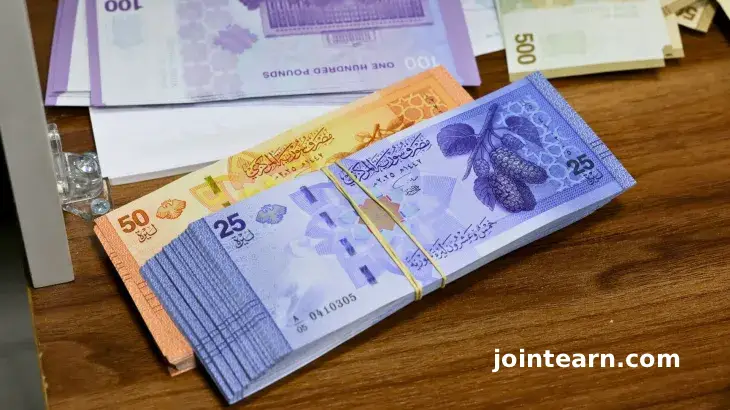
Syria has unveiled a new series of banknotes, removing images of the ousted al-Assad family in a symbolic shift aimed at boosting confidence in the Syrian pound and stabilizing the nation’s struggling economy. The move also involves redenomination, with two zeros removed from the old currency, simplifying everyday transactions and restoring a sense of financial normalcy after years of hyperinflation.
New Banknotes Symbolize a Fresh Start for Syria
On January 1, 2026, Syrians began using redesigned banknotes ranging from 10 to 500 Syrian pounds. Unlike previous currency that featured former leader Bashar al-Assad and his family, the new bills showcase roses, wheat, olives, oranges, and other iconic symbols of Syrian agriculture and heritage.
Syrian leader Ahmed al-Sharaa described the updated currency as marking “the end of a previous, unlamented phase and the beginning of a new phase that the Syrian people aspire to.” The redesigned banknotes are intended to reflect a new national identity, moving away from the glorification of individuals toward a broader celebration of Syria’s cultural and agricultural wealth.
Redenomination: Simplifying the Syrian Pound
The redenomination process involves removing two zeros from the old Syrian pound. This change does not affect the actual value of the currency, but it helps simplify everyday transactions for citizens who previously had to carry huge stacks of banknotes even for basic purchases such as groceries.
Since the outbreak of the Syrian civil war in 2011, the Syrian pound has lost significant value, plunging from 50 pounds to nearly 11,000 per US dollar at its lowest point. By the end of 2025, the Central Bank of Syria reportedly held only $200 million in foreign reserves, a sharp decline from $17 billion in 2010.
Public Response: A Step Toward Normalcy
Damascus resident Muhammad Zaar told Al Jazeera that the removal of al-Assad images was a welcome change. “At least we get rid of this previous president. It is ridiculous to see his picture on our money,” he said.
Journalist Ayman Oghanna, reporting from Damascus, emphasized that the new currency is more than just a redesign. It signals economic reform, government legitimacy, and a symbolic break from Syria’s past.
Economic Recovery and International Investments
The introduction of the new banknotes coincides with efforts to revive Syria’s economy after 14 years of civil war and devastation. The country has recently seen a significant boost in foreign investment:
- U.S. sanctions, including the Caesar sanctions, have been permanently lifted, opening the door for international investments.
- Gulf Arab states, including Saudi Arabia and Qatar, have contributed billions of dollars in financial support.
These moves aim to stabilize the Syrian economy, encourage trade, and restore public confidence in the Syrian pound.
Challenges Ahead for Syria’s Economy
Despite these positive developments, Syria continues to face economic and security challenges. Inflation has recently surged into triple digits, and rebuilding a war-torn economy requires sustained investment and political stability. Experts note that currency reform is a necessary but not sufficient step toward long-term recovery.
Looking Forward: A New Chapter for Syria
The new Syrian banknotes are part of a larger initiative to modernize the financial system, improve daily transactions, and rebrand the nation. By removing the images of the al-Assad family and emphasizing national symbols, Syria is signaling a move toward a post-conflict identity while addressing urgent economic needs.
As Syrians begin to carry the new currency, the hope is that this symbolic and practical reform will contribute to broader efforts to rebuild the nation, encourage investment, and restore stability to a country long defined by conflict.


Leave a Reply