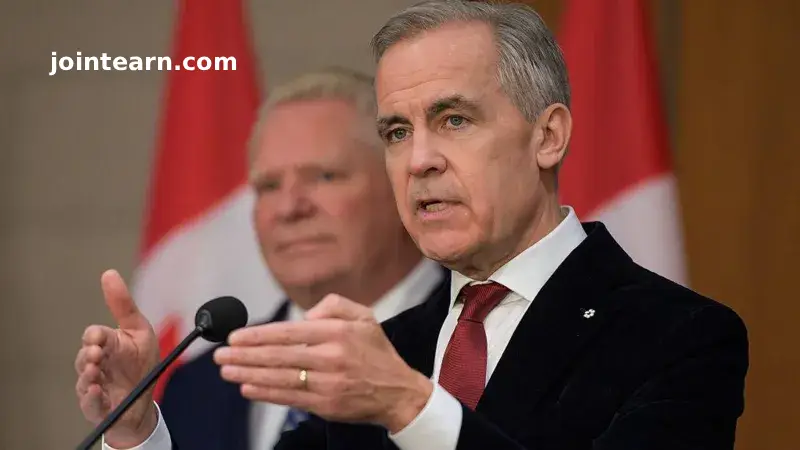
Canadian Prime Minister Mark Carney has reassured investors that the country’s oil industry remains competitive, even as Venezuela may increase production following the US seizure of Venezuelan President Nicolás Maduro.
Speaking to reporters in Paris, Carney highlighted that Canadian oil is “low risk, low cost, and low carbon”, making it an attractive supply option despite potential changes in Latin American markets.
“Canada welcomes the possibility of a democratic transition in Venezuela,” Carney said. “A functioning, transparent economy there would benefit both the Venezuelan people and the wider Western hemisphere.”
Context: Venezuela’s Oil Potential
Venezuela is estimated to hold over 300 billion barrels of oil, roughly 17% of global reserves, while Canada accounts for 10%. The US has expressed interest in ramping up Venezuelan oil production, with former President Donald Trump suggesting that American companies could be “up and running” in 18 months, helping to lower global oil prices.
Despite these developments, Canadian energy company stocks experienced a brief dip on Monday, but Carney said the long-term outlook for domestic producers remains strong.
“Canadian oil is competitive in the medium and long term,” he emphasized, noting ongoing plans to diversify exports, particularly to Asian markets via a proposed Pacific pipeline.
Analysts Weigh In
Heather Exner-Pirot, director of energy and natural resources at the MacDonald-Laurier Institute, said that Venezuela is likely to experience instability for the coming months, which could deter significant investment in its oil sector.
“I don’t expect Venezuela to become an immediate competitor for Canada’s oil exports,” she said.
Derek Holt, VP and head of capital markets economics at Scotiabank, urged caution against overestimating the impact of Venezuelan production on global markets.
“Oil pundits may be getting ahead of themselves,” Holt said. “We need to carefully assess how quickly Venezuela can scale production and its effects on Canadian supply.”
Canada’s Pipeline Strategy
Canada has been pursuing a pipeline to the Pacific coast to reduce reliance on the US, but the project faces hurdles including opposition from British Columbia and First Nations groups. Alberta has until July 1, 2026, to submit a formal proposal. Conservative leader Pierre Poilievre has publicly urged Carney to approve the pipeline quickly to access international markets.
Carney stressed that Canadian oil’s reliability remains its key selling point, echoing the view of market analysts.
“Canada is very low risk, very reliable,” Exner-Pirot said. “Our oil will look attractive for multiple reasons, even if Venezuela expands production.”
Takeaway
While Venezuela’s potential production increase raises questions for the global oil market, Canada’s strategy of emphasizing low-risk, low-carbon oil and diversifying exports is intended to secure its long-term competitive position. With 97% of Canadian oil exports currently going to the US, expanding access to other markets remains a priority for Ottawa.


Leave a Reply