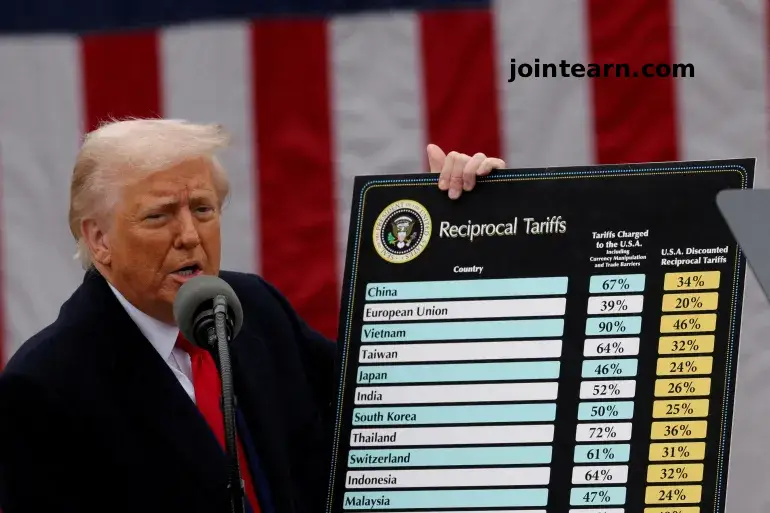
The United States Supreme Court is expected to issue a ruling this Friday on one of the most closely watched legal battles in recent years: the legality of the tariffs imposed by former President Donald Trump. This case has drawn attention not only for its domestic economic impact but also for its potential consequences on global trade relations.
Background: The Controversy Over Trump’s Tariffs
In February 2025, President Trump invoked the International Emergency Economic Powers Act (IEEPA) to impose tariffs on goods imported from specific countries. According to the Trump administration, these measures addressed a national emergency related to the United States’ trade deficits.
However, critics argued that the President overstepped his authority. Congress, not the President, holds the constitutional power to regulate taxes and tariffs, they contended. During oral arguments before the Supreme Court in November, both liberal and conservative justices expressed skepticism over whether the IEEPA could legally be used to impose tariffs.
Chief Justice John Roberts highlighted the historical role of Congress, stating that the authority to levy taxes and tariffs “has always been the core power of Congress.” Justice Neil Gorsuch, appointed by Trump during his first term, also voiced concerns, noting that Congress might lose this power permanently if it is handed over to the executive branch.
Economic Impact of the Tariffs
President Trump has defended his tariffs, claiming they have strengthened the US economy and enhanced national security. In social media posts leading up to the Supreme Court’s decision, Trump described the tariffs as making the country “financially, and from a national security standpoint, far stronger and more respected than ever before.”
The economic data, however, presents a mixed picture:
- US GDP Growth: The United States saw a 4.3% GDP increase in the third quarter of 2025, the largest growth in two years.
- Job Growth: Sectors heavily exposed to tariffs experienced slower job growth. Johannes Matschke, senior economist at the Kansas City Federal Reserve, noted that “jobs in sectors with higher import exposure grew more slowly than jobs in sectors with lower import exposure, suggesting tariffs may have weighed on employment.”
Additionally, American consumers and businesses have faced rising costs, with tariffs affecting prices on imported goods ranging from electronics to consumer goods.
Legal Journey to the Supreme Court
The challenge to Trump’s tariffs began in lower courts. In May 2025, the Court of International Trade ruled against the administration, stating that Congress, not the President, has “exclusive authority to regulate commerce.” This decision was later upheld by a Washington, DC, appeals court in August.
Legal experts suggest that the Supreme Court may likely uphold the lower court rulings. Greg Shaffer, law professor at Georgetown University, told Al Jazeera, “Given the different justices’ concerns, the Supreme Court will likely decide that IEEPA does not provide the authority for the Trump administration to adopt these tariffs.”
If the Supreme Court rules against the administration, the United States may be required to refund tariffs already paid, potentially affecting millions of dollars collected from importers. Treasury Secretary Scott Bessent estimated that the US could have to refund “about half the tariffs” imposed.
Broader Implications for Trade and National Security
A Supreme Court ruling against the Trump administration could reshape the future of presidential trade authority. It may set a precedent limiting the executive branch’s ability to unilaterally impose tariffs using emergency powers. Conversely, if the court sides with the administration, it could expand presidential discretion in trade policy, influencing future economic and foreign policy decisions.
The ruling also carries potential global consequences. Countries affected by the tariffs will closely monitor the decision, which could impact trade negotiations, supply chains, and international relations.
Conclusion
The Supreme Court’s upcoming decision on Trump-era tariffs represents a critical moment in the balance of power between Congress and the President regarding economic policy. Beyond its legal significance, the ruling will have wide-reaching consequences for the US economy, global trade, and national security policy. Businesses, economists, and lawmakers alike await the ruling, as it could reshape the landscape of US trade authority for years to come.


Leave a Reply