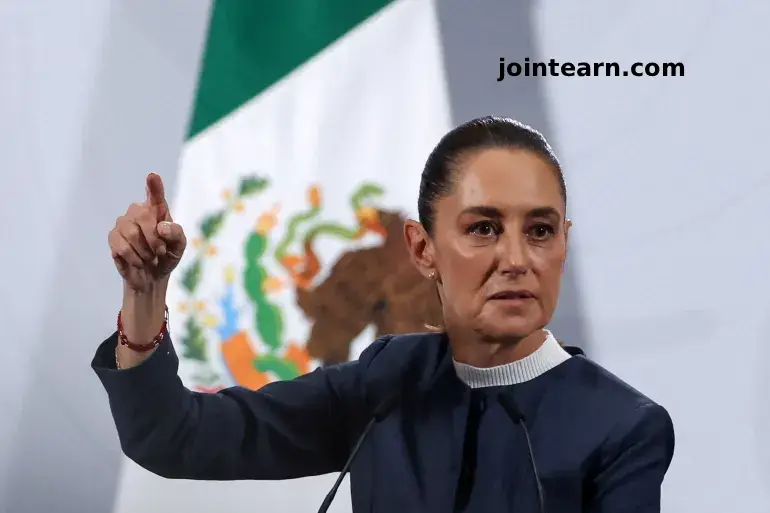
Mexico City, Mexico – January 7, 2026 – U.S. President Donald Trump’s military strikes in Venezuela and the subsequent abduction of President Nicolás Maduro have sent ripples of concern throughout Latin America. Among the most anxious is Mexico, the United States’ longtime neighbor and strategic partner, where leaders are working to protect national sovereignty while maintaining cooperation with Washington on key security and economic issues.
Trump Targets Mexico in Post-Venezuela Rhetoric
Following the weekend attack on Caracas, which killed dozens and drew global condemnation, Trump singled out Mexico in public remarks. The U.S. president suggested that military action on Mexican soil could be justified in the fight against drug trafficking.
“Something’s going to have to be done with Mexico,” Trump stated in a Fox News interview. “She [President Claudia Sheinbaum] is very frightened of the cartels. They’re running Mexico.”
Such statements have heightened fears in Mexico of renewed U.S. interventionism in the region. Analysts say these comments evoke memories of historical U.S. incursions into Mexican territory and challenge Mexico’s long-established sovereignty.
Sheinbaum Affirms Mexican Sovereignty
Mexican President Claudia Sheinbaum responded firmly to the Trump administration’s threats, insisting on Mexico’s autonomy:
“We categorically reject intervention in the internal matters of other countries. It is necessary to reaffirm that, in Mexico, the people rule and that we are a free and sovereign country,” Sheinbaum said.
While reaffirming sovereignty, Sheinbaum has also maintained cooperation with the U.S. on key issues such as migration, border security, and combating organized crime.
Historical Context Heightens Sensitivity
The memory of past U.S. interventions shapes Mexican responses to current threats. From the U.S.-Mexico War in 1846, which resulted in the annexation of large swaths of Mexican territory, to U.S. involvement during the Mexican Revolution and the bombardment of Veracruz in 1914, historical interventions continue to influence Mexican national identity.
“Poor Mexico. So far from God, so close to the United States,” a quote attributed to former President Porfirio Díaz, remains emblematic of the country’s historical vulnerability to U.S. influence, according to Pablo Piccato, a historian at Columbia University.
Trump has framed his recent actions within this historical lens, invoking the Monroe Doctrine and asserting a claim of hemispheric dominance.
“The Monroe Doctrine is a big deal, but we’ve superseded it by a lot, by a real lot. They now call it the ‘Donroe Doctrine,’” Trump remarked, highlighting his administration’s assertive approach to Latin America.
Cooperation Without Subordination
Despite tensions, Sheinbaum has continued to collaborate with the U.S. on areas of mutual interest. Mexico has deployed thousands of National Guard troops to its northern border to curb irregular migration and drug trafficking, and has extradited criminal suspects accused of drug offenses to U.S. authorities.
“There would be no rational reason to break this bilateral relationship by crossing the one red line Mexico has set out,” said Stephanie Brewer, director of the Mexico program at the Washington Office on Latin America (WOLA).
Experts note that Sheinbaum’s approach—balancing sovereignty with cooperation—is a calculated effort to avoid escalation while signaling Mexico’s autonomy.
Risks of U.S. Military Action
The strikes on Venezuela underscore the Trump administration’s willingness to use military force in Latin America, raising concerns that similar tactics could be considered against Mexico if the U.S. deems it necessary. Analysts warn that while attacks on Mexican soil remain unlikely, the rhetoric alone requires vigilance.
“Sheinbaum is doing a balancing act on an increasingly thin wire,” Brewer added, emphasizing the delicate position Mexico faces in navigating relations with a more aggressive U.S. administration.
Conclusion
As Latin America watches closely, Mexico’s leadership seeks to protect national sovereignty while cooperating with Washington on security and trade. The unfolding situation in Venezuela and Trump’s aggressive posture in the region highlight the fragility of international norms and the challenges neighboring countries face in responding to U.S. interventions.


Leave a Reply