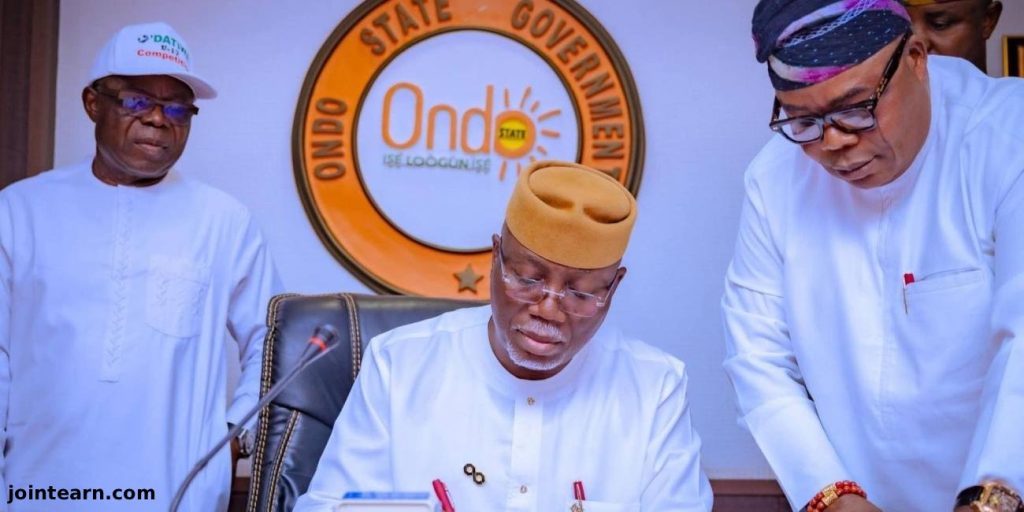
The Ondo State House of Assembly has allocated ₦80 million for telephone calls in the 2026 fiscal year, which translates to a daily expenditure of about ₦219,178 on airtime per day.
This allocation is part of a broader budget that has drawn public criticism for prioritizing luxury spending over critical public services. Earlier reports revealed that the state government plans to spend ₦2.4 billion on vehicles for lawmakers. According to the budget document, ₦2.16 billion is earmarked for the purchase of 27 Fortuner Jeeps for members of the Assembly and the Clerk, while an additional ₦245 million is allocated for SUVs for the Speaker, Deputy Speaker, and Majority Leader. The Deputy Speaker is set to receive a vehicle worth ₦85 million, bringing the total proposed spending on luxurious vehicles to ₦2.4 billion.
In addition, the budget allocates ₦765 million for the renovation of the Assembly Complex and official lodges. Of this, ₦485 million is designated for the renovation of the House of Assembly Complex, while ₦280 million is set aside for the official lodge and residential quarters.
These spending plans have sparked backlash, particularly as judiciary workers in Ondo State continue to protest poor welfare conditions and the denial of financial autonomy. Since Monday, striking judiciary staff have locked judges out of court facilities in Akure, effectively shutting down the Ondo State Judiciary Headquarters. On Tuesday, the Judiciary Staff Union of Nigeria (JUSUN) joined the strike, further paralyzing judicial activities across the state.
Workers argue that the state government has failed to honor welfare commitments and continues to undermine the judiciary’s financial independence, despite repeated negotiations.
This is not the first instance of luxury-focused spending in Ondo State. In 2025, the government budgeted ₦2 billion for vehicles, including an armoured car for Governor Lucky Aiyedatiwa and several Toyota and GAC vehicles for senior officials. Reports indicated that more funds were spent on vehicles than on critical sectors like rural water supply, sanitation, and local security initiatives, such as the Amotekun security outfit, which received zero disbursed funds despite a ₦2.3 billion allocation.
Critics argue that such budget priorities highlight misaligned governance choices and fuel public dissatisfaction amid ongoing strikes and service disruptions in key state sectors.


Leave a Reply