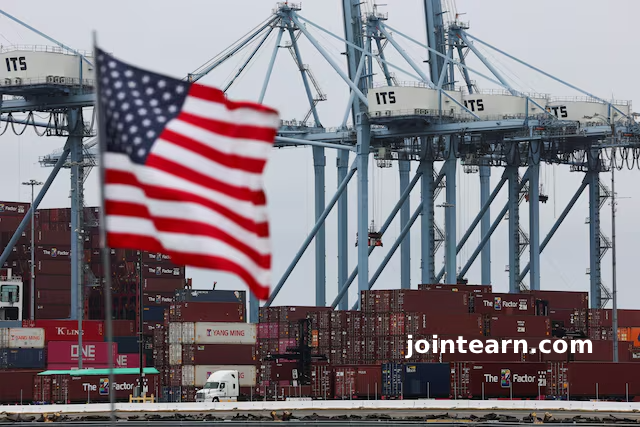
U.S. importers, customs brokers, and trade lawyers are preparing for a potential $150 billion tariff refund battle following a Supreme Court ruling on the legality of tariffs imposed by former President Donald Trump under the International Emergency Economic Powers Act (IEEPA). If the court strikes down the tariffs, importers may face a complex process to recover duties paid over the last year.
Background on Trump’s IEEPA Tariffs
Trump was the first U.S. president to use IEEPA—a law historically applied to sanctions or freezing assets—to levy broad tariffs. The tariffs targeted goods imported from countries including China, Canada, and Mexico, citing trade deficits and, in some cases, concerns over fentanyl trafficking and illicit drugs.
The tariffs have already generated an estimated $133.5 billion in collections between February and December 2025, with total collections potentially approaching $150 billion based on average daily rates.
Potential Refund Challenges
Even if the Supreme Court rules the tariffs unlawful, companies may face challenges securing refunds.
“It’s not in the government’s DNA to give back money, and Trump would not want to give back money,” said Jim Estill, CEO of Danby Appliances.
Some importers, including Costco, Bumble Bee Foods, Revlon, EssilorLuxottica, Kawasaki Motors, and Yokohama Tire, have already filed preemptive lawsuits to protect their right to refunds, highlighting concerns that the U.S. Customs and Border Protection (CBP) may not automatically return tariff payments.
Smaller companies are selling claims for pennies on the dollar to hedge funds in a secondary market for refund rights, while larger corporations are preparing meticulous records to ensure compliance with CBP procedures.
Electronic Refund System
The CBP announced on January 2 that all tariff refunds will shift to electronic distribution through the ACE portal effective February 6. While not fully automated, this change could streamline the process and reduce errors, fraud, and delays.
“It does kind of signal that Customs is fully prepared to move forward with refunds, if the Supreme Court does, in fact, rule that way,” said Angela Lewis, global head of customs at logistics firm Flexport.
Legal and Procedural Considerations
The Supreme Court is expected to issue rulings soon, though it has not specified which cases will be acted upon. The outcome will likely influence whether refund rights are determined immediately or remanded to the Court of International Trade.
Importers have up to 314 days after importation to make corrections before shipments are “liquidated,” after which refunds are typically disallowed. Many tariffs imposed in early 2025 have already passed this deadline, adding urgency to legal filings.
Trade advisory experts stress that companies should maintain detailed payment records, submit claims promptly, and prepare for a potentially prolonged refund process, which could take years before funds are returned.
Market Implications
The potential refunds represent unprecedented sums for CBP, although the U.S. Treasury routinely distributes hundreds of billions in tax refunds annually. Treasury Secretary Scott Bessent expressed confidence the Supreme Court will uphold Trump’s actions, while the U.S. Trade Representative indicated lost revenues could be offset by new tariffs under alternative legal authority.
Advice for Importers
Pete Mento, trade advisory director at Baker Tilly, advised companies to act quickly:
“The people that get their claims in early and have them done correctly are the ones who are going to reap the benefits the fastest. And, knowing the way the processes work in Washington, it could be years before you see that money.”
Companies navigating these potential refunds must balance legal strategy, record-keeping, and compliance with U.S. trade and customs regulations, as the outcome could affect hundreds of billions of dollars in international commerce.


Leave a Reply